
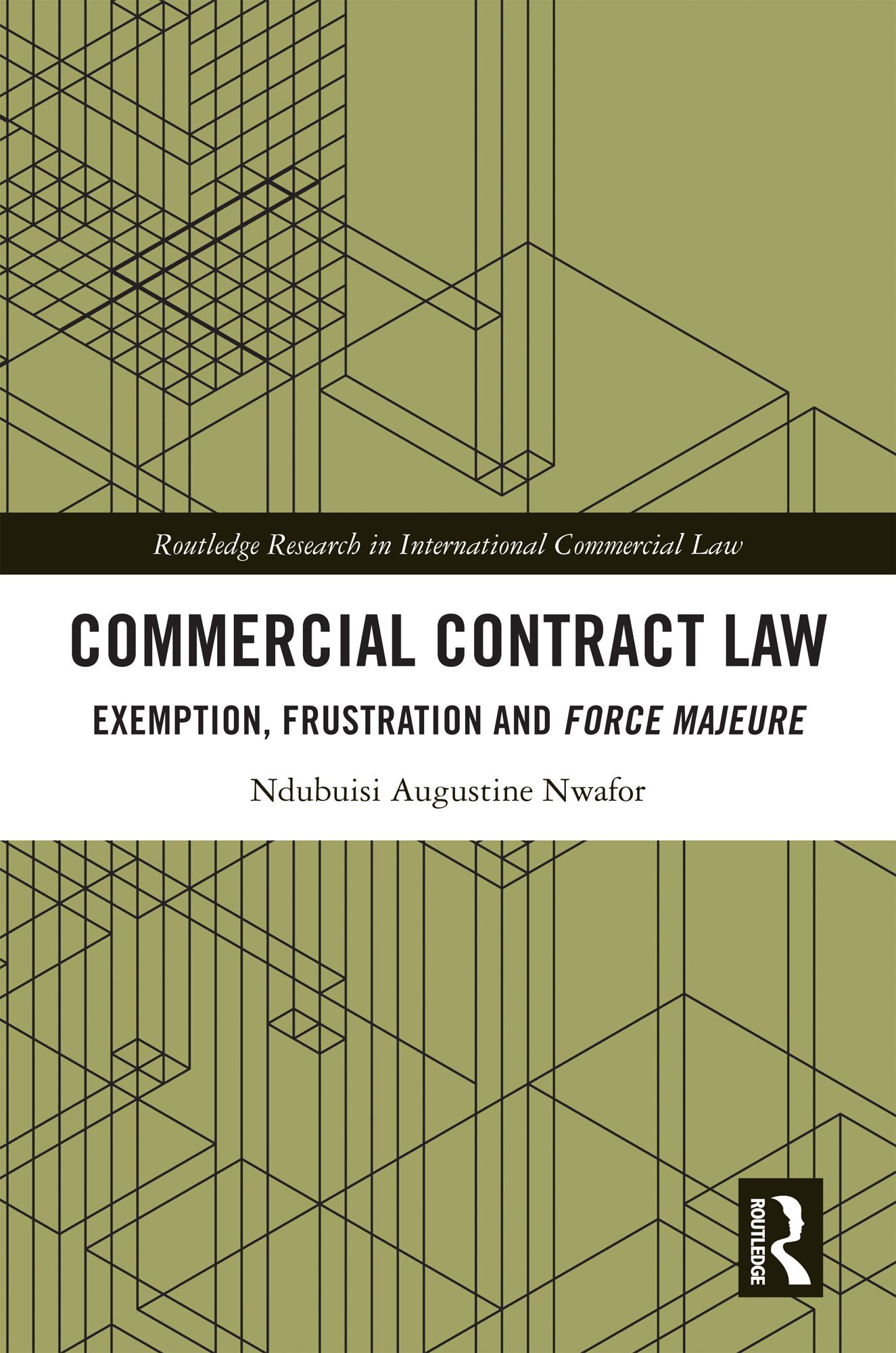
This book offers a critical and comparative analysis of exemption, frustration, and force majeure within the framework of three pivotal legal instruments: the United Nations Convention on Contracts for the International Sale of Goods (CISG), the UNIDROIT Principles of International Commercial Contracts (UPICC), and English contract law.
Rooted in principles of fairness and legal predictability, the book argues that the CISG, UPICC, and English law provide mechanisms through which contractual obligations may be excused when unforeseen events render performance impossible. While conceptually related, the book reveals substantive and procedural divergences in how each legal system interprets and applies the principles of exemption, frustration, and force majeure. Systematically examining the similarities, differences, and evolving intersections of each legal framework, particularly in relation to mistake, termination, avoidance, risk, and hardship, the book employs a historical and jurisprudential context, highlighting both theoretical and practical applications. It suggests a Draft Model Frustration Clause (DMFC), aimed at addressing deficiencies in existing legal frameworks and providing a harmonized clause better suited for contemporary international commercial practice.
The book will be of interest to researchers in the field of commercial law, contract law, and business law.
Pay easily by card, Klarna, Apple Pay or Google Pay. Not happy? You always have a 14-day money-back guarantee. Read more in our terms. If you have any questions, email us at hello@memmo.org.
Memmo makes studying easier – wherever you are in the world. We bring your course books and smart study tools together in one place: summaries, quizzes, podcasts and flashcards. Plus Ted, your study buddy who answers anything you wonder. Over 50,000 students already study here – built to help you learn faster and stress less.