
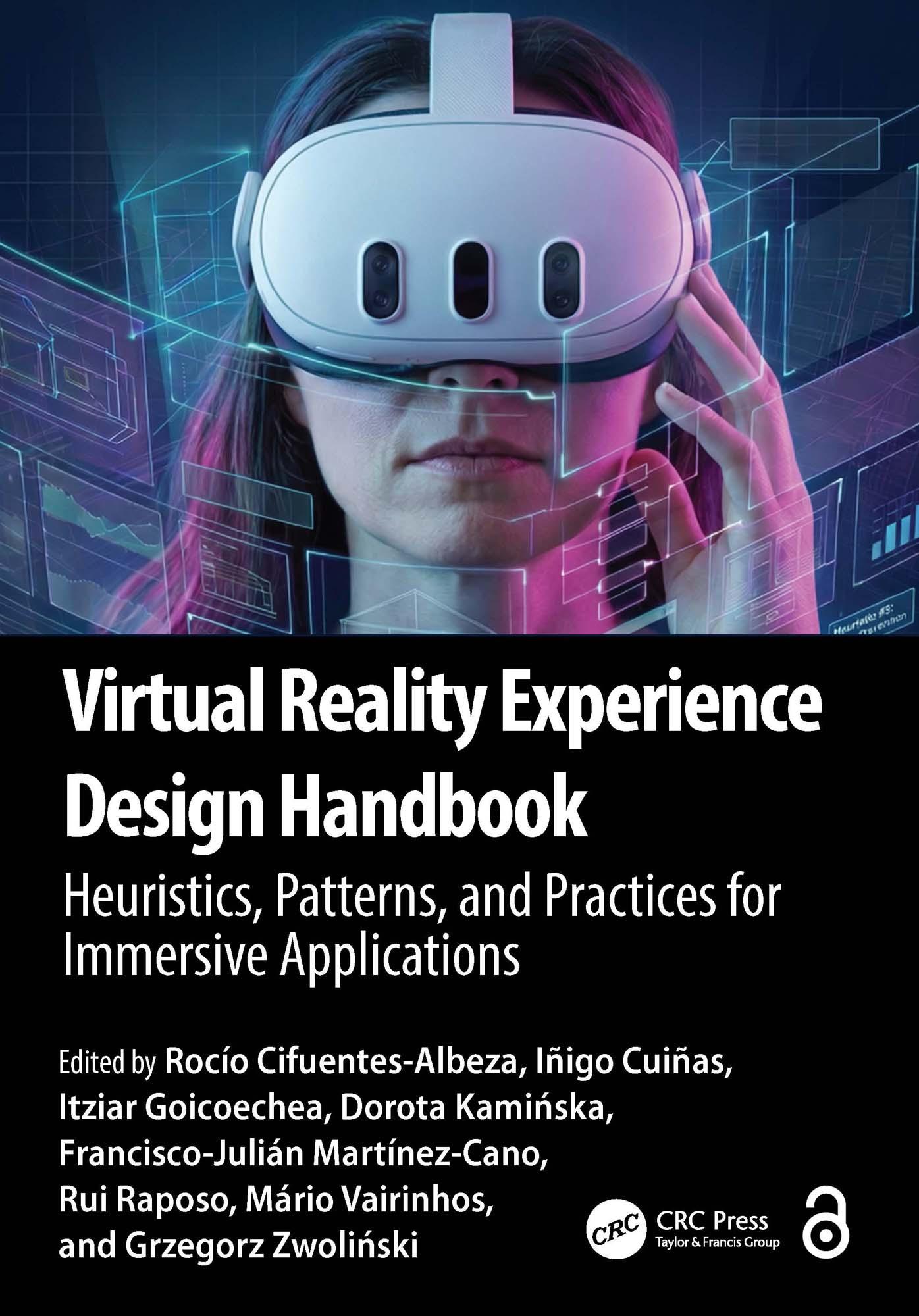
Designing for virtual reality goes far beyond simply adapting flat-screen content for a headset. It demands a deep understanding of how the human body and mind interact with immersive environments, ensuring experiences feel intuitive and natural. This book serves as a vital resource for anyone looking to create immersive experiences that are not only engaging but also comfortable and inclusive, offering practical guidance for crafting meaningful interactions in VR.
Focused on the needs of designers, developers, and product teams, the book bridges the gap between traditional 2D design principles and the unique challenges of embodied interaction. It moves beyond theoretical concepts, providing actionable tools such as a VR-specific heuristic framework, checklists, and templates to simplify complex design problems. Readers will gain insights into translating familiar 2D patterns into spatial equivalents, integrating accessibility features, and leveraging elements like spatial audio, lighting, and animation to guide user attention effectively.
This handbook equips professionals with the knowledge and practical tools needed to deliver high-quality immersive experiences. Whether refining existing products for spatial interfaces or developing new immersive applications, readers will find practical strategies and a clear framework for addressing the distinctive challenges of virtual reality design.
Pay easily by card, Klarna, Apple Pay or Google Pay. Not happy? You always have a 14-day money-back guarantee. Read more in our terms. If you have any questions, email us at hello@memmo.org.
Memmo makes studying easier – wherever you are in the world. We bring your course books and smart study tools together in one place: summaries, quizzes, podcasts and flashcards. Plus Ted, your study buddy who answers anything you wonder. Over 50,000 students already study here – built to help you learn faster and stress less.