
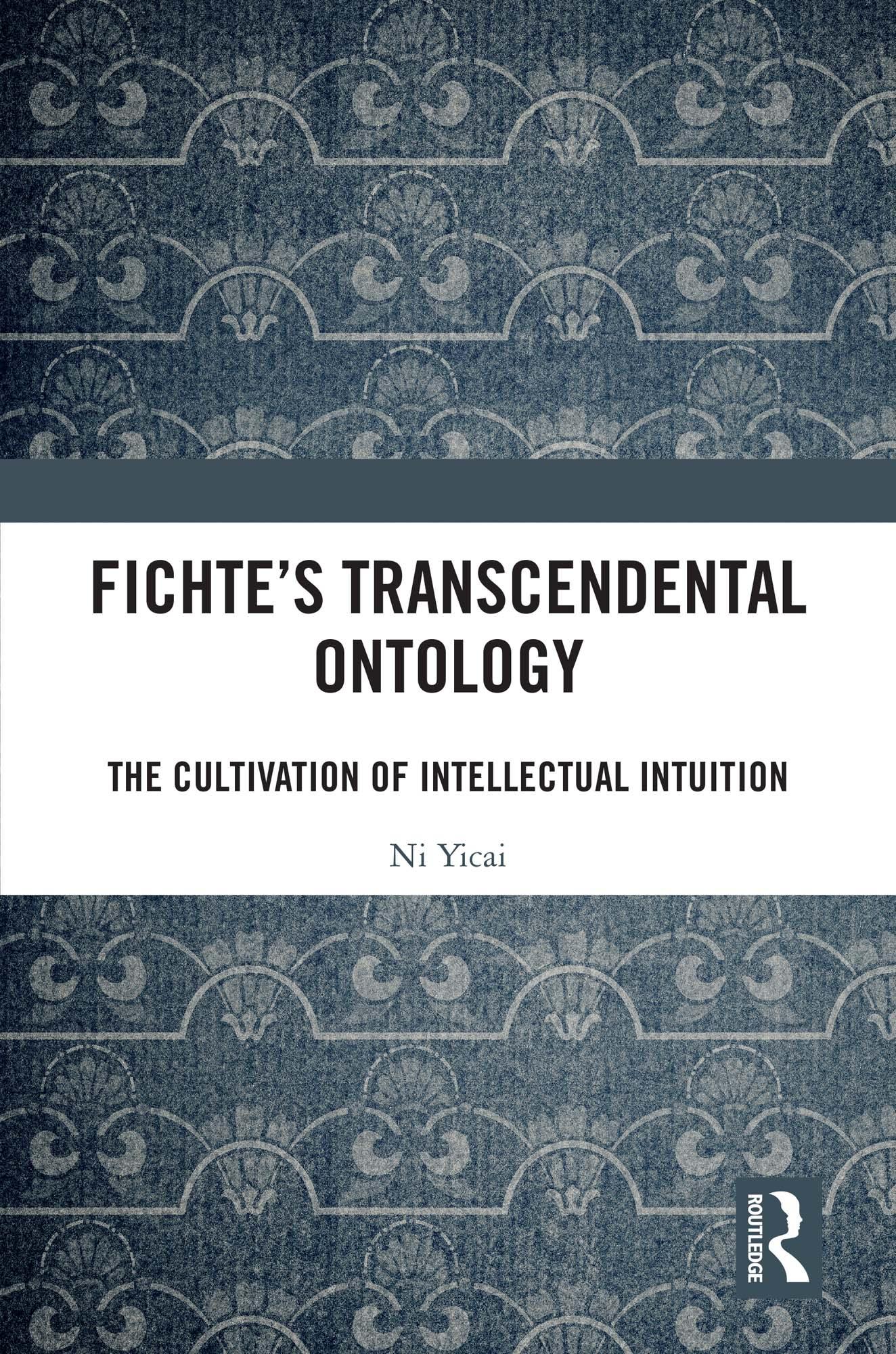
This book reinterprets Fichte’s thought as a “transcendental ontology,” arguing that his later Jena Wissenschaftslehre transcends the “History of Self-Consciousness” to establish a “History of Being,” where the I’s genesis aligns with the world’s historical development.
Challenging the dominant interpretive traditions established by Henrich and the Heidelberg School, this book adopts the framework of “Transcendental Ontology” to explicate the pre-conscious, self-generating activity of primordial reality. The narrative traces the roots of the ontological genesis from Kant’s doctrine of self-affection and Reinhold’s theory of representation, through Fichte’s theoretical confrontations with Schelling and Hölderlin, to its profound reception in the early 20th century. By examining the works of Neo-Kantians (Lask and Hirsch), Neo-Marxist Georg Lukács, and Russian philosopher Ivan Ilyin, this book demonstrates how Fichte’s philosophy evolved into a response to the spiritual crisis of European modernity. Its aim was to unite individuality with historical totality in a “concrete universal.”
This book is essential for scholars and advanced students of German Idealism, modern European philosophy, and intellectual history, especially those interested in subjectivity, the shift from Kant to Fichte and Schelling, and transcendental philosophy's impact on 20th-century thought.
Pay easily by card, Klarna, Apple Pay or Google Pay. Not happy? You always have a 14-day money-back guarantee. Read more in our terms. If you have any questions, email us at hello@memmo.org.
Memmo makes studying easier – wherever you are in the world. We bring your course books and smart study tools together in one place: summaries, quizzes, podcasts and flashcards. Plus Ted, your study buddy who answers anything you wonder. Over 50,000 students already study here – built to help you learn faster and stress less.