
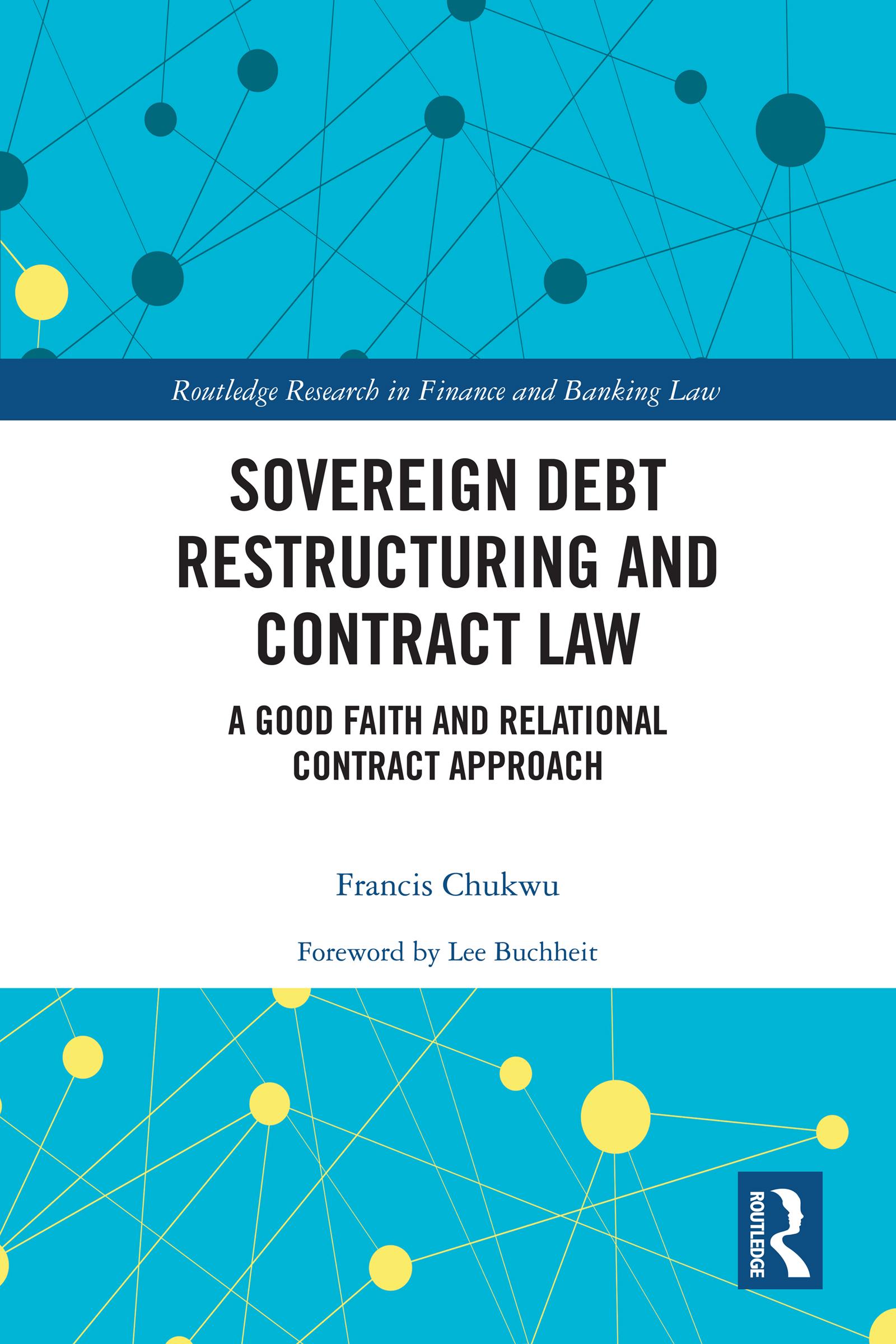
This book tackles the challenge of holdout creditor disruption of sovereign debt restructuring, where creditors reject collective agreements to pursue full loan recovery in domestic courts.
Critically examining the contemporary statutory and contractual approaches to sovereign debt restructuring, the book presents their usefulness and limitations, including the potential major impact of the doctrine of merger in rem judicatam. It proposes the duty of good faith (which is generally implied under US law, implied in certain categories of contract under English law, and widely recognized globally) applied in the context of sovereign debt as a relational contract, as a robust legal approach to combating such disruptions in domestic courts. Through rigorous analysis of case law and treatises, the book argues that sovereign debt contracts are relational contracts, invoking heightened good faith and equity obligations. With in-depth analysis of the contents and judicial applications of the duty of good faith in English and New York jurisprudence, it demonstrates how holdout actions violate good faith and proffers a judicial approach, based on the duty of good faith, to sovereign debt restructuring as a viable alternative to current statutory and contractual approaches.
This book will be of interest to practitioners, researchers, and policy makers in contract law, finance law, relational contract theory, good faith, and sovereign debt.
Pay easily by card, Klarna, Apple Pay or Google Pay. Not happy? You always have a 14-day money-back guarantee. Read more in our terms. If you have any questions, email us at hello@memmo.org.
Memmo makes studying easier – wherever you are in the world. We bring your course books and smart study tools together in one place: summaries, quizzes, podcasts and flashcards. Plus Ted, your study buddy who answers anything you wonder. Over 50,000 students already study here – built to help you learn faster and stress less.