
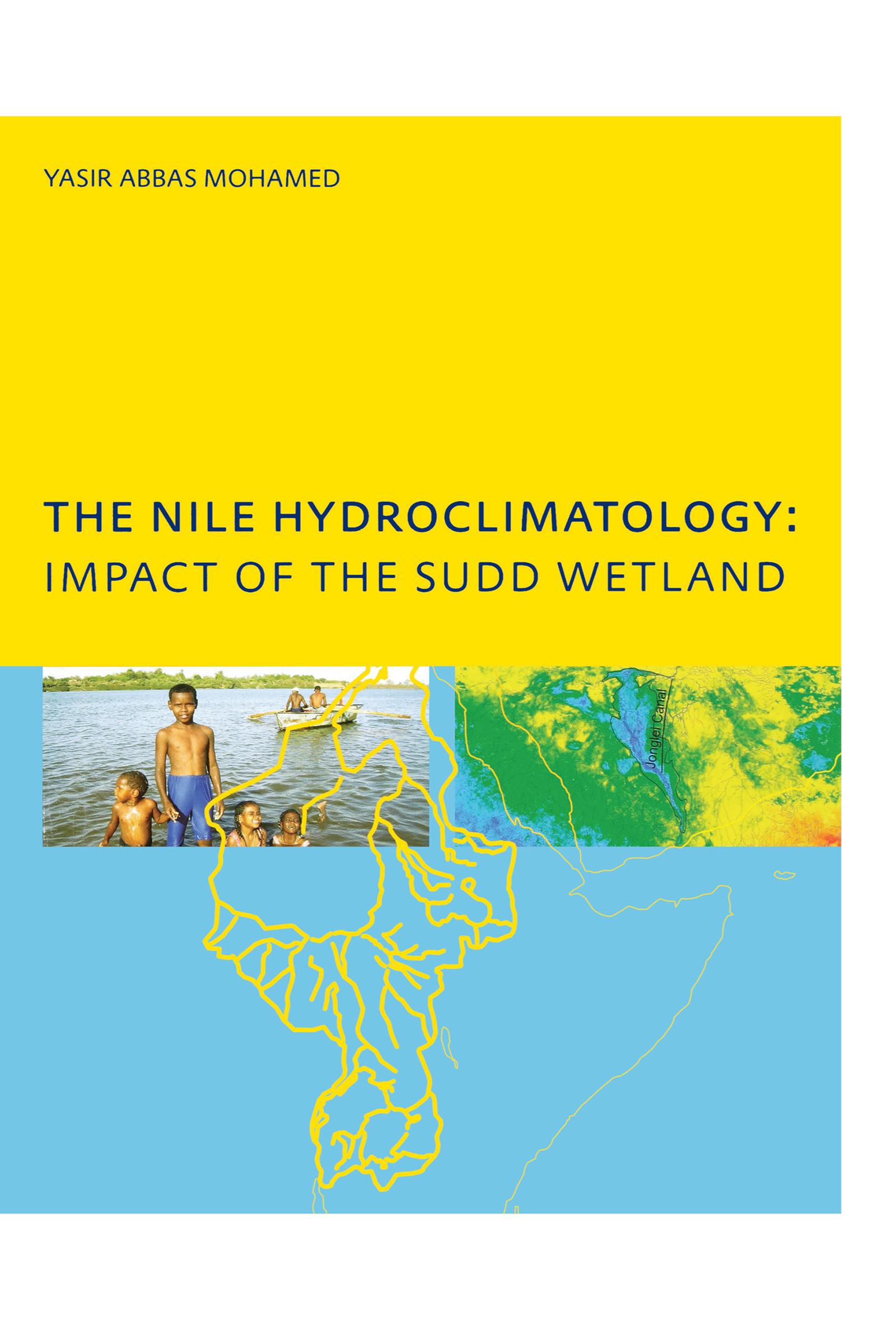
Hydroclimatology has emerged as a new discipline in line with increasing awareness of the connected nature of land-surface-atmosphere processes. Changes in landuse affect the atmospheric moisture conditions, not only locally but also at a continental scale. Similarly, climate change influences river basin hydrology and water resources. A good understanding of the atmospheric contribution to the regional water cycle is important for sound (integrated) water resources planning and management at river basin scale. The Nile Basin is characterized by increasing water demands in the downstream areas and high evaporation from the Upper Nile swamps. This has led to the planning and construction of river short-cut channels to intercept the water feeding the wetlands. Despite the importance of the wetlands to the local environment, and, it is thought, as a supplier of additional Nile water, its exact hydrology and its interaction with the climate is largely unknown. This study aims at a better understanding of the Sudd hydrology in relation to the regional hydroclimatology. The impact of the Sudd wetland on the Nile hydroclimatology has been studied by comparing two regional climate model scenarios: the present climatology, and a drained Sudd scenario. Remote sensing techniques have been utilized intensively to derive evaporation and related biophysical properties over the wetlands. The derived results from this study may also serve as boundary conditions for related impact assessment models.
Pay easily by card, Klarna, Apple Pay or Google Pay. Not happy? You always have a 14-day money-back guarantee. Read more in our terms. If you have any questions, email us at hello@memmo.org.
Memmo makes studying easier – wherever you are in the world. We bring your course books and smart study tools together in one place: summaries, quizzes, podcasts and flashcards. Plus Ted, your study buddy who answers anything you wonder. Over 50,000 students already study here – built to help you learn faster and stress less.