
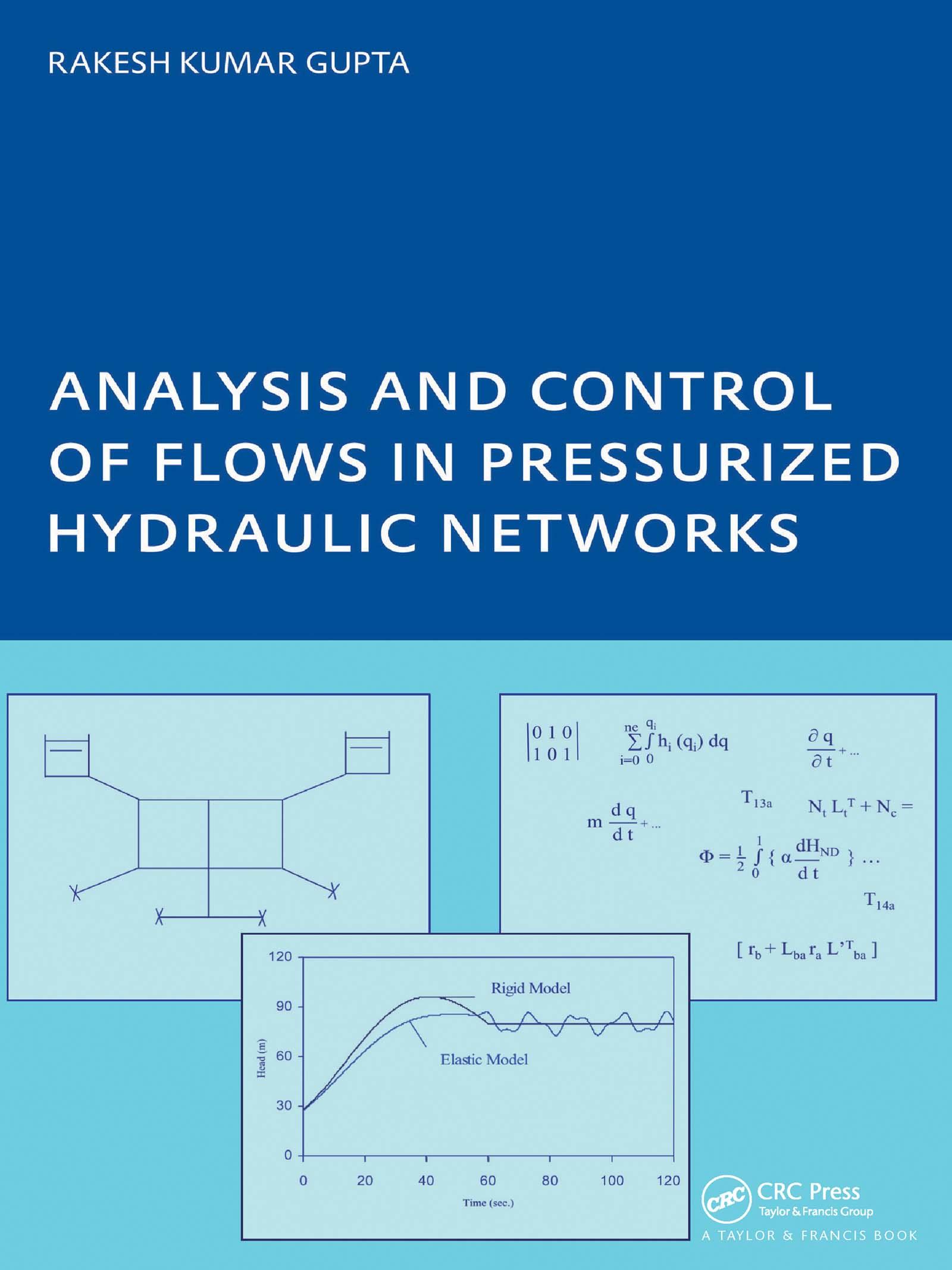
Water transmission and distribution systems are pressurized hydraulic networks, consisting of pipes and other appurtenant components such as reservoirs, pumps, valves and surge devices. Analysis, design and flow control problems in such systems can best be dealt with using network synthesis. This approach aims to directly determine design variables in order to achieve a specified behaviour of the system under steady state or transient flow conditions. There are enormous advantages to be achieved in applying such a model to a wide variety of problems in engineering practice. The innovative theoretical framework described in this thesis, incorporates necessary and sufficient conditions for solvability, as well as methods/algorithms for the efficient solution of network problems.
Pay easily by card, Klarna, Apple Pay or Google Pay. Not happy? You always have a 14-day money-back guarantee. Read more in our terms. If you have any questions, email us at hello@memmo.org.
Memmo makes studying easier – wherever you are in the world. We bring your course books and smart study tools together in one place: summaries, quizzes, podcasts and flashcards. Plus Ted, your study buddy who answers anything you wonder. Over 50,000 students already study here – built to help you learn faster and stress less.