
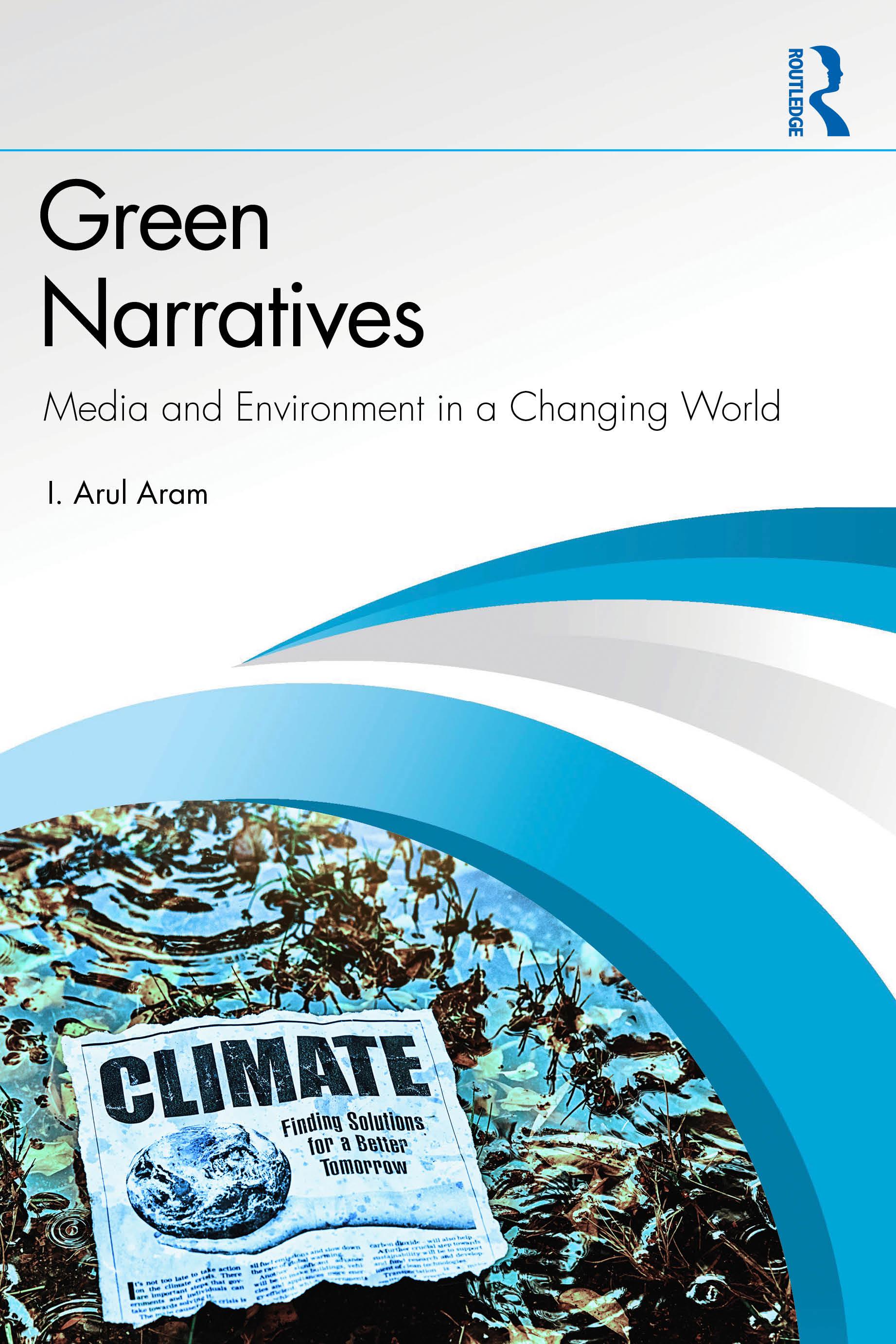
This book examines the nuances of how the media conveys environmental issues, drawing on scientific facts and documenting grassroots realities, and influencing popular perceptions. It provides a broad overview of the emerging field of environmental communication research. It is a valuable resource for scholars of environmental communication across various disciplines, including environmental studies and media and communication studies.
This book arises from the need to guide media academics undertaking research in environmental communication, as well as media professionals, environmental enthusiasts, and environmental non-governmental organisations. It discusses the issues, theories, and methods related to environmental communication research practised around the globe. It goes beyond the Green Revolution and its aftermath, and examines the mass media’s coverage of agriculture. Case studies such as the Fukushima nuclear disaster and the Bhopal gas disaster provide an in-depth understanding of pollution policies and the role of the media in monitoring their implementation. Greta Thunberg’s climate change movement and the depletion of the ozone layer are also discussed. The book covers how human-wildlife conflict revolves around protected areas. It focuses on how the media creates a platform for the exchange of eco-sensitive information and ideas. The book provides an in-depth account of ecocriticism and visual analysis. All chapters are intertwined with examples of media coverage of the environment.
This book has an advocacy approach, aiming to encourage people and governments to take action by promoting research in environmental communication. It will be an invaluable textbook for students, researchers, and educators studying environmental communication, media studies, environmental studies, disaster studies, and cultural studies. It will also serve as an essential resource for academics, policymakers, disaster management professionals, media practitioners, mental health experts, social workers, and general readers seeking a deeper understanding of ecology and environment, disaster narratives, memory, and resilience.
Pay easily by card, Klarna, Apple Pay or Google Pay. Not happy? You always have a 14-day money-back guarantee. Read more in our terms. If you have any questions, email us at hello@memmo.org.
Memmo makes studying easier – wherever you are in the world. We bring your course books and smart study tools together in one place: summaries, quizzes, podcasts and flashcards. Plus Ted, your study buddy who answers anything you wonder. Over 75,000 students already study here – built to help you learn faster and stress less.