
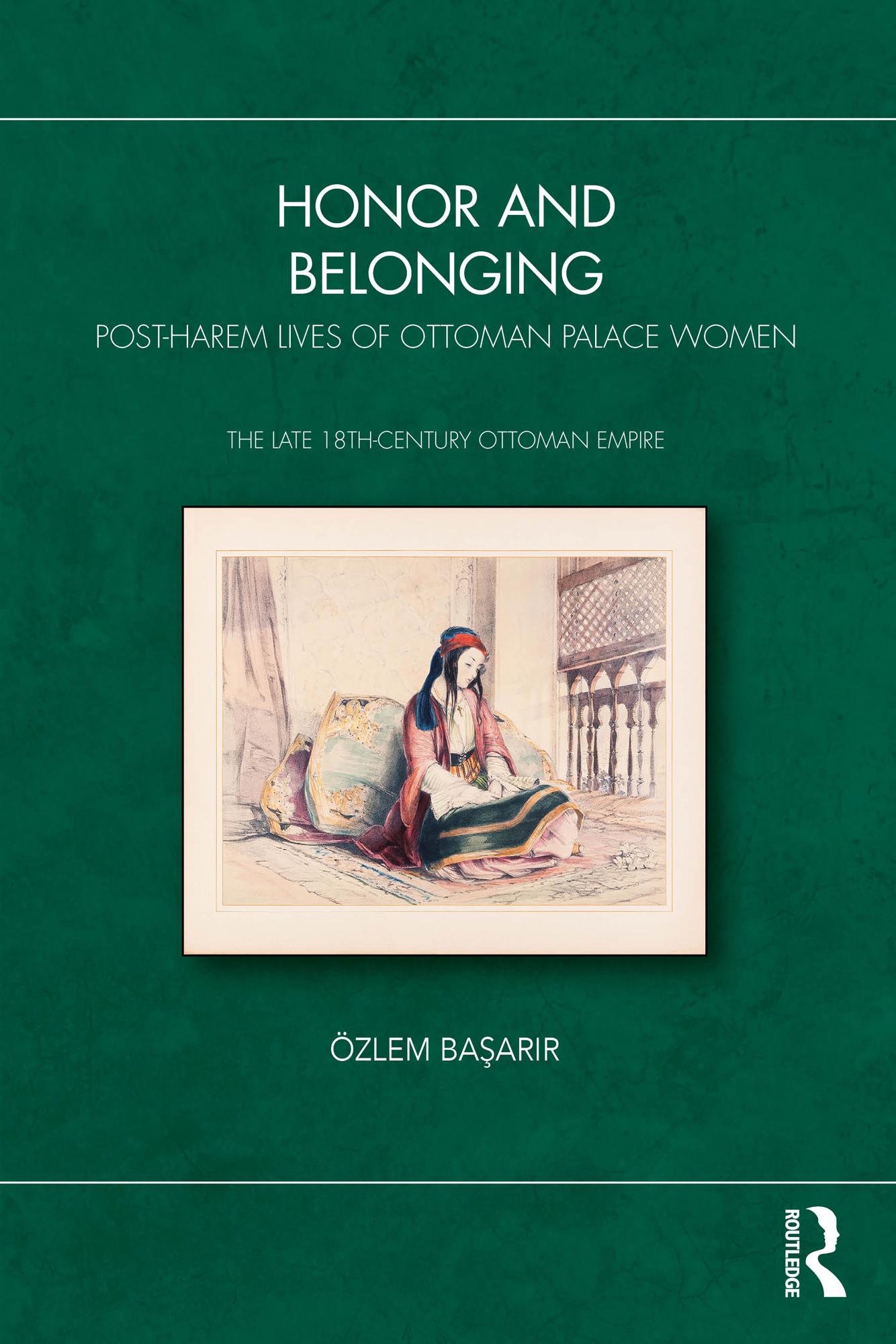
This book explores the post-harem lives of Ottoman palace women who, unlike valide sultans, mothers of princes (şehzades), or imperial princesses (hanım sultans), lost their formal prominence after the death of the reigning sultan and have remained largely overlooked in imperial historiography. These women, often without surviving children or powerful networks, have been relegated to the background of dynastic narratives and treated as peripheral figures in mainstream history writing. Focusing on the consorts of Sultan Abdülhamid I (r. 1774–1789), this volume examines how these women sustained their social status, financial stability, and symbolic ties to the dynasty in the aftermath of palace life. Drawing upon a wide range of Ottoman archival materials, including rental agreements, vakfiye (waqf deeds), household expense records, and posthumous inventories, it reveals the economic strategies, spatial transitions, and charitable activities through which these women rebuilt a sense of belonging and dynastic visibility outside the palace walls. The book demonstrates that although these women did not enjoy fixed entitlements from the central treasury, they succeeded in securing stable and long-term income sources through investments in rental properties, eshâm bonds, and agricultural estates. Their engagement with the imperial revenue system, distinct from that of valide sultans and hanım sultans, shows an alternative but equally structured model of female economic agency. By tracing these overlooked trajectories, the book offers a fresh lens on gender, space, and power in the Ottoman Empire and fills a critical gap in the literature on dynastic wealth, representation, and imperial femininity. The book will be of great interest to students, researchers, and educators working in the fields of Ottoman history, gender studies, Middle Eastern economic history, cultural anthropology, and sociology.
Pay easily by card, Klarna, Apple Pay or Google Pay. Not happy? You always have a 14-day money-back guarantee. Read more in our terms. If you have any questions, email us at hello@memmo.org.
Memmo makes studying easier – wherever you are in the world. We bring your course books and smart study tools together in one place: summaries, quizzes, podcasts and flashcards. Plus Ted, your study buddy who answers anything you wonder. Over 50,000 students already study here – built to help you learn faster and stress less.