
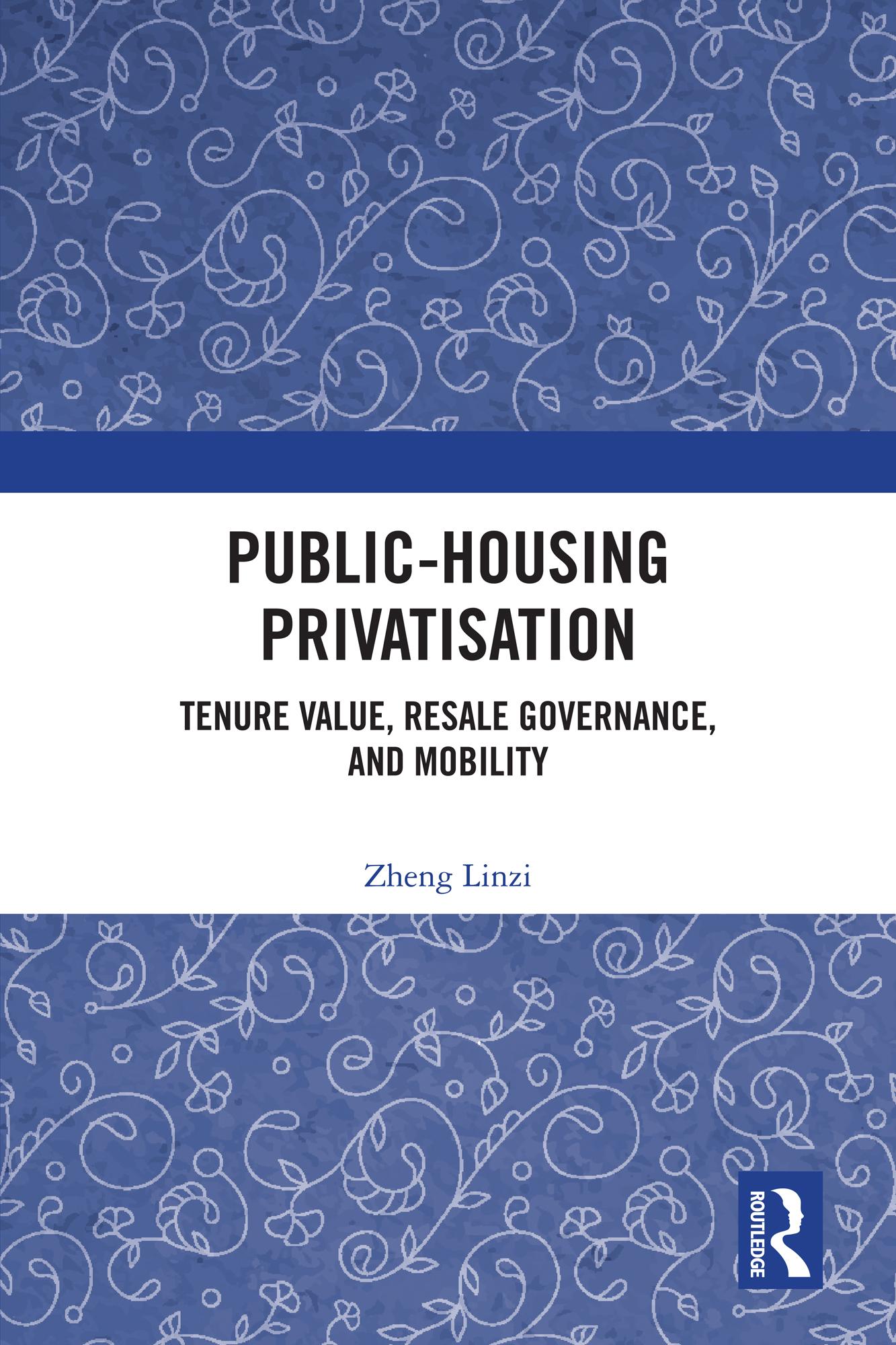
Focusing on Hong Kong’s Tenants Purchase Scheme, this book examines the implications of transforming public tenants into homeowners, particularly in terms of creating properties that are marketable, financeable, and conducive to upward mobility.
It argues that the hidden value embedded in public housing stems from security, predictable charges, and access to public services. However, the privatisation of housing does not always translate seamlessly into market dynamics—whether owners can sell their homes depends on factors such as resale regulations, valuation practices, mortgage accessibility, and eligibility criteria. Combining theory, institutional analysis, and original empirical evidence, the book explains why Hong Kong’s resale market for privatised public housing has remained thin and difficult to access. The argument is further enriched through comparative analysis with the United Kingdom’s Right to Buy programme and Singapore’s Housing and Development Board resale system. Spanning decades of housing reform, the book explores how governments can promote homeownership while preserving mobility and public value, offering a valuable resource for advancing housing policy.
This book will appeal to scholars and policymakers working in housing policy, public administration, and real estate economics.
Pay easily by card, Klarna, Apple Pay or Google Pay. Not happy? You always have a 14-day money-back guarantee. Read more in our terms. If you have any questions, email us at hello@memmo.org.
Memmo makes studying easier – wherever you are in the world. We bring your course books and smart study tools together in one place: summaries, quizzes, podcasts and flashcards. Plus Ted, your study buddy who answers anything you wonder. Over 75,000 students already study here – built to help you learn faster and stress less.