
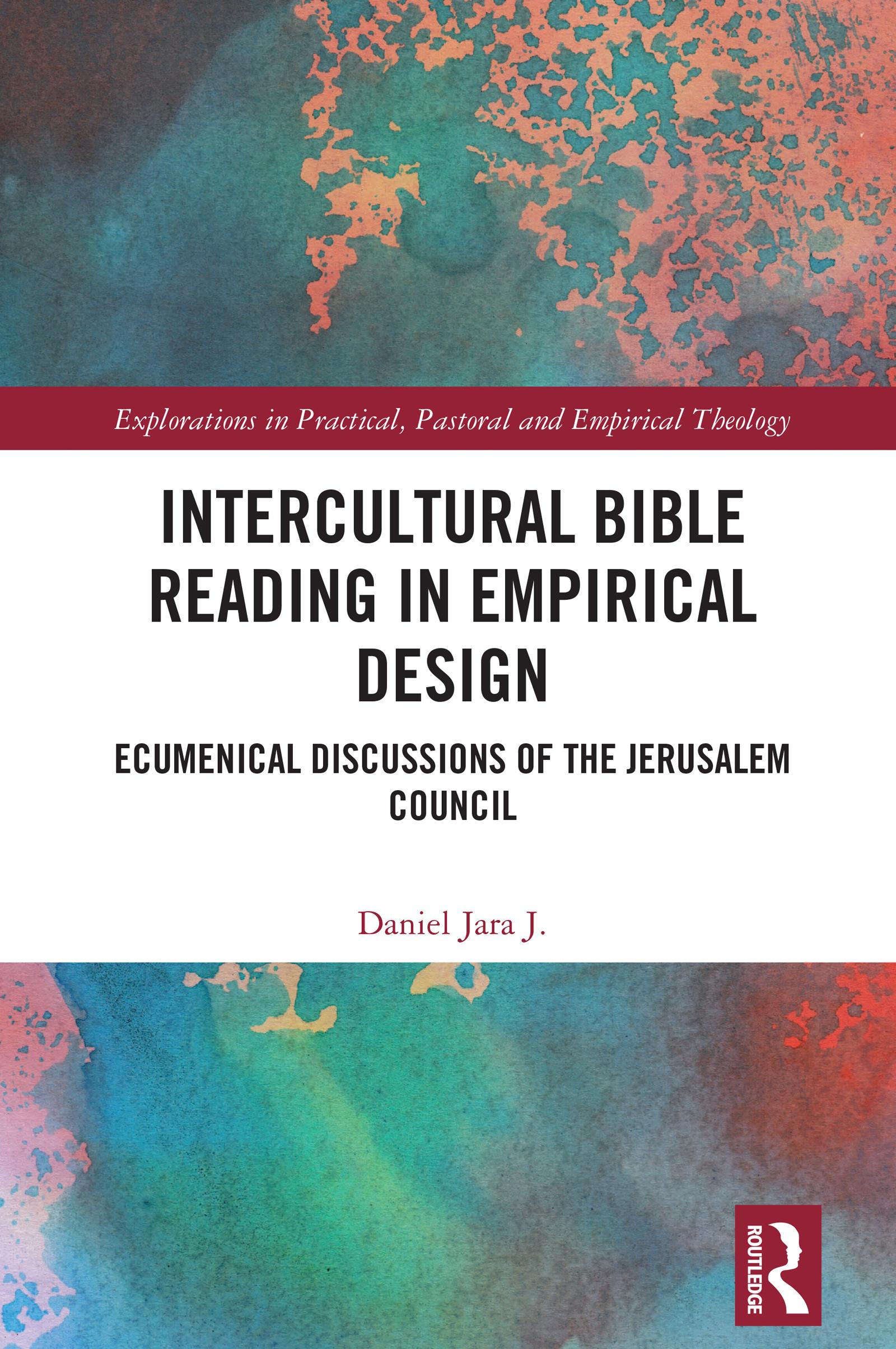
Intercultural Bible Reading in Empirical Design offers an innovative exploration of how global Christian communities engage with Scripture together across cultural, theological, and denominational boundaries.
Focusing on the text of the Jerusalem Council (Acts of the Apostles 15), the book analyses digital ecumenical encounters among youth from Student Christian Movements (SCMs) affiliated with the World Student Christian Federation (WSCF). Drawing on qualitative methods, grounded theory, and the use of MAXQDA software, the study identifies key factors that foster or hinder successful intercultural and ecumenical dialogue. The book builds on a transcultural framework that frames Christian faith as an open, networked system of multidirectional change. The author introduces a model of “receptive ecumenism” grounded in lived experience, affective trust, and ongoing interpretive negotiation among “grassroots” communities.
Situated at the intersection of empirical hermeneutics, intercultural communication, and ecumenical theology, this work offers both scholarly insight and a practical roadmap for churches, educators, and dialogue facilitators seeking renewed Christian unity amid the diversity of biblical interpretations.
Pay easily by card, Klarna, Apple Pay or Google Pay. Not happy? You always have a 14-day money-back guarantee. Read more in our terms. If you have any questions, email us at hello@memmo.org.
Memmo makes studying easier – wherever you are in the world. We bring your course books and smart study tools together in one place: summaries, quizzes, podcasts and flashcards. Plus Ted, your study buddy who answers anything you wonder. Over 50,000 students already study here – built to help you learn faster and stress less.