
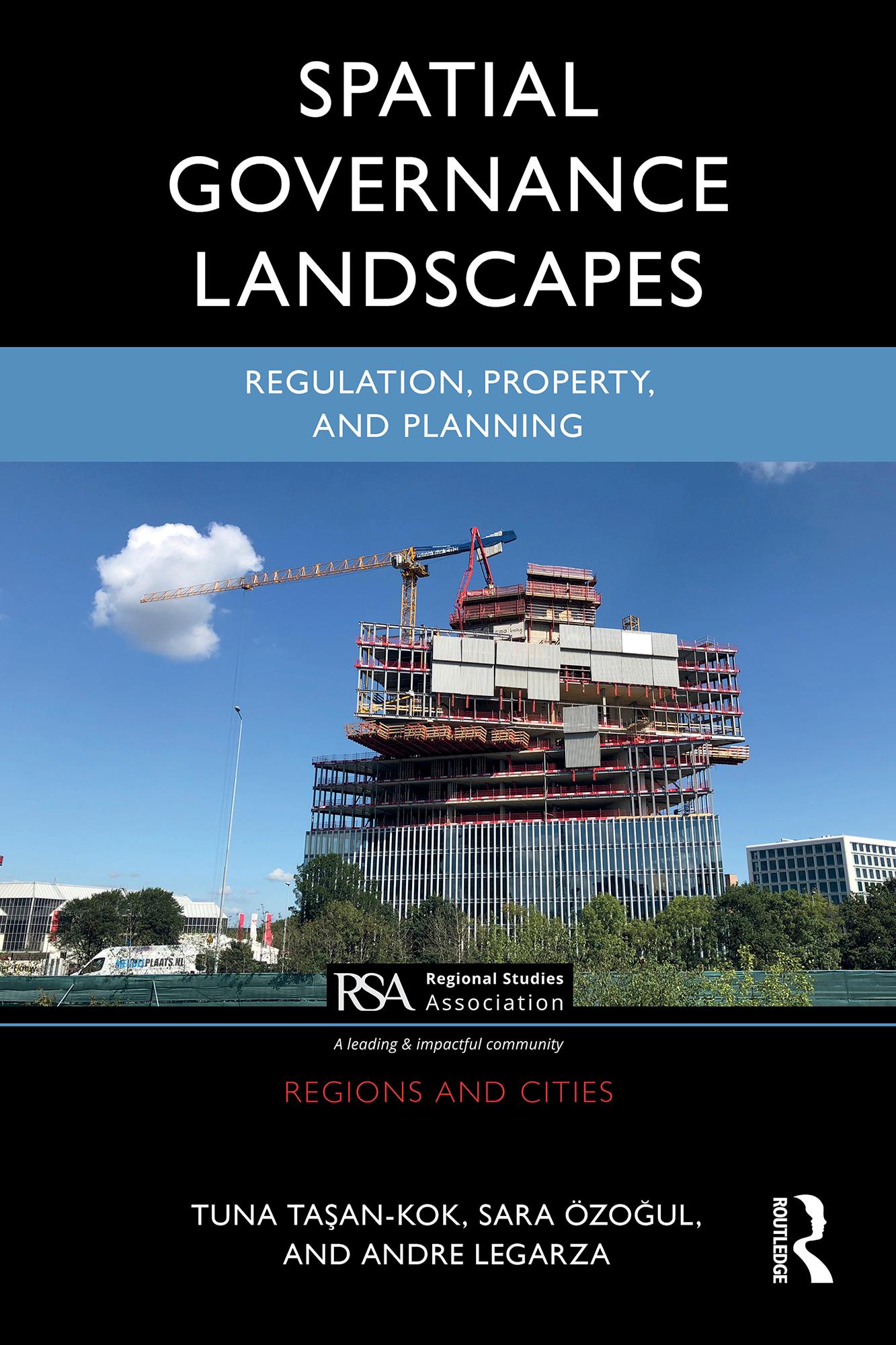
What shapes the city? This book answers this question with a fresh, relational lens: spatial governance landscapes, the dynamic interplay between planning regulation and property-market strategies. Centered on the Metropolitan Region of Amsterdam, the book traces how rules, norms, and public ambitions meet the logics of investors, developers, and intermediaries to co-produce urban form and everyday life. Bringing planning scholarship into direct conversation with real estate and urban governance studies, the authors map regulatory landscapes and investor landscapes side by side, showing how their frictions and alignments open and close pathways for housing, land use, and infrastructure.
Crucially, the book challenges a common hesitation in critical planning and urban studies to engage real estate for fear of 'capitulating' to market logics. Instead, it advances a relational approach that makes visible the fundamental interactions between public regulators and private investors, and demonstrates why understanding these relations is indispensable to explaining, and shaping, urban development dynamics. Amsterdam may be a small city, but it is a revealing laboratory: its distinctive planning traditions, acute housing pressures, and concentrated investment flows render broader patterns legible.
Built on extensive interviews, original databases on property transactions, and planning regulations, the book moves from conceptual framing to empirically rich chapters on Amsterdam’s regulatory infrastructures and evolving investment ecologies, concluding with a synthetic answer to the enduring question of state–market relations in urbanization. The result is a theory-driven, evidence-based account, and a new integrative model that synthesizes market and regulatory findings, offering a transferable framework and research agenda for analyzing and governing where regulation and property meet.
Pay easily by card, Klarna, Apple Pay or Google Pay. Not happy? You always have a 14-day money-back guarantee. Read more in our terms. If you have any questions, email us at hello@memmo.org.
Memmo makes studying easier – wherever you are in the world. We bring your course books and smart study tools together in one place: summaries, quizzes, podcasts and flashcards. Plus Ted, your study buddy who answers anything you wonder. Over 75,000 students already study here – built to help you learn faster and stress less.