
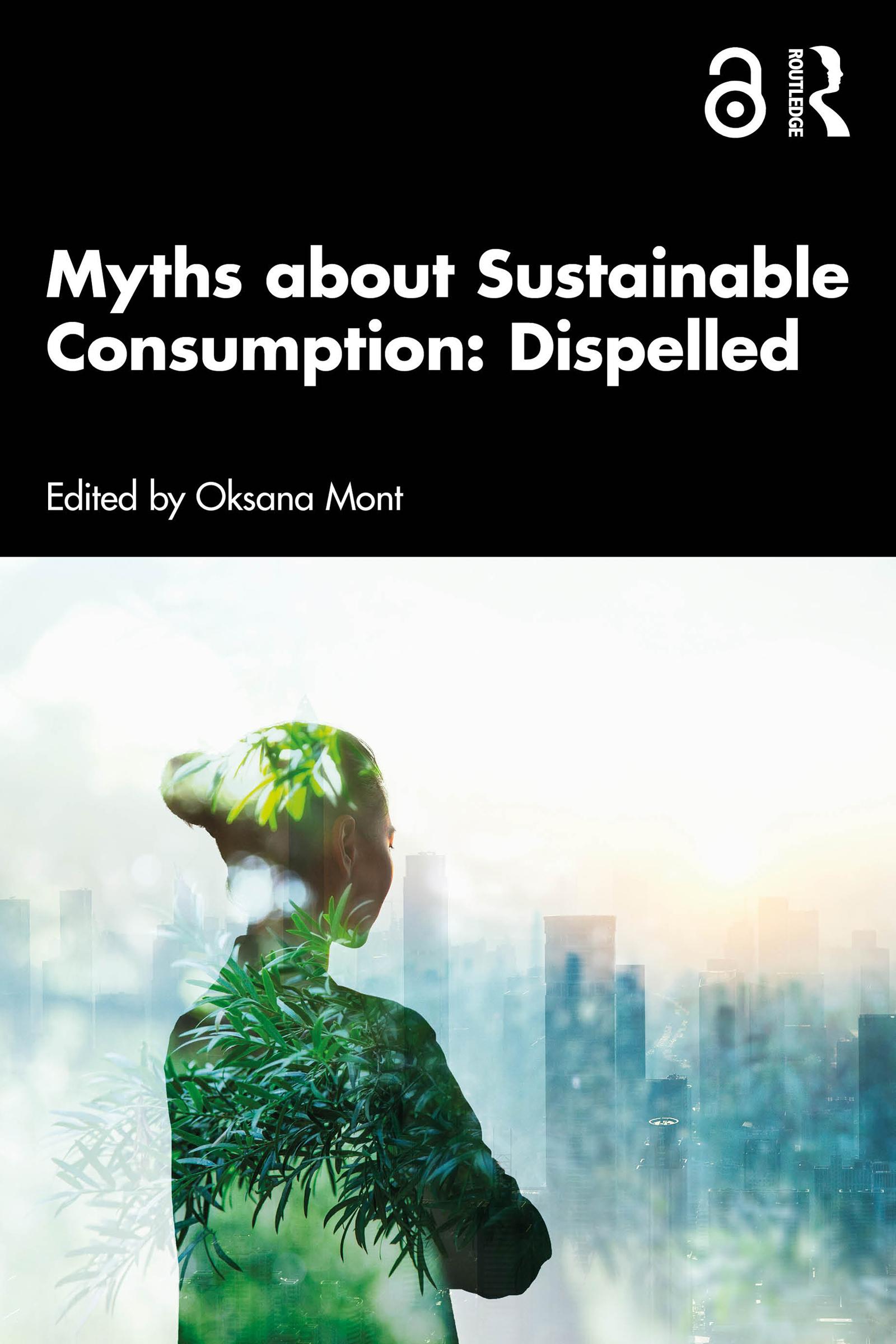
Why, despite decades of warnings and solutions, does unsustainable consumption still persist? What keeps societies locked into business as usual even when the consequences are clear? This book contends that part of the answer lies in the myths we adhere to – powerful narratives that normalise the status quo, limit imagination and delay the transition to sustainability.
Gathering leading scholars from various disciplines, this book examines 12 of the most widespread myths about sustainable consumption – from the belief that information provision, small individual actions or technological fixes will deliver sustainability to the faith in economic growth as the goal of societal development and the idea that consumer demand drives sustainability. Each chapter explores the origin of a specific myth, details its environmental and social impacts and presents evidence-based counterarguments. Chapters also move beyond critique by offering practical strategies, policy and business implications and inspiring real-world examples, illustrating how alternative pathways can be implemented in practice. Collectively, the chapters reveal how myths endure through cultural resonance, institutional embedding, daily practices and political interests, while also providing a clear and applicable framework for diagnosing myths, debating them and designing alternatives. The book underscores recurring barriers to change but highlights leverage points and opportunities for transformation.
This volume will benefit researchers, students, policymakers, business leaders and engaged citizens seeking to understand why simplistic solutions fall short and how sufficiency, justice and systemic change can foster more sustainable ways of living within planetary boundaries. It ultimately empowers readers to rethink taken-for-granted assumptions and help accelerate sustainability transformations.
The Open Access version of this book, available at http://www.taylorfrancis.com, has been made available under a Creative Commons Attribution-Non Commercial-No Derivatives (CC BY-NC-ND) 4.0 license.
Pay easily by card, Klarna, Apple Pay or Google Pay. Not happy? You always have a 14-day money-back guarantee. Read more in our terms. If you have any questions, email us at hello@memmo.org.
Memmo makes studying easier – wherever you are in the world. We bring your course books and smart study tools together in one place: summaries, quizzes, podcasts and flashcards. Plus Ted, your study buddy who answers anything you wonder. Over 50,000 students already study here – built to help you learn faster and stress less.