
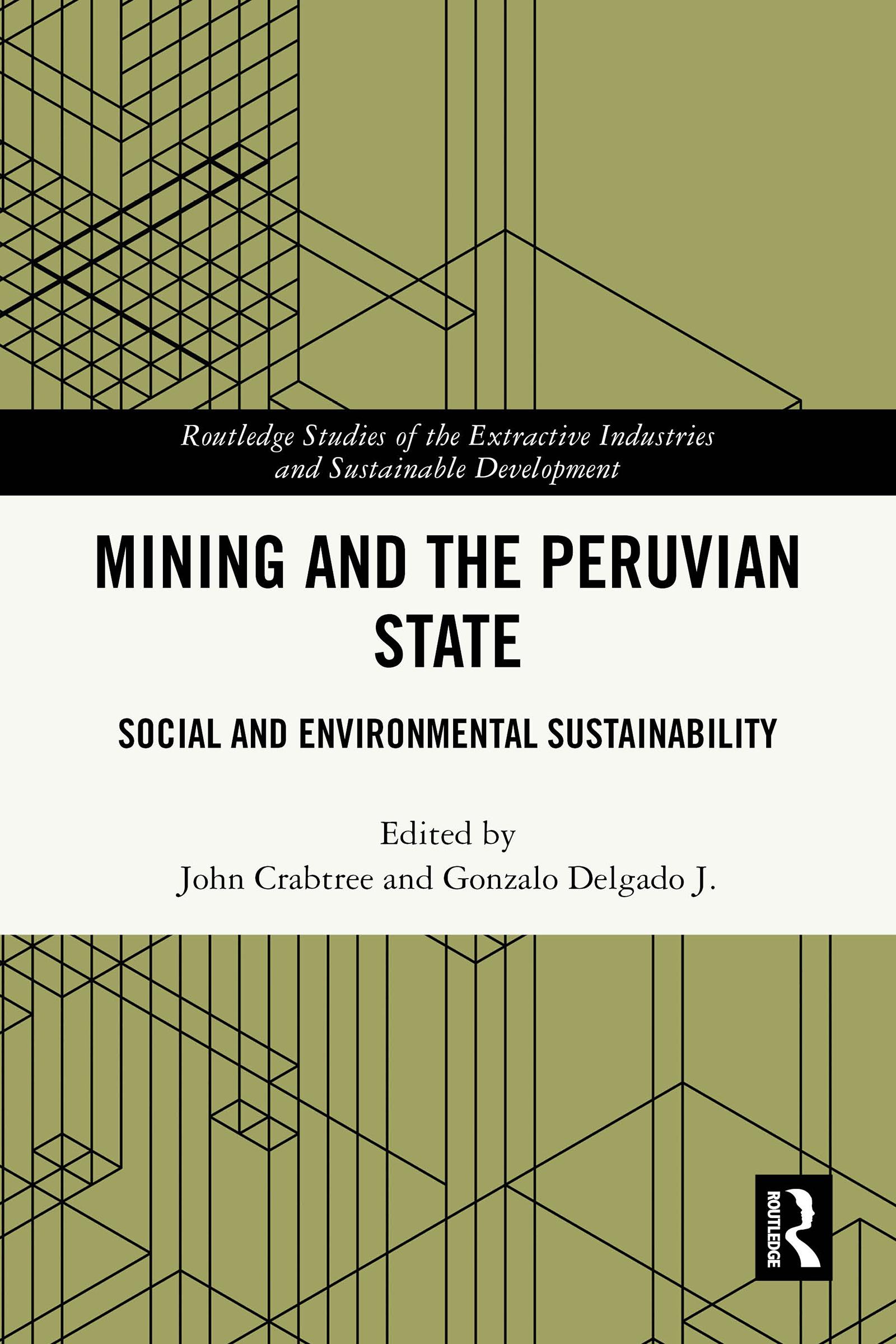
This book examines the social, environmental, and political sustainability of Peru’s mining industry as it seeks to garner the benefits of the energy transition between now and 2050.
As the global shift toward net-zero emissions accelerates, Peru is uniquely positioned to play a vital role in the energy transition, thanks to its abundant reserves of critical minerals. This growing global demand presents an unprecedented opportunity for the country to harness its natural wealth to support sustainable development. Yet, the experiences of the past 25 years have shown that maximizing these benefits requires more than resource abundance alone. Social and environmental challenges have too often accompanied mining expansion, leading to significant conflicts around new projects. This book moves the conversation forward by offering a deeper understanding of the structural challenges posed by modern industrial mining and identifying the public policies needed to address them. It goes beyond the traditional ‘resource curse’ narrative to explore how mining can serve as a driver of inclusive growth – provided it is responsibly managed, transparently governed, and aligned with the needs of affected communities. A key message is that the future of mining in Peru depends on building a stronger, more democratic, and participatory state: one capable of representing all sectors of society, not just corporate interests. By learning from past missteps and committing to institutional reforms that promote dialogue, accountability, and equitable development, Peru can chart a new path. The goal is not simply to avoid conflict, but to contribute to a governance model and the building of institutional mechanisms capable of meeting and resolving variant interests in society, and that enable mining to contribute meaningfully to national well-being and long-term sustainability. While Peru provides key examples of the problems arising from mining development, it typifies problems encountered elsewhere not just in Latin America but further afield. It will therefore be of interest to a far wider readership concerned with the extractive industries.
This book will be of great interest to students and scholars of mining and the extractive industries, Latin American development, and natural resource management more widely, as well as those involved in government and NGOs.
Pay easily by card, Klarna, Apple Pay or Google Pay. Not happy? You always have a 14-day money-back guarantee. Read more in our terms. If you have any questions, email us at hello@memmo.org.
Memmo makes studying easier – wherever you are in the world. We bring your course books and smart study tools together in one place: summaries, quizzes, podcasts and flashcards. Plus Ted, your study buddy who answers anything you wonder. Over 50,000 students already study here – built to help you learn faster and stress less.