
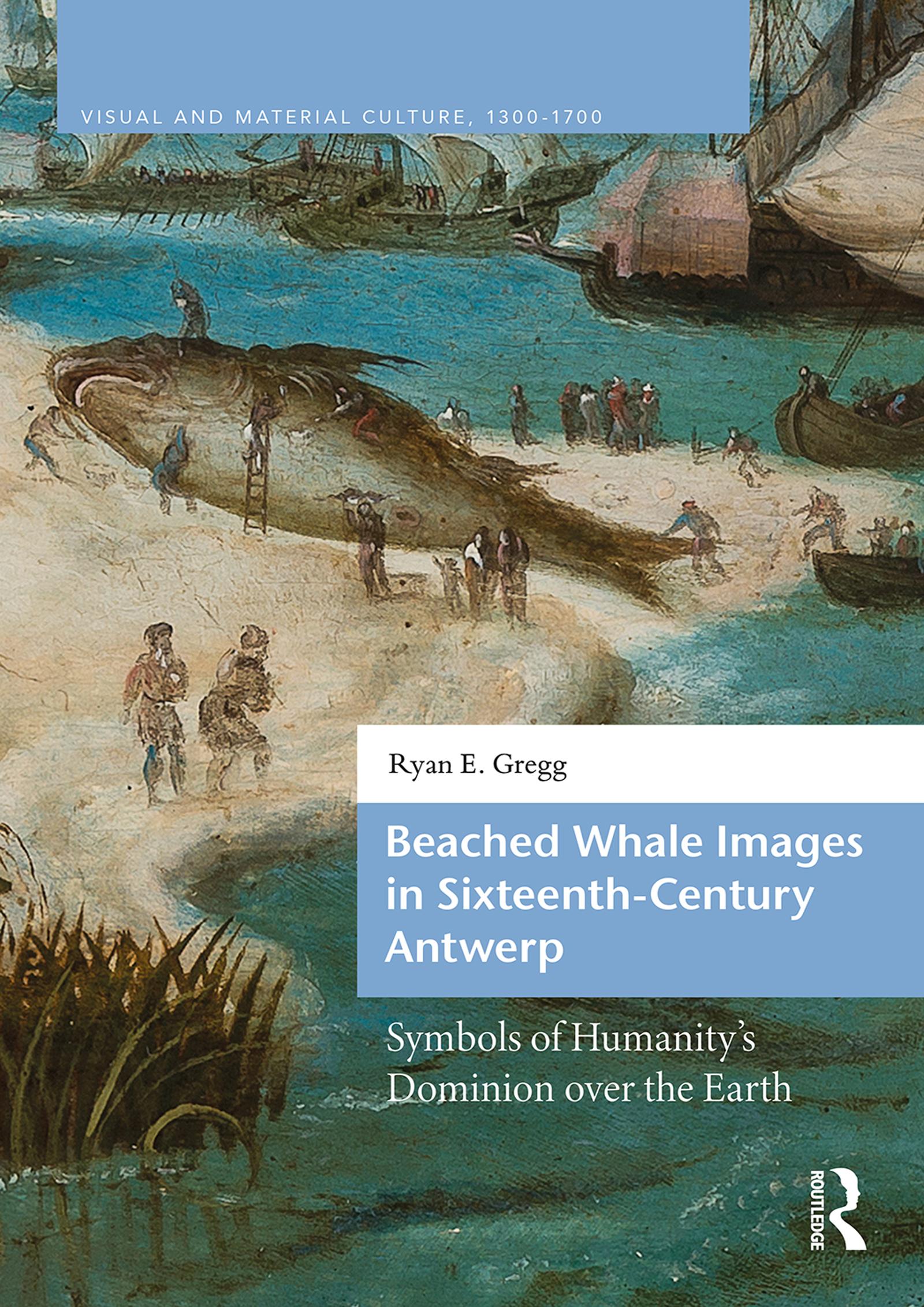
This book examines a small group of sixteenth-century Antwerp artworks depicting the butchering of beached whales, revealing how these images represent a pivotal moment in European attitudes toward nature. It argues that these "cetaceous units"—iconographic compounds showing humans dominating marine mammals—served as powerful symbols of humanity's relationship with the ocean and the natural world more broadly, marking a transition from medieval moralizing approaches to early modern empirical investigation.
The study provides a detailed iconographical analysis of works by artists such as Herri met de Bles, Master J. Kock, Anton van den Wyngaerde, and Hendrick Goltzius. It traces the evolution of whale imagery from ancient Roman sources through medieval bestiaries to Renaissance naturalist texts, examining how flensing scenes reflected contemporary whaling practices while symbolizing Christian themes and political authority. The study incorporates ecocritical methodology to demonstrate how these images justified European exploitation of natural resources and established visual precedents for later scientific illustration.
This book will appeal to art historians specializing in early modern art, environmental historians, and scholars of ecocriticism. It offers valuable insights for researchers interested in human–animal relationships, maritime history, and the intersection of art with scientific inquiry during the Renaissance period.
Pay easily by card, Klarna, Apple Pay or Google Pay. Not happy? You always have a 14-day money-back guarantee. Read more in our terms. If you have any questions, email us at hello@memmo.org.
Memmo makes studying easier – wherever you are in the world. We bring your course books and smart study tools together in one place: summaries, quizzes, podcasts and flashcards. Plus Ted, your study buddy who answers anything you wonder. Over 50,000 students already study here – built to help you learn faster and stress less.