
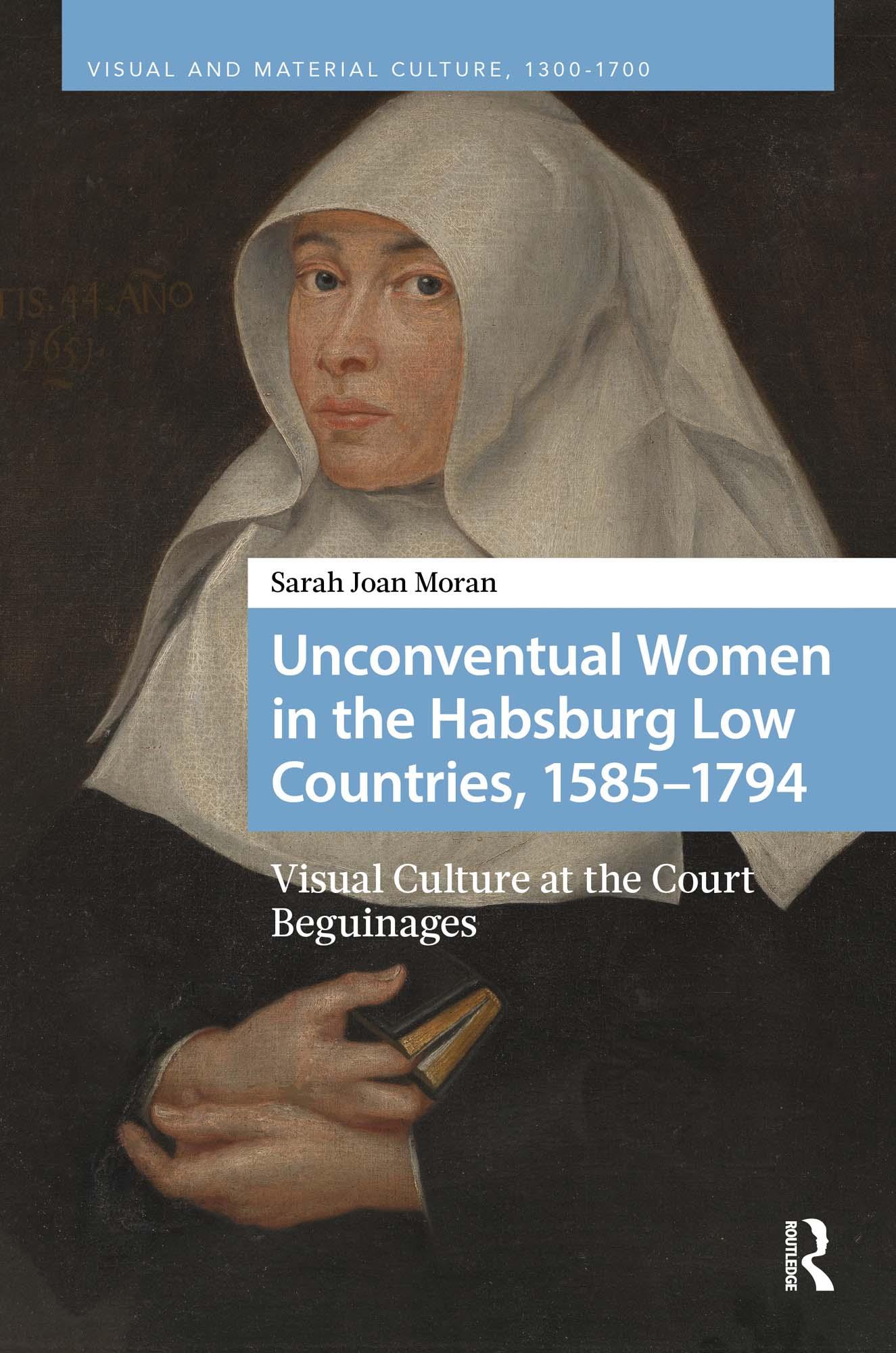
This book examines the Court Beguinages, a fascinating group of semi-monastic female communities that were endemic to cities of the Southern Low Countries from the thirteenth century into the twentieth.
Their members, called Beguines, played fundamental social and religious roles in their communities, and they also became major patrons of art and architecture, building vast complexes and filling them with paintings, sculptures, prints, textiles, and all sorts of other decorative objects. As the first comprehensive and primary source-driven account of Court Beguinage visual culture, this study explores the historical importance of these institutions and reveals how the Beguines used buildings and images to support devotional practice, shape public perception, raise funds, and negotiate power relationships during the Counter-Reformation.
Unconventual Women in the Habsburg Low Countries is intended for scholars and students of early modern history, art and architectural history, cultural history, religious history, and women’s and gender studies.
Pay easily by card, Klarna, Apple Pay or Google Pay. Not happy? You always have a 14-day money-back guarantee. Read more in our terms. If you have any questions, email us at hello@memmo.org.
Memmo makes studying easier – wherever you are in the world. We bring your course books and smart study tools together in one place: summaries, quizzes, podcasts and flashcards. Plus Ted, your study buddy who answers anything you wonder. Over 50,000 students already study here – built to help you learn faster and stress less.