
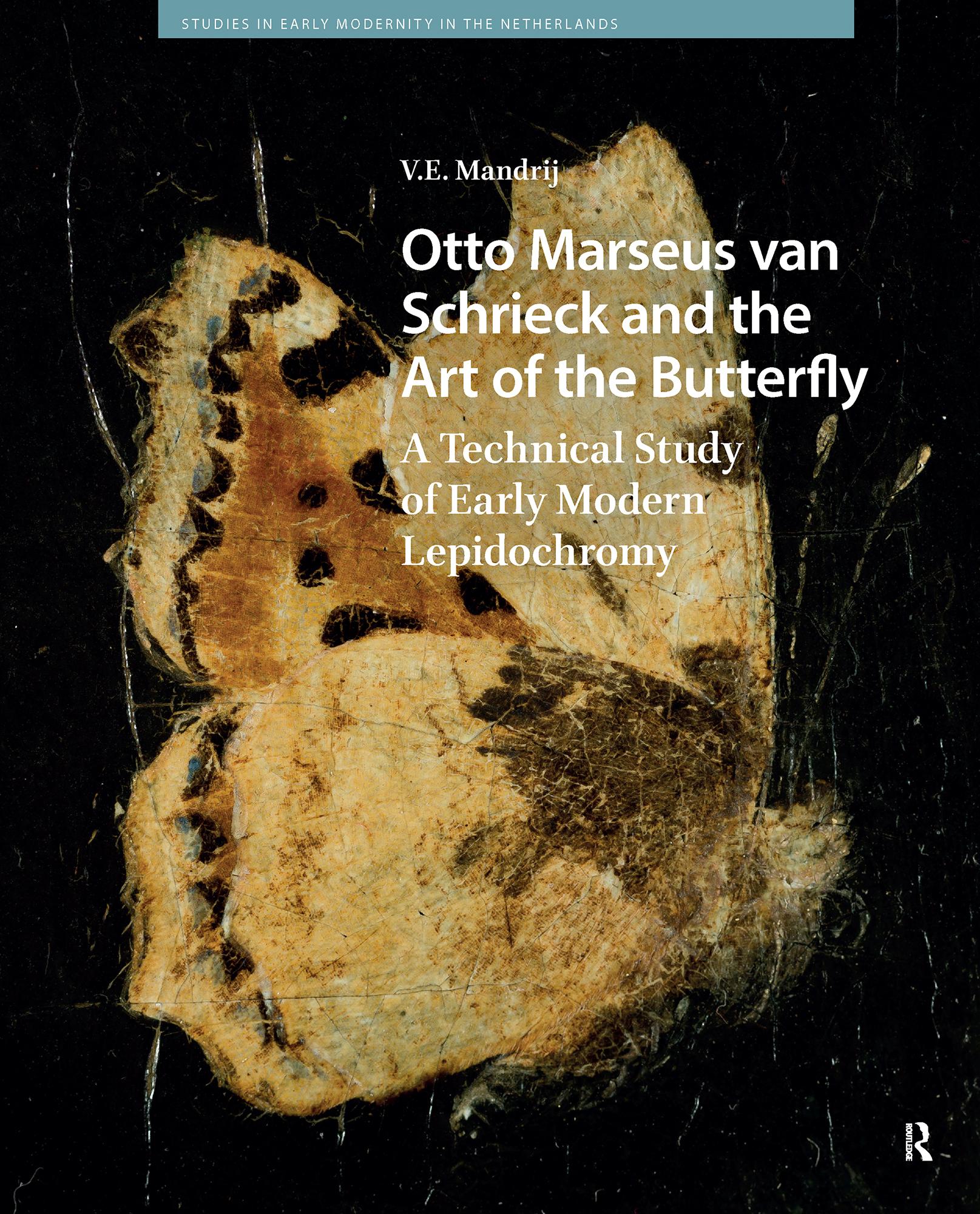
The Dutch painter and naturalist Otto Marseus van Schrieck (c. 1619/20–1678) became famous for an unusual iconography that mixed characteristics of landscape, animal painting, natural history illustration, and still life: the sottobosco paintings. These artworks, which he developed during his voyage to Italy around 1650, represent reptiles, amphibians, and insects in dark forests. To increase the realistic representations of butterflies and moths, he pressed the wings of dead specimens onto the paintings to transfer their original colours. The technique of printing butterfly wings, named lepidochromy in this book, was already being used in the sixteenth century and has been documented as a means of conserving and classifying lepidopterans from the eighteenth through twentieth century.
With a strong focus on the techniques and materials involved in making butterfly imprints, this book introduces readers for the first time to the development, uses, and meanings of lepidochromy in the oeuvre of Otto Marseus van Schrieck at the crossroads of art and natural history.
Pay easily by card, Klarna, Apple Pay or Google Pay. Not happy? You always have a 14-day money-back guarantee. Read more in our terms. If you have any questions, email us at hello@memmo.org.
Memmo makes studying easier – wherever you are in the world. We bring your course books and smart study tools together in one place: summaries, quizzes, podcasts and flashcards. Plus Ted, your study buddy who answers anything you wonder. Over 50,000 students already study here – built to help you learn faster and stress less.