
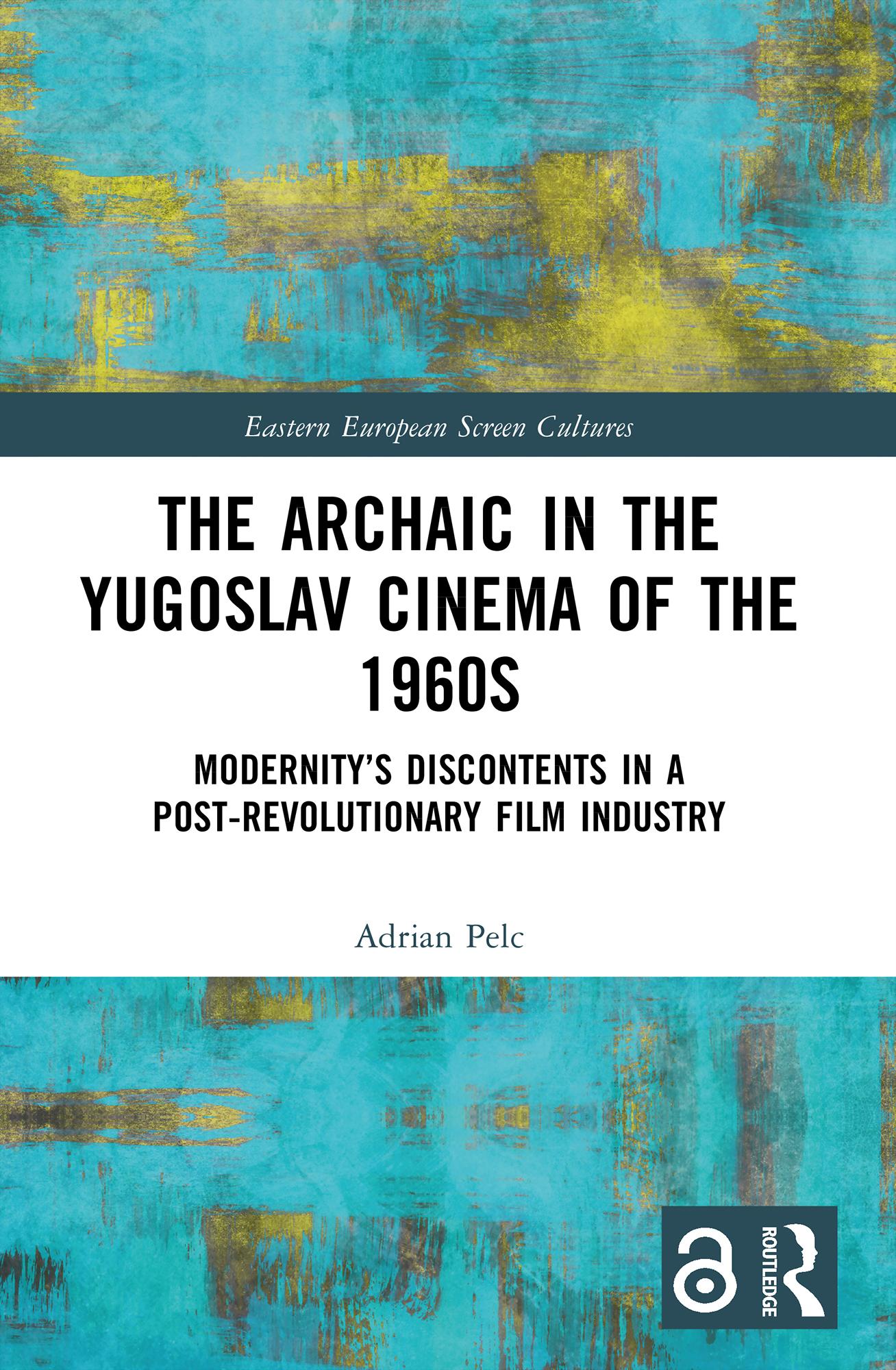
This book investigates the “Golden Age” of Yugoslav cinema and sheds light on it from a fresh perspective. By examining various tropes and discourses of the “archaic” that shaped not only the flourishing Yugoslav cinematic modernism of the 1960s but also a broader Yugoslav cultural politics, the book reveals a nuanced panorama of cultural negotiations.
The “archaic” – that which is at odds with modernity – is a peculiar crossroads where Marxism intersects with Balkanism, while both are circumscribed by a general distrust towards representation. The analysis thus opens new perspectives on a politics of aesthetics that shaped some of the most successful Yugoslav films of all time. Furthermore, its findings will be relevant to any context in which a political as well as artistic movement seeks to present itself as avant-garde but is confronted with a discourse assigning it time-lag.
Addressing an academic audience of scholars and postgraduate students interested in Balkan and East European area studies, Slavic studies, cultural studies, film, and postcolonial studies, this book is also of interest to those researching the intersections of time, aesthetics, and politics.
Pay easily by card, Klarna, Apple Pay or Google Pay. Not happy? You always have a 14-day money-back guarantee. Read more in our terms. If you have any questions, email us at hello@memmo.org.
Memmo makes studying easier – wherever you are in the world. We bring your course books and smart study tools together in one place: summaries, quizzes, podcasts and flashcards. Plus Ted, your study buddy who answers anything you wonder. Over 50,000 students already study here – built to help you learn faster and stress less.