
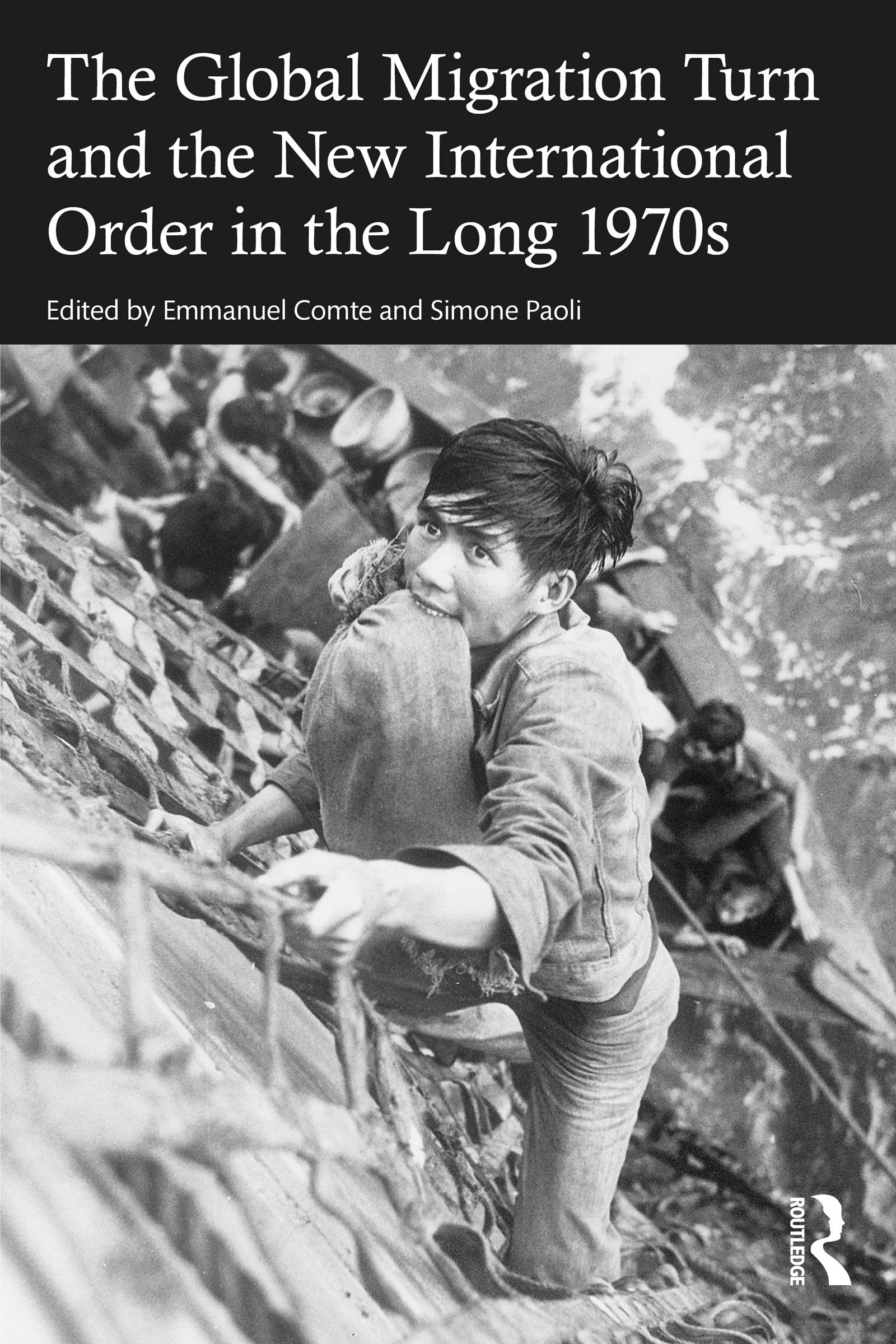
This book reveals how policies, public sentiments, and international negotiations converged to reshape migration governance in the 1970s, a pivotal decade which serves as a crucial starting point for grappling with one of the twenty-first century’s defining issues.
Expansive government interventions, growing public resistance, and the first serious efforts at global migration governance left an enduring legacy. Tracing the shift from relative North–South openness to new restrictions and from East–West closure to cautious openness, the book explores how migration governance transformed in response to economic pressures, decolonisation, and Cold War geopolitics. Covering case studies from Europe, North America, Africa, Asia, and Australia, contributors analyse the emergence of migration as a political flashpoint – from legislative change and international diplomacy to grassroots activism. The book innovates by connecting diverse world regions and actors – state and non-state alike – and by reassessing the role of international organisations such as the ILO, UNHCR, and ICEM.
Essential reading for academics and general readers alike, The Global Migration Turn offers a ground-breaking interpretation of the 1970s as a turning point in global migration governance. It equips readers with critical historical insight into contemporary challenges surrounding migration and international cooperation.
Pay easily by card, Klarna, Apple Pay or Google Pay. Not happy? You always have a 14-day money-back guarantee. Read more in our terms. If you have any questions, email us at hello@memmo.org.
Memmo makes studying easier – wherever you are in the world. We bring your course books and smart study tools together in one place: summaries, quizzes, podcasts and flashcards. Plus Ted, your study buddy who answers anything you wonder. Over 50,000 students already study here – built to help you learn faster and stress less.