
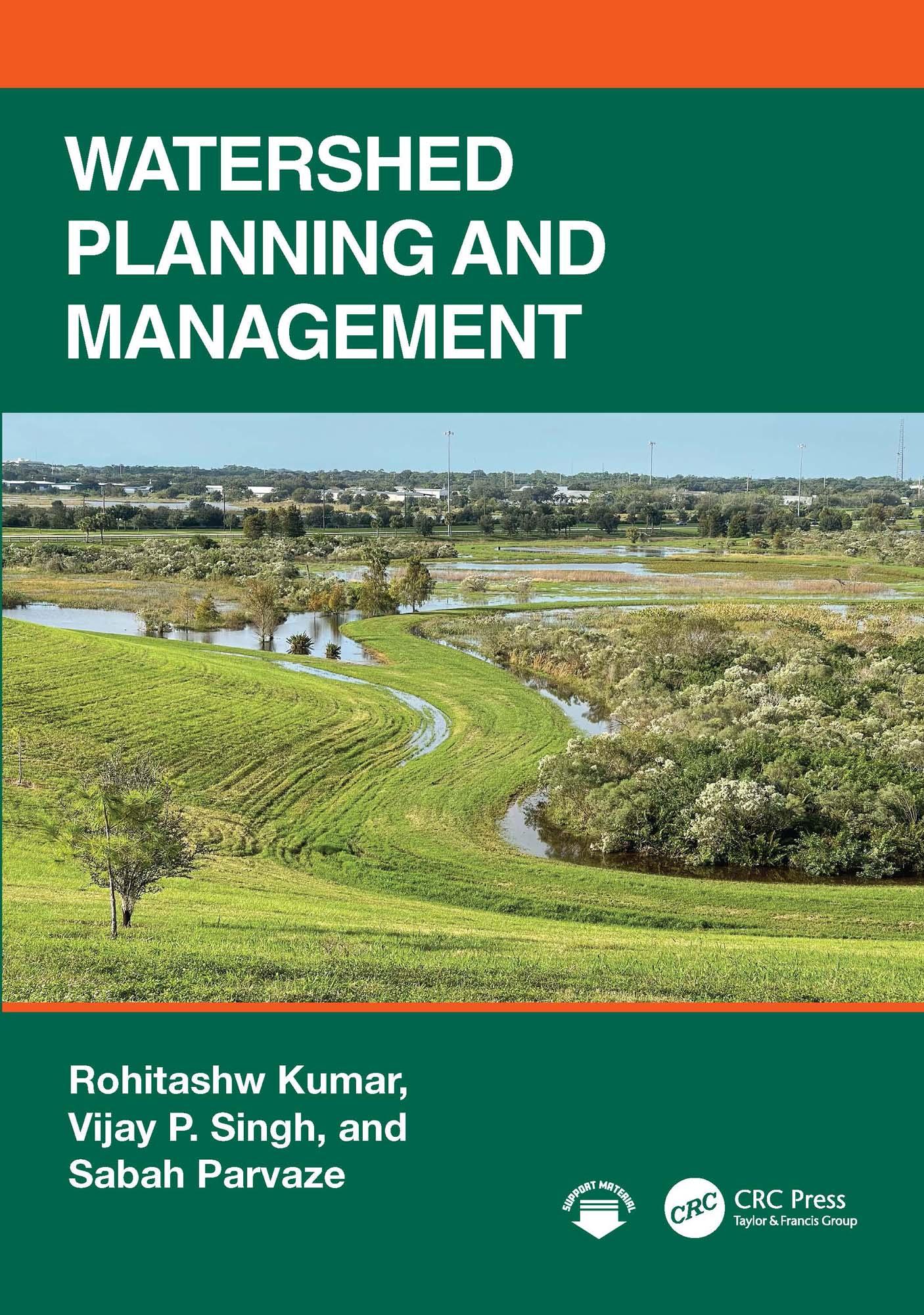
Watershed Planning and Management examines the science, technology, and practice of managing land and water resources through the watershed approach. It integrates hydrology, geomorphology, soil and water conservation, land use planning, socio-economic considerations, and modern tools such as remote sensing and geographic information system (GIS). This book presents an overview of global water resources and their diverse uses, followed by fundamental concepts of watersheds, hydrological cycles, and delineation methods. With a balance of theory, methodology, and practice, this book serves as a valuable resource for students, researchers, practitioners, and policymakers. It not only strengthens conceptual understanding but also provides practical insights into implementing watershed projects in diverse regions.
Key Features:
- Explains watershed concepts from basic hydrology to advanced applications in planning, management, and policy concepts designed for optimizing crop yields and reaping economic and environmental benefits.
- Focuses on sustainable development and aligns watershed management with environmental conservation, climate resilience, and sustainable agriculture.
- Explains methods of watershed prioritization, erosion modeling, hydrological budget analysis, and water yield assessment.
- Includes practical real-world examples to present insights of watershed planning and management for climate change mitigation.
Pay easily by card, Klarna, Apple Pay or Google Pay. Not happy? You always have a 14-day money-back guarantee. Read more in our terms. If you have any questions, email us at hello@memmo.org.
Memmo makes studying easier – wherever you are in the world. We bring your course books and smart study tools together in one place: summaries, quizzes, podcasts and flashcards. Plus Ted, your study buddy who answers anything you wonder. Over 50,000 students already study here – built to help you learn faster and stress less.