
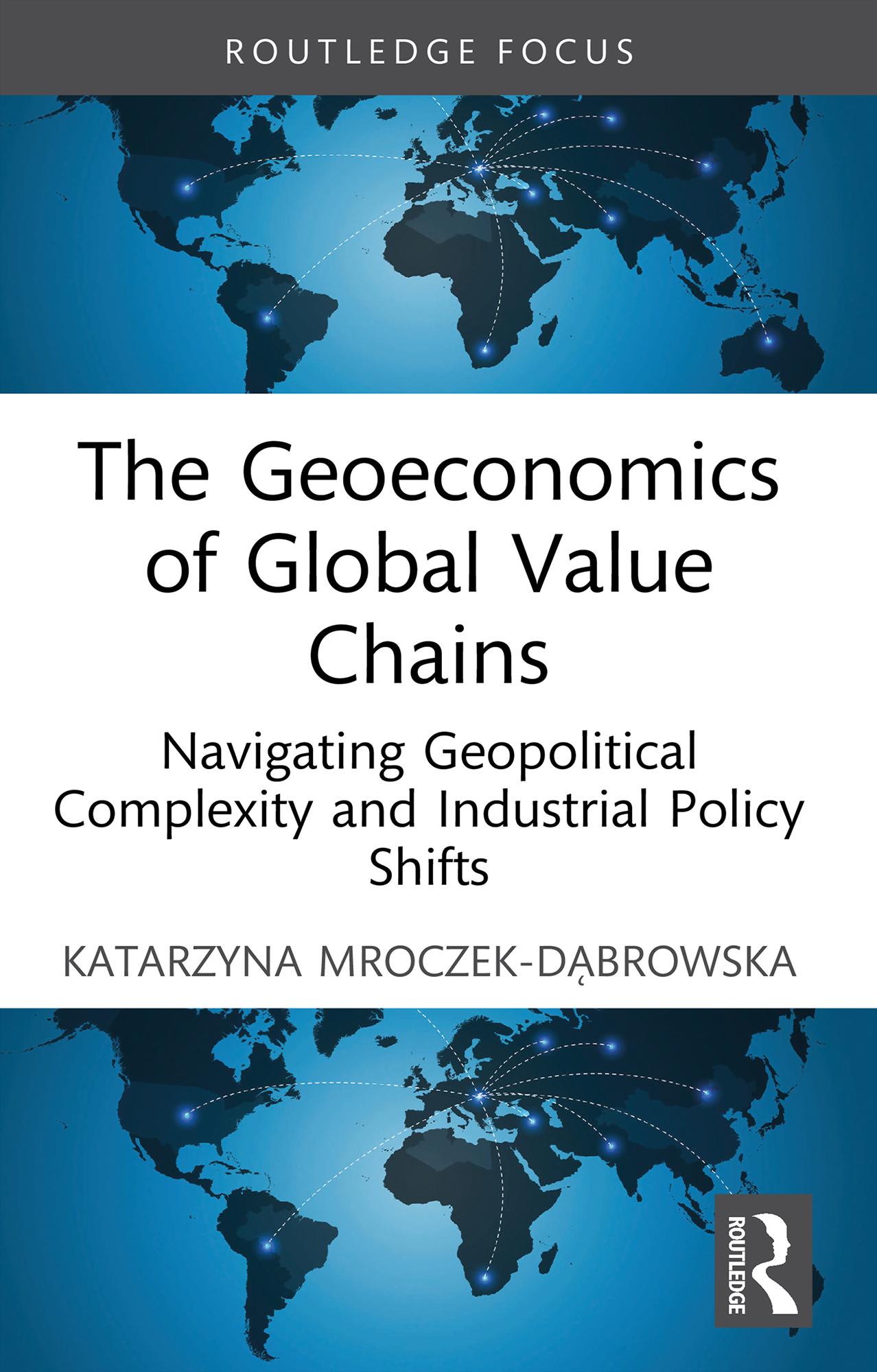
The post-Cold War era was widely associated with the Washington Consensus, which promoted economic efficiency, specialization, and trade liberalization as pathways to growth and social welfare. Globalization facilitated the rise of geographically dispersed production networks, known as global value chains (GVCs). For decades, firms benefited from offshoring by exploiting labour cost differentials, accessing cheaper resources, and entering new markets. However, since 2010, political and societal shifts have driven a collective reconfiguration of GVCs. Today, manufacturing systems are being reshaped by three major forces: digital transformation, climate change, and geopolitical tensions.
This volume focuses on the latter – geopolitical disruptions – and examines their impact on corporate strategies related to trade and foreign direct investment. Firms increasingly respond by relocating operations, either through reshoring to the home country or through nearshoring to adjacent regions. The study investigates the drivers behind these decisions, comparing current reshoring patterns with previous disruptions, such as those during the COVID-19 pandemic. It also evaluates the role of policy frameworks in enabling relocation and considers how these may evolve. While the analysis centres on the European Union, it offers a global perspective on geopolitical risks. The book serves as a key resource for academics, practitioners, and policymakers seeking to understand international business and investment decisions.
Pay easily by card, Klarna, Apple Pay or Google Pay. Not happy? You always have a 14-day money-back guarantee. Read more in our terms. If you have any questions, email us at hello@memmo.org.
Memmo makes studying easier – wherever you are in the world. We bring your course books and smart study tools together in one place: summaries, quizzes, podcasts and flashcards. Plus Ted, your study buddy who answers anything you wonder. Over 50,000 students already study here – built to help you learn faster and stress less.