
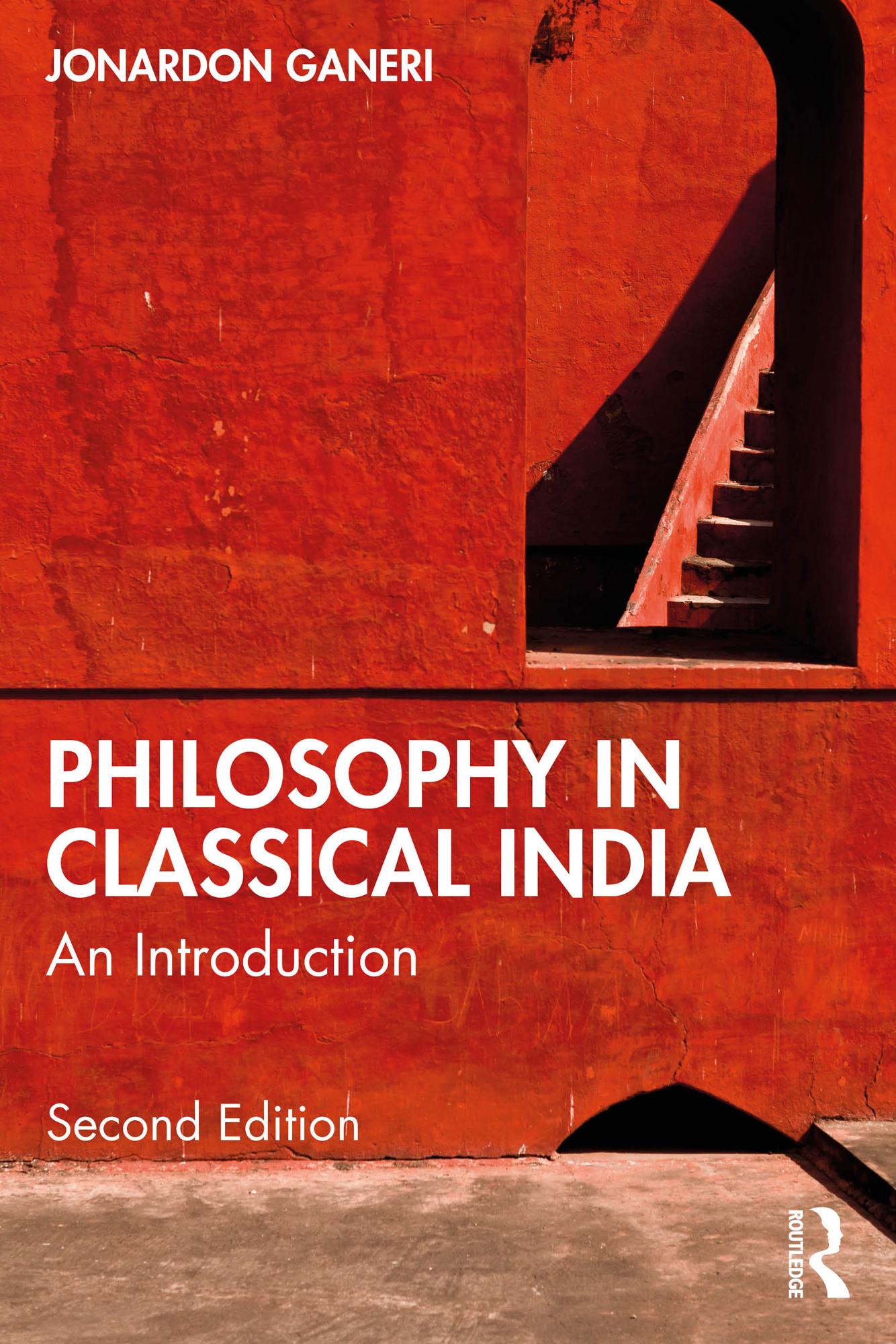
What are the goals of the major Indian philosophers and what are the methods of rational inquiry used in their pursuit? Philosophy in Classical India is a much-needed introduction to the philosophical texts, traditions and arguments of Indian philosophy. Philosophical rather than mystical or religious in approach and assuming no prior knowledge of key texts, Jonardon Ganeri examines the following topics:
- the motive and method of rational inquiry: the early Nyāya
- rationality, emptiness and the objective view: the philosophy of Nāgārjuna’s Madhyamaka Buddhism
- the rational basis of metaphysics: Vaiśeṣika metaphysics
- reduction, exclusion and rational reconstruction: the philosophy of Diṅnāga’s Yogācāra Buddhism
- rationality, harmony and perspective: Jaina epistemology and metaphysics
- reason in equilibrium: Gaṅgeśa’s new Nyāya
- balance and repost: public reason in Theravāda Buddhism
- practical reasoning in Mīmāṃsā and the Dharmaśāstra
This second edition has been substantially updated, with the addition of new chapters on Theravāda and Mīmāṃsā.
All chapters and further reading have been updated to reflect changes in scholarship and the publication of new editions and translations of primary texts, making Philosophy in Classical India an ideal introduction to Indian philosophy from the perspective of analytical philosophy.
Pay easily by card, Klarna, Apple Pay or Google Pay. Not happy? You always have a 14-day money-back guarantee. Read more in our terms. If you have any questions, email us at hello@memmo.org.
Memmo makes studying easier – wherever you are in the world. We bring your course books and smart study tools together in one place: summaries, quizzes, podcasts and flashcards. Plus Ted, your study buddy who answers anything you wonder. Over 50,000 students already study here – built to help you learn faster and stress less.