
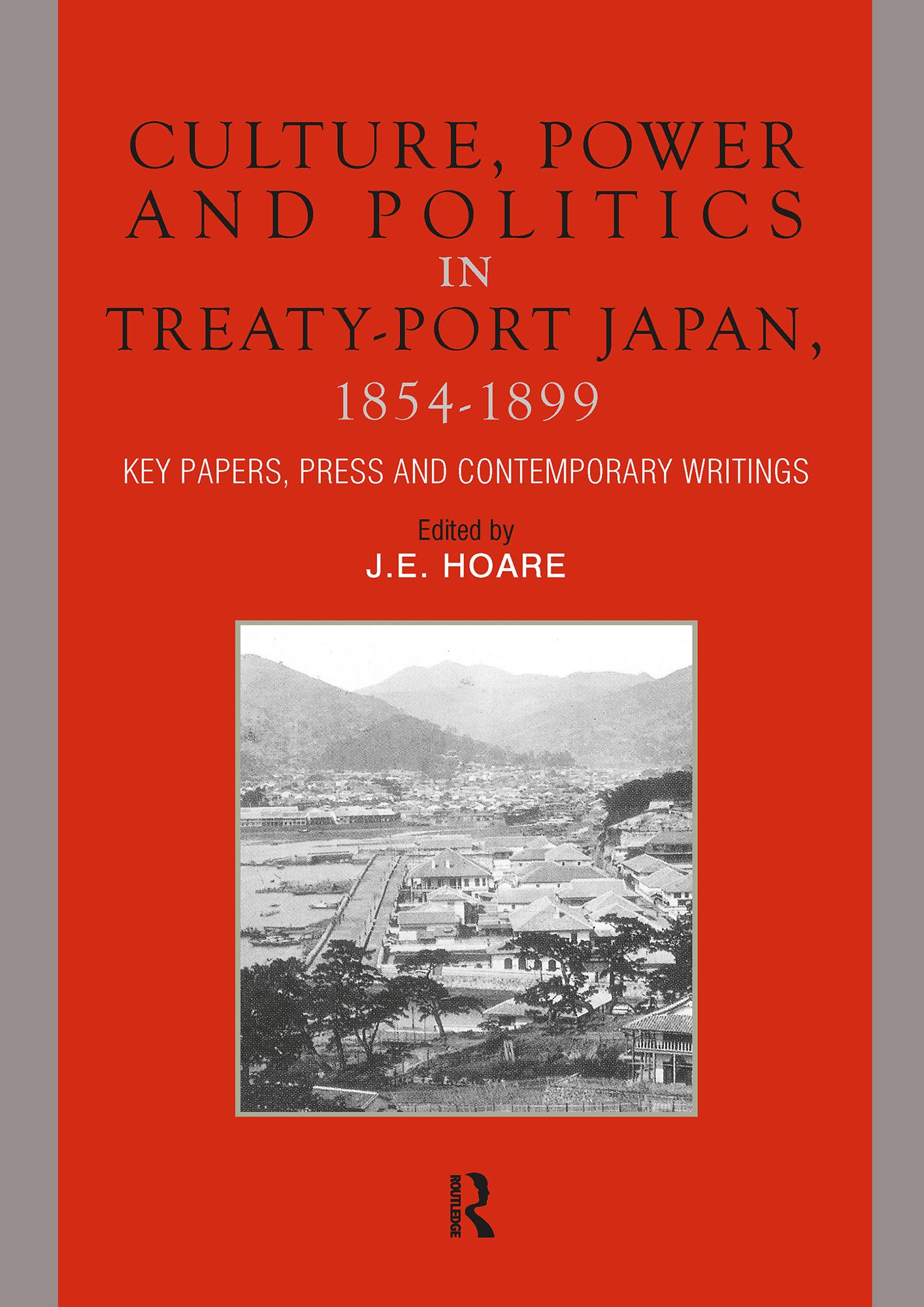
This two–volume collection, supported by an in-depth introduction that addresses origins, actuality, endgame and afterlife, brings together for the first time contemporary documentation and more recent scholarship to give a broad picture of Japan’s Treaty Ports and their inhabitants at work and play in the second half of the nineteenth century. The material selected, shows how the ports’ existence and the Japanese struggle to end their special status, impacted on many aspects of modern Japan beyond their primary role as trading stations. Compared with their counterparts in China, the Japanese treaty ports cast a small shadow. They were far fewer – only four really mattered – and lasted for just under fifty years, while the Chinese ports made their centenary. Yet the Japanese ports were important. The thriving modern cities of Yokohama and Kobe had their origins as treaty ports. Nagasaki, a major centre of foreign trade since at least the sixteenth century, may not have owed so much to its treaty-port status, but it was a factor in its modern development.
Pay easily by card, Klarna, Apple Pay or Google Pay. Not happy? You always have a 14-day money-back guarantee. Read more in our terms. If you have any questions, email us at hello@memmo.org.
Memmo makes studying easier – wherever you are in the world. We bring your course books and smart study tools together in one place: summaries, quizzes, podcasts and flashcards. Plus Ted, your study buddy who answers anything you wonder. Over 50,000 students already study here – built to help you learn faster and stress less.
You might also like
Buy the book0