
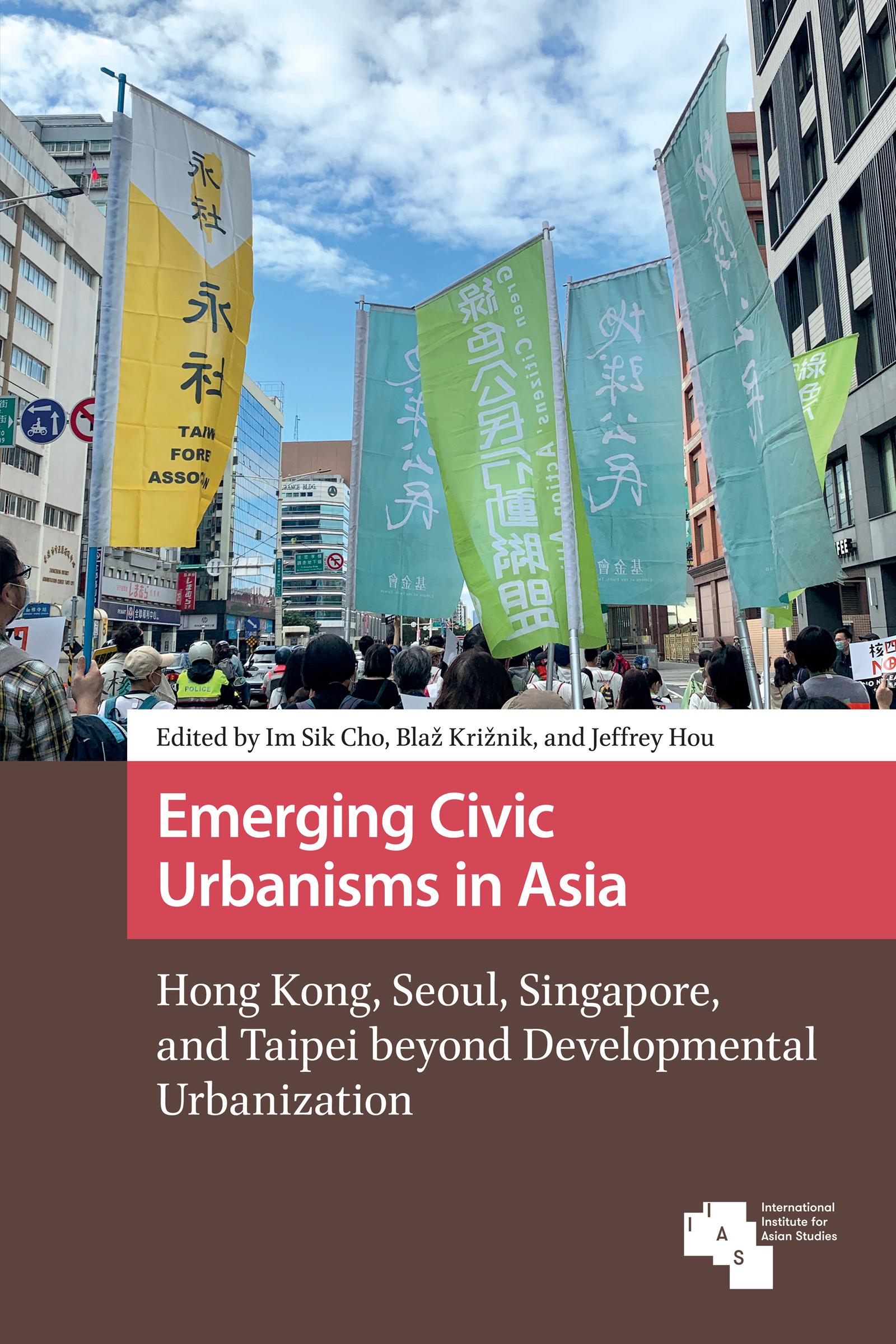
In parts of Asia, citizens are increasingly involved in shaping their neighbourhoods and cities, representing a significant departure from earlier state-led or market-driven urban development. These emerging civic urbanisms are a result of an evolving relationship between the state and civil society. The contributions in this volume provide critical insights into how the changing state–civil society relationship affects the recent surge of civic urbanism in Hong Kong, Seoul, Singapore, and Taipei, and the authors present eighteen cases of grassroots activism and resistance, collaboration and placemaking, neighbourhood community building, and self-organization and commoning in these cities. Exploring how citizen participation and state–civil society partnerships contribute to more resilient and participatory neighbourhoods and cities, the authors use the concept of civic urbanisms not only as a conceptual framework to understand the ongoing social and urban change but as an aspirational model of urban governance for cities in Asia and beyond.
Pay easily by card, Klarna, Apple Pay or Google Pay. Not happy? You always have a 14-day money-back guarantee. Read more in our terms. If you have any questions, email us at hello@memmo.org.
Memmo makes studying easier – wherever you are in the world. We bring your course books and smart study tools together in one place: summaries, quizzes, podcasts and flashcards. Plus Ted, your study buddy who answers anything you wonder. Over 75,000 students already study here – built to help you learn faster and stress less.
You might also like
Buy the book0