
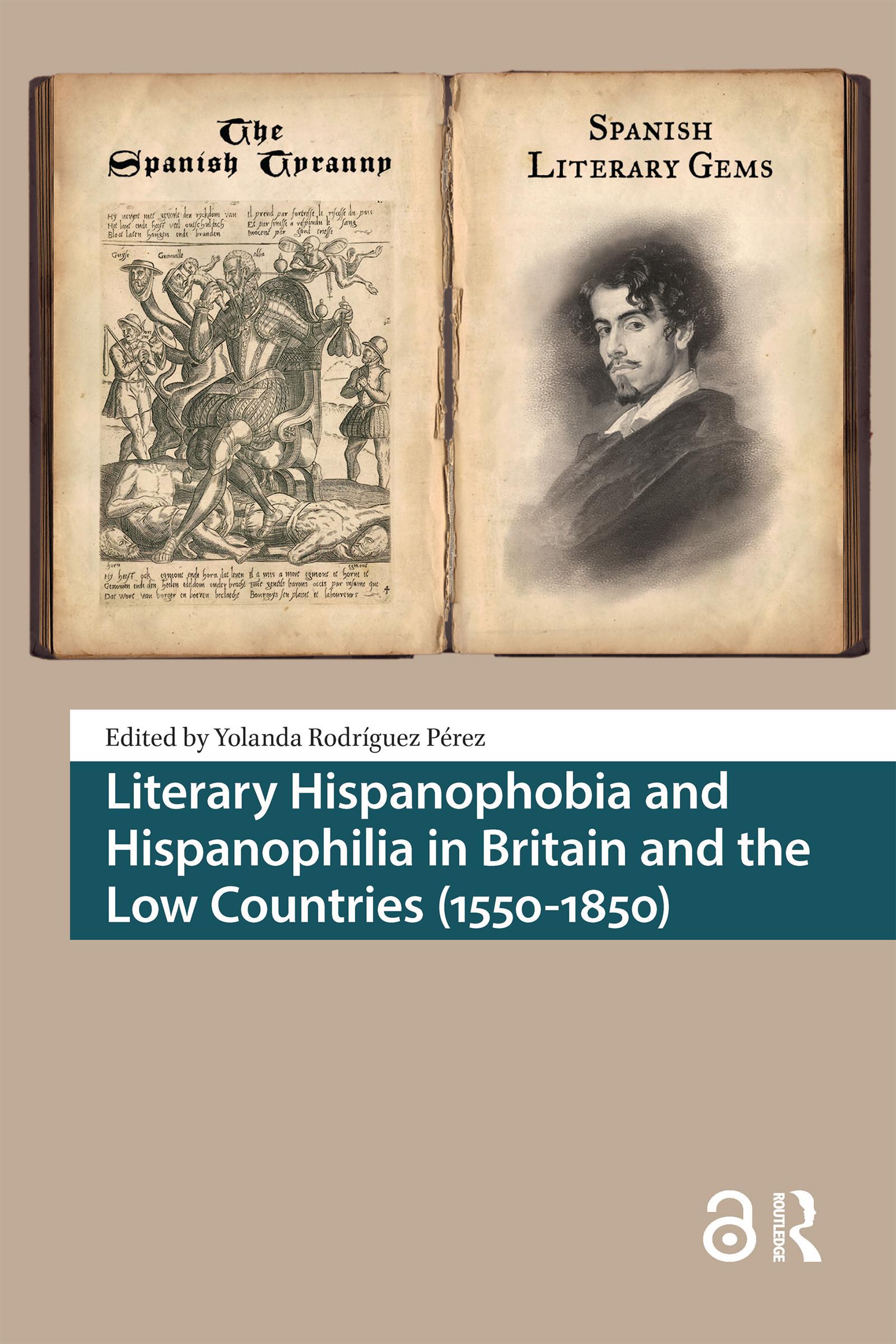
Spain has been a fruitful locus for the European imagination for centuries, and it has been most often perceived in black-and-white oppositions -- either as a tyrannical and fanatical force in the early modern period or as an imaginary geography of a 'Romantic' Spain in later centuries. However, the image of Spain, its culture and its inhabitants did not evolve inexorably from negative to positive. From the early modern period onwards, it responded to an ambiguous matrix of conflicting Hispanophobic and Hispanophilic representations. Just as in the nineteenth century latent negative stereotypes continued to resurface, even in the Romantic heyday, in the early modern period appreciation for Spain was equally undeniable. When Spain was a political and military superpower, it also enjoyed cultural hegemony with a literary Golden Age producing internationally hailed masterpieces. Literary Hispanophobia and Hispanophilia in Britain and the Low Countries (1550-1850) explores the protracted interest in Spain and its culture, and it exposes the co-existent ambiguity between scorn and fascination that characterizes Western historical perceptions, in particular in Britain and the Low Countries, two geographical spaces with a shared sense of historical connectedness and an overlapping, sometimes complicated, history with Spain.
Pay easily by card, Klarna, Apple Pay or Google Pay. Not happy? You always have a 14-day money-back guarantee. Read more in our terms. If you have any questions, email us at hello@memmo.org.
Memmo makes studying easier – wherever you are in the world. We bring your course books and smart study tools together in one place: summaries, quizzes, podcasts and flashcards. Plus Ted, your study buddy who answers anything you wonder. Over 50,000 students already study here – built to help you learn faster and stress less.