
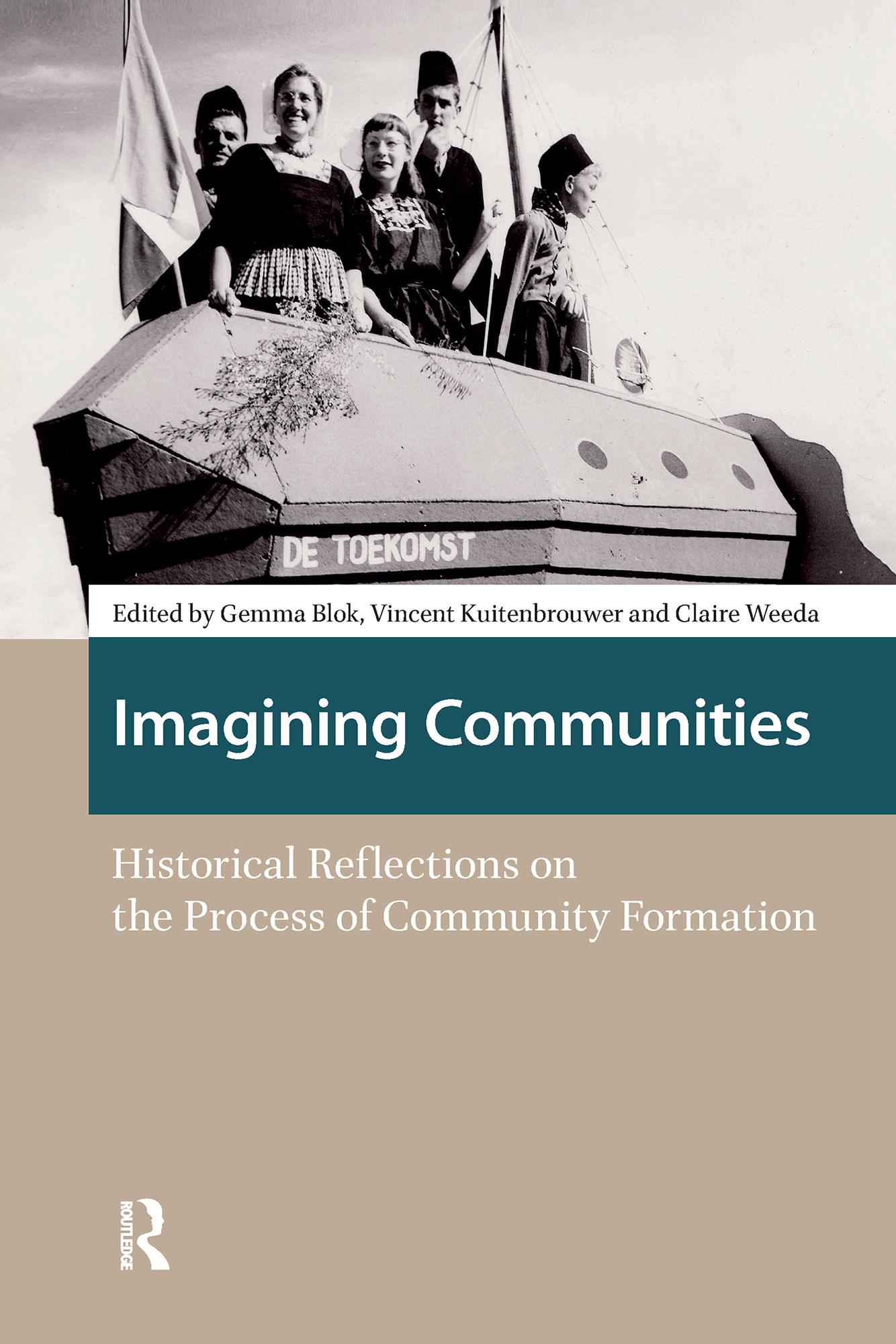
In his groundbreaking Imagined Communities, first published in 1983, Benedict Anderson argued that members of a community experience a deep, horizontal camaraderie. Despite being strangers, members feel connected in a web of imagined experiences., Yet while Anderson's insights have been hugely influential, they remain abstract: it is difficult to imagine imagined communities. How do they evolve and how is membership constructed cognitively, socially and culturally? How do individuals and communities contribute to group formation through the act of imagining? And what is the glue that holds communities together?, Imagining Communities examines actual processes of experiencing the imagined community, exploring its emotive force in a number of case studies. Communal bonding is analysed, offering concrete insights on where and by whom the nation (or social group) is imagined and the role of individuals therein. Offering eleven empirical case studies, ranging from the premodern to the modern age, this volume looks at and beyond the nation and includes regional as well as transnational communities as well.
Pay easily by card, Klarna, Apple Pay or Google Pay. Not happy? You always have a 14-day money-back guarantee. Read more in our terms. If you have any questions, email us at hello@memmo.org.
Memmo makes studying easier – wherever you are in the world. We bring your course books and smart study tools together in one place: summaries, quizzes, podcasts and flashcards. Plus Ted, your study buddy who answers anything you wonder. Over 50,000 students already study here – built to help you learn faster and stress less.