
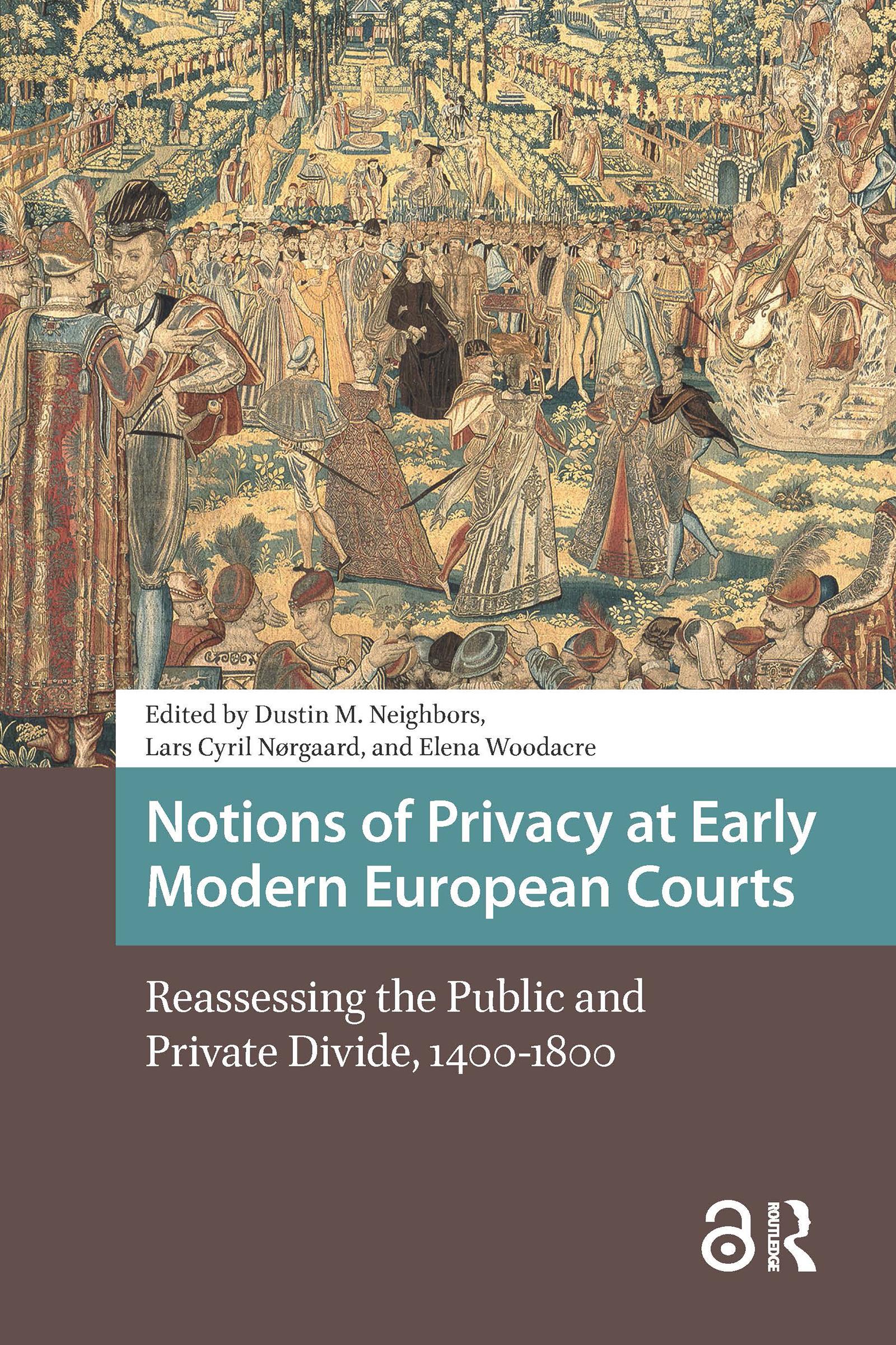
Grand, extravagant, magnificent, scandalous, corrupt, political, personal, fractious; these are terms often associated with the medieval and early modern courts. Moreover, the court constituted a forceful nexus in the social world, which was central to the legitimacy and authority of rulership. As such, courts shaped European politics and culture: architecture, art, fashion, patronage, and cultural exchanges were integral to the spectacle of European courts. Researchers have convincingly emphasised the public nature of courtly events, procedures, and ceremonies. Nevertheless, court life also involved pockets of privacy, which have yet to be systematically addressed. This edited collection addresses this lacuna and offers interpretations that urge us to reassesses the public nature of European courts. Thus, the proposed publication will fertilise the grounds for a discussion of the past and future of court studies. Indeed, the contributions make us reconsider present-day understandings of privacy as a stable and uncontestable notion.
Pay easily by card, Klarna, Apple Pay or Google Pay. Not happy? You always have a 14-day money-back guarantee. Read more in our terms. If you have any questions, email us at hello@memmo.org.
Memmo makes studying easier – wherever you are in the world. We bring your course books and smart study tools together in one place: summaries, quizzes, podcasts and flashcards. Plus Ted, your study buddy who answers anything you wonder. Over 50,000 students already study here – built to help you learn faster and stress less.
You might also like
Buy the book0