
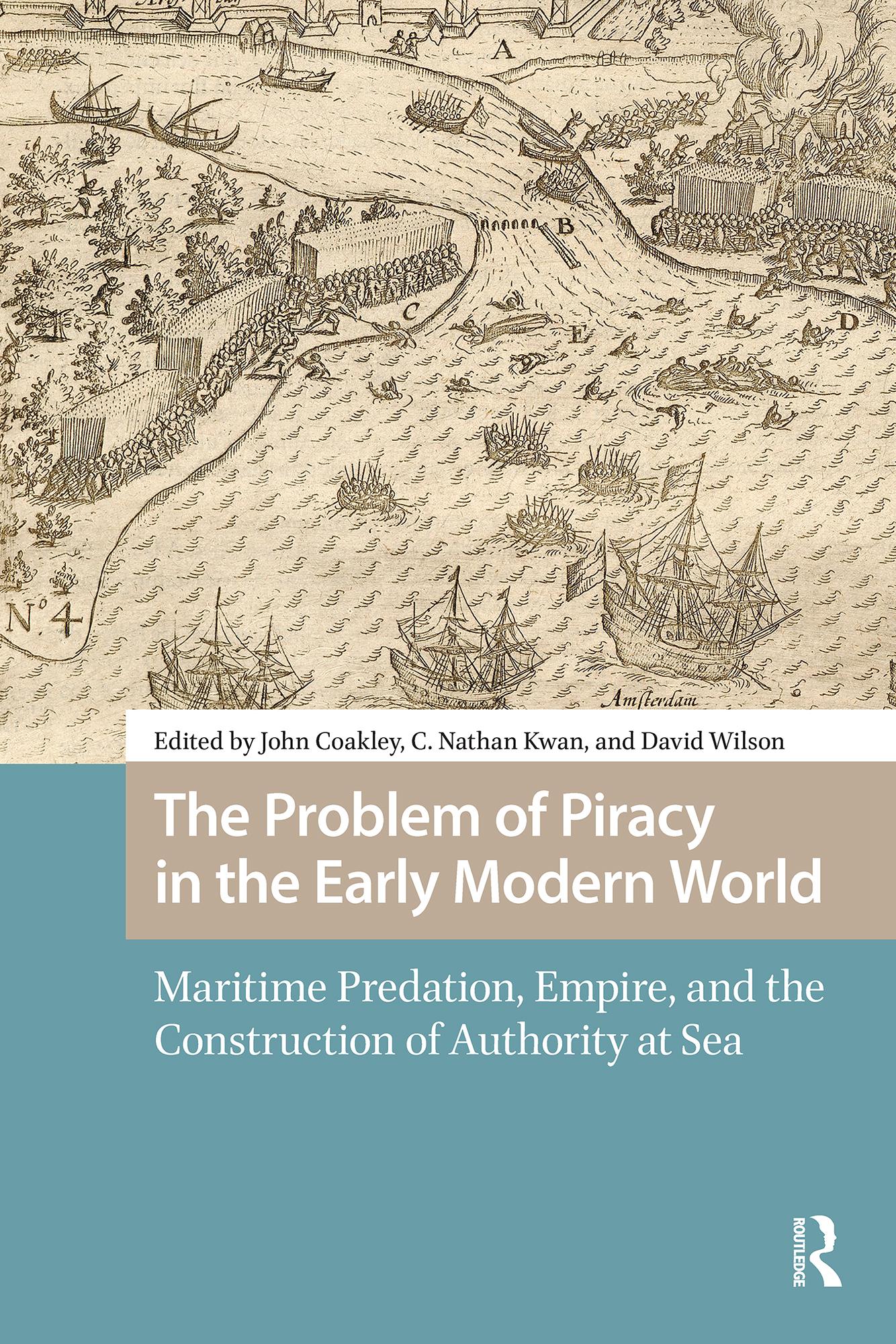
In the early modern period, both legal and illegal maritime predation was a common occurrence, but the expansion of European maritime empires exacerbated existing and created new problems of piracy across the globe. This collection of original case studies addresses these early modern problems in three sections: first, states’ attempts to exercise jurisdiction over seafarers and their actions; second, the multiple predatory marine practices considered ‘piracy’; and finally, the many representations made about piracy by states or the seafarers themselves. Across nine chapters covering regions including southeast Asia, the Atlantic archipelago, the North African states, and the Caribbean Sea, the complexities of defining and criminalizing maritime predation is explored, raising questions surrounding subjecthood, interpolity law, and the impacts of colonization on the legal and social construction of ocean, port, and coastal spaces. Seeking the meanings and motivations behind piracy, this book reveals that while European states attempted to fashion piracy into a global and homogenous phenomenon, it was largely a local and often idiosyncratic issue.
Pay easily by card, Klarna, Apple Pay or Google Pay. Not happy? You always have a 14-day money-back guarantee. Read more in our terms. If you have any questions, email us at hello@memmo.org.
Memmo makes studying easier – wherever you are in the world. We bring your course books and smart study tools together in one place: summaries, quizzes, podcasts and flashcards. Plus Ted, your study buddy who answers anything you wonder. Over 50,000 students already study here – built to help you learn faster and stress less.
You might also like
Buy the book0