
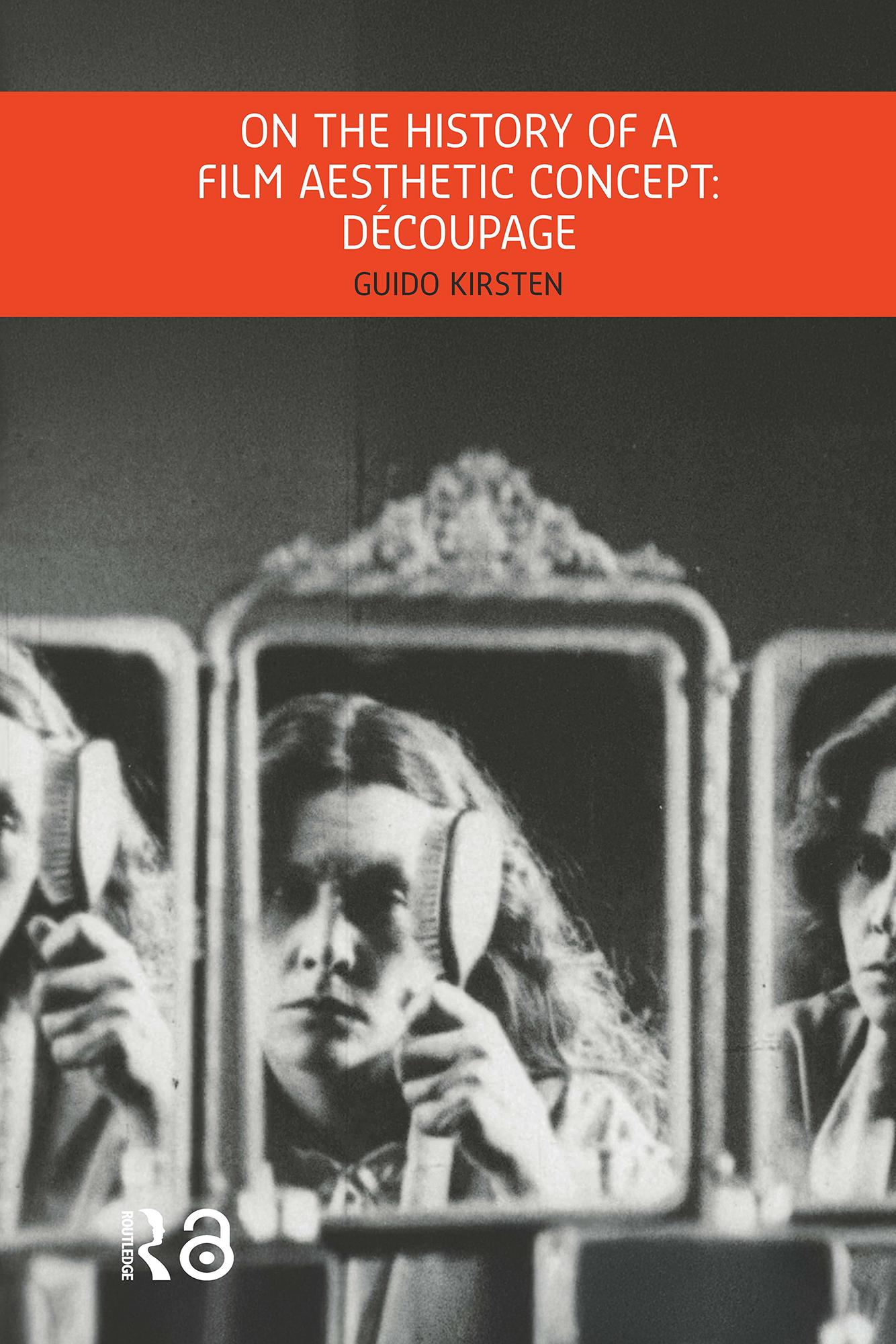
Unlike editing, découpage does not take place after the film has been shot, but before. The French term refers to the breakdown of a scene into a sequence of shots. In order to translate the written screenplay into film language, cinematographers and directors employ a genuinely cinematic way of thinking—a thinking in sequences of moving images and sounds, including the camera setups, movements, and shot sizes. Découpage is thus crucial in shaping a film's specific form. Using the tools of conceptual history, Guido Kirsten traces the term's evolution from its emergence in the 1910s through the eventful film history of the twentieth century until its recent rediscovery. By differentiating layers of meaning and discussing important shifts in the concept's evolution, this book improves the understanding of key film theoretical texts, whose meaning has been distorted by mistranslation, and shows how a deeper reflection of découpage promises to enrich the analysis of contemporary moving image media.
Pay easily by card, Klarna, Apple Pay or Google Pay. Not happy? You always have a 14-day money-back guarantee. Read more in our terms. If you have any questions, email us at hello@memmo.org.
Memmo makes studying easier – wherever you are in the world. We bring your course books and smart study tools together in one place: summaries, quizzes, podcasts and flashcards. Plus Ted, your study buddy who answers anything you wonder. Over 50,000 students already study here – built to help you learn faster and stress less.
You might also like
Buy the book0