
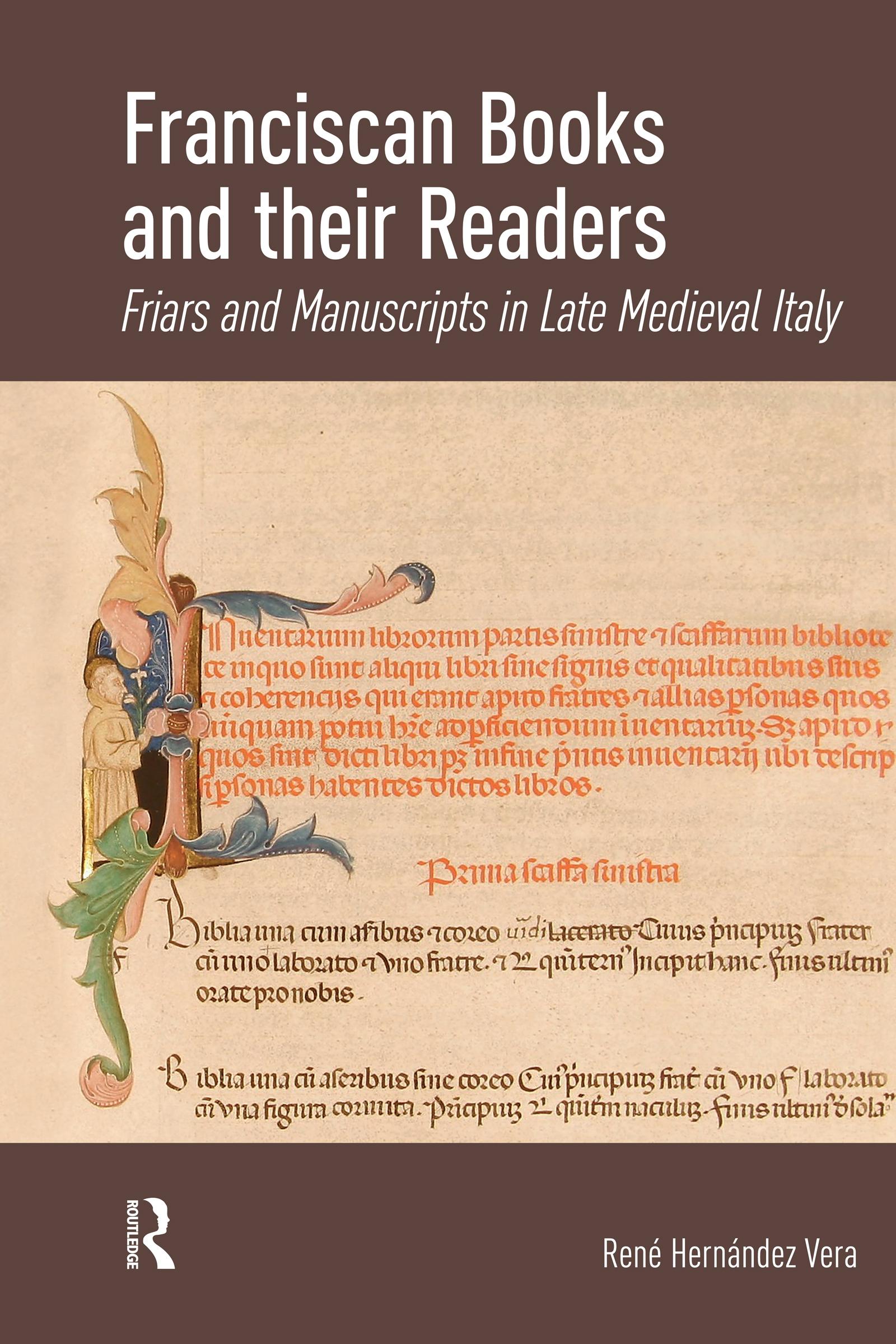
Franciscan Books and their Readers explores the manuscripts written, read and studied by Franciscan friars from the thirteenth to the fifteenth centuries in northern Italy, and specifically Padua, assessing four key aspects: ideal, space, form and readership. The ideal is studied through the regulations that determined what manuscripts should aim for. Space refers to the development and role of Franciscan libraries. The form is revealed by the assessment of the physical configuration of a set of representative manuscripts read, written and manufactured by the friars. Finally, the study of the readership shows how Franciscans were skilled readers who employed certain forms of the manuscript as a portable, personal library and as a tool for learning and pastoral care. By comparing the book collections of Padua’s reformed and unreformed medieval Franciscan libraries for the first time, this study reveals new features of the ground-breaking cultural agency of medieval friars.
Pay easily by card, Klarna, Apple Pay or Google Pay. Not happy? You always have a 14-day money-back guarantee. Read more in our terms. If you have any questions, email us at hello@memmo.org.
Memmo makes studying easier – wherever you are in the world. We bring your course books and smart study tools together in one place: summaries, quizzes, podcasts and flashcards. Plus Ted, your study buddy who answers anything you wonder. Over 50,000 students already study here – built to help you learn faster and stress less.