
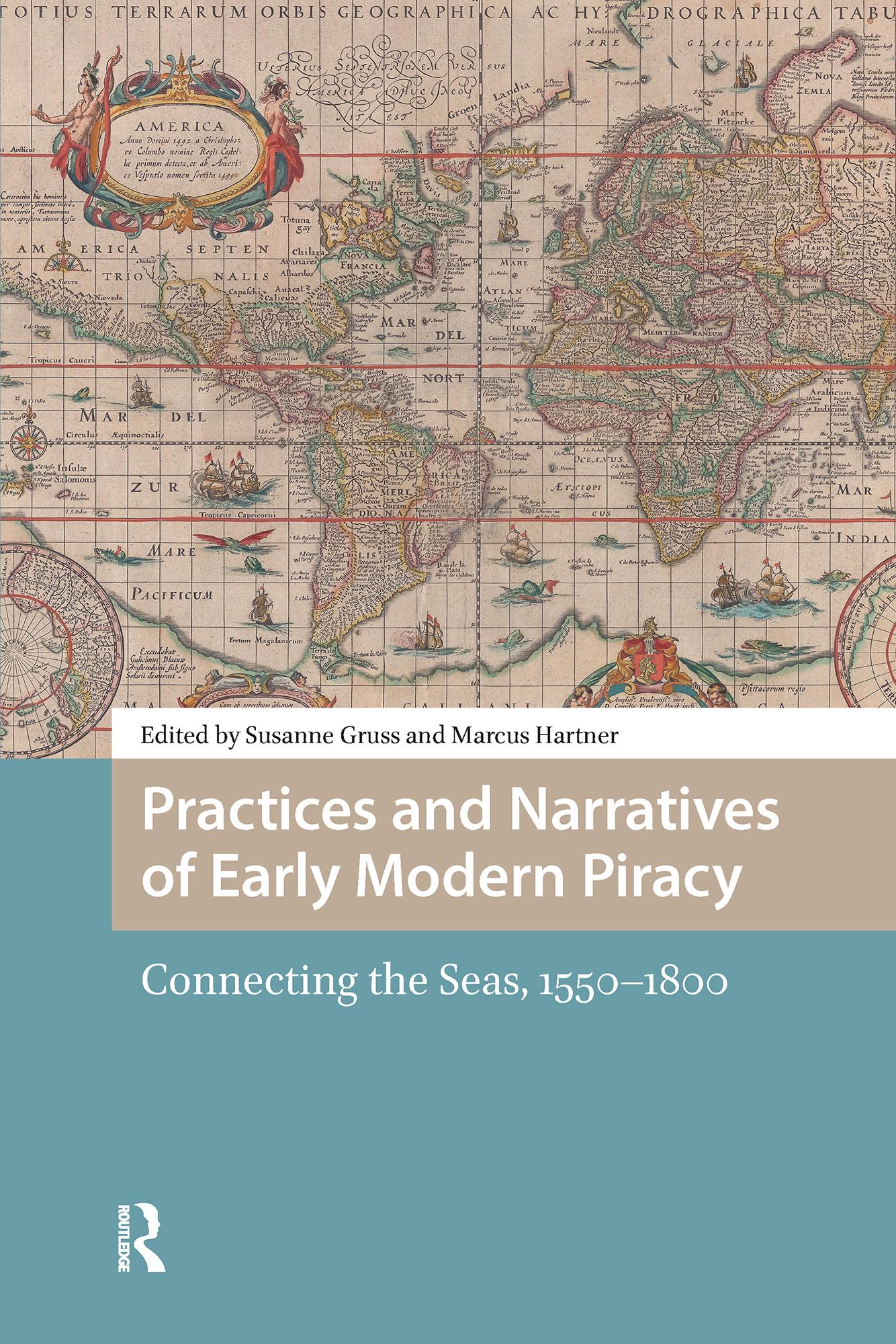
Rather than looking at different manifestations of early modern piracy as geographically and temporally isolated cultural phenomena, Practices and Narratives of Early Modern Piracy: Connecting the Seas (1550–1800) pursues a comprehensive approach to this field of study. This volume investigates the spatial, temporal, and economic connections between pirates and other seafarers who navigated the North Sea, the Mediterranean Sea, the Atlantic, and the Indian Oceans in the early modern period, and the cultural products they inspired. With a specific focus on historical practices and cultural narratives it addresses issues such as the appearance of pirates and piratical protagonists in diverse geographical locations, changing negotiations of pirate identity, the fluid boundary between illegal piracy and state-sanctioned privateering, and the (trans)national economic entanglements of different forms of maritime predation. By bringing together the discussion of literary, cultural, and historical aspects of piracy and seafaring, the volume explores the cultural as well as the ideological impact and function of the pirate figure in early modern historiography, literature, and popular culture.
Pay easily by card, Klarna, Apple Pay or Google Pay. Not happy? You always have a 14-day money-back guarantee. Read more in our terms. If you have any questions, email us at hello@memmo.org.
Memmo makes studying easier – wherever you are in the world. We bring your course books and smart study tools together in one place: summaries, quizzes, podcasts and flashcards. Plus Ted, your study buddy who answers anything you wonder. Over 50,000 students already study here – built to help you learn faster and stress less.