
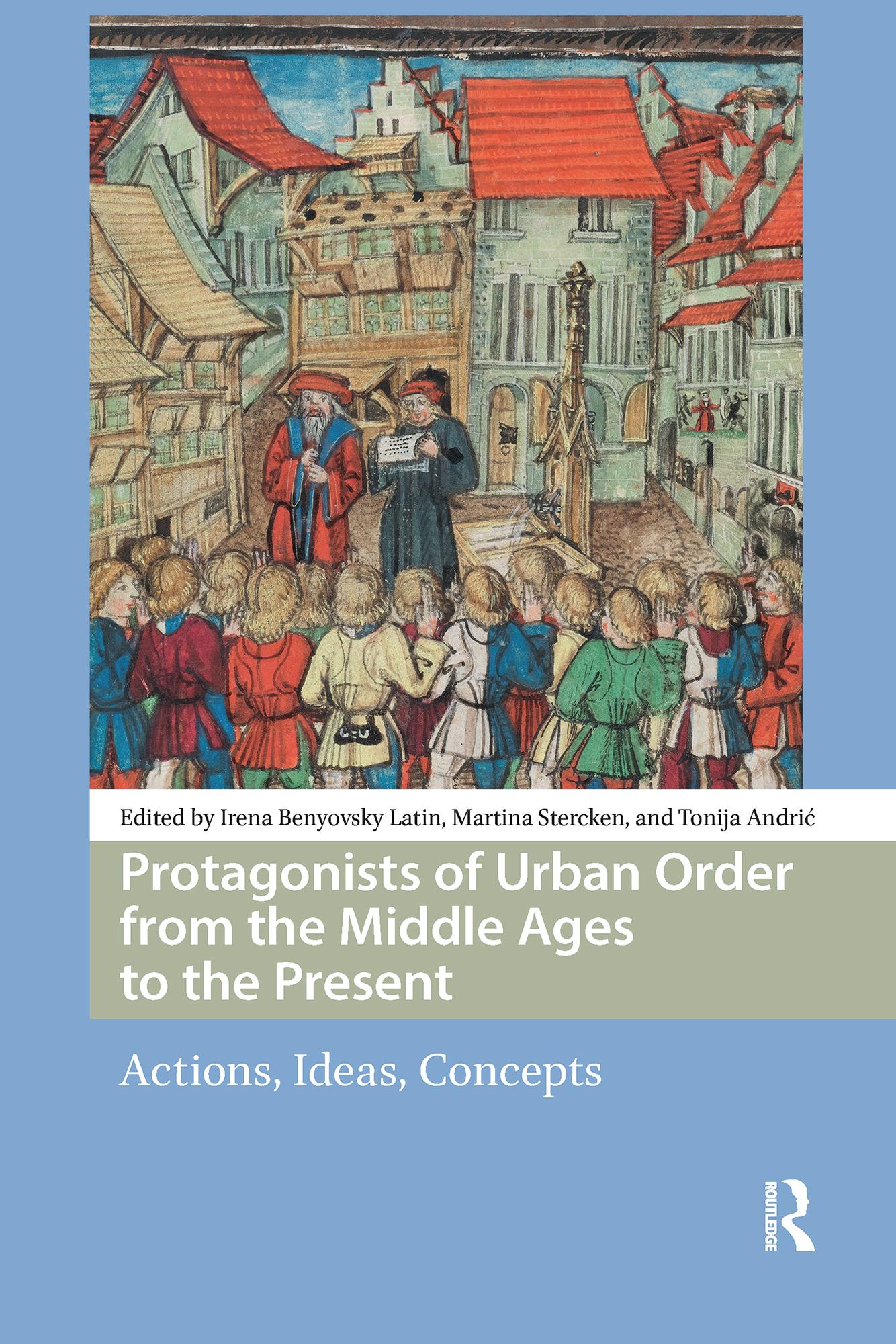
European cities and towns are considered places with a particular order established by their inhabitants. This volume centres on the authorities, groups, and individuals who formed the rules for common life in urban communities. It considers the protagonists of urban order between the Middle Ages and modernity: those who were responsible for the common welfare, those who produced change, and those who caused disorder. The authors focus on the practices that shaped the order of urban communities and in particular on situations in which this order was transformed socially and spatially. By looking at urban order through this lens, the volume sheds light on the complex interplay of interests that can bring about change.
Pay easily by card, Klarna, Apple Pay or Google Pay. Not happy? You always have a 14-day money-back guarantee. Read more in our terms. If you have any questions, email us at hello@memmo.org.
Memmo makes studying easier – wherever you are in the world. We bring your course books and smart study tools together in one place: summaries, quizzes, podcasts and flashcards. Plus Ted, your study buddy who answers anything you wonder. Over 50,000 students already study here – built to help you learn faster and stress less.
You might also like
Buy the book0