
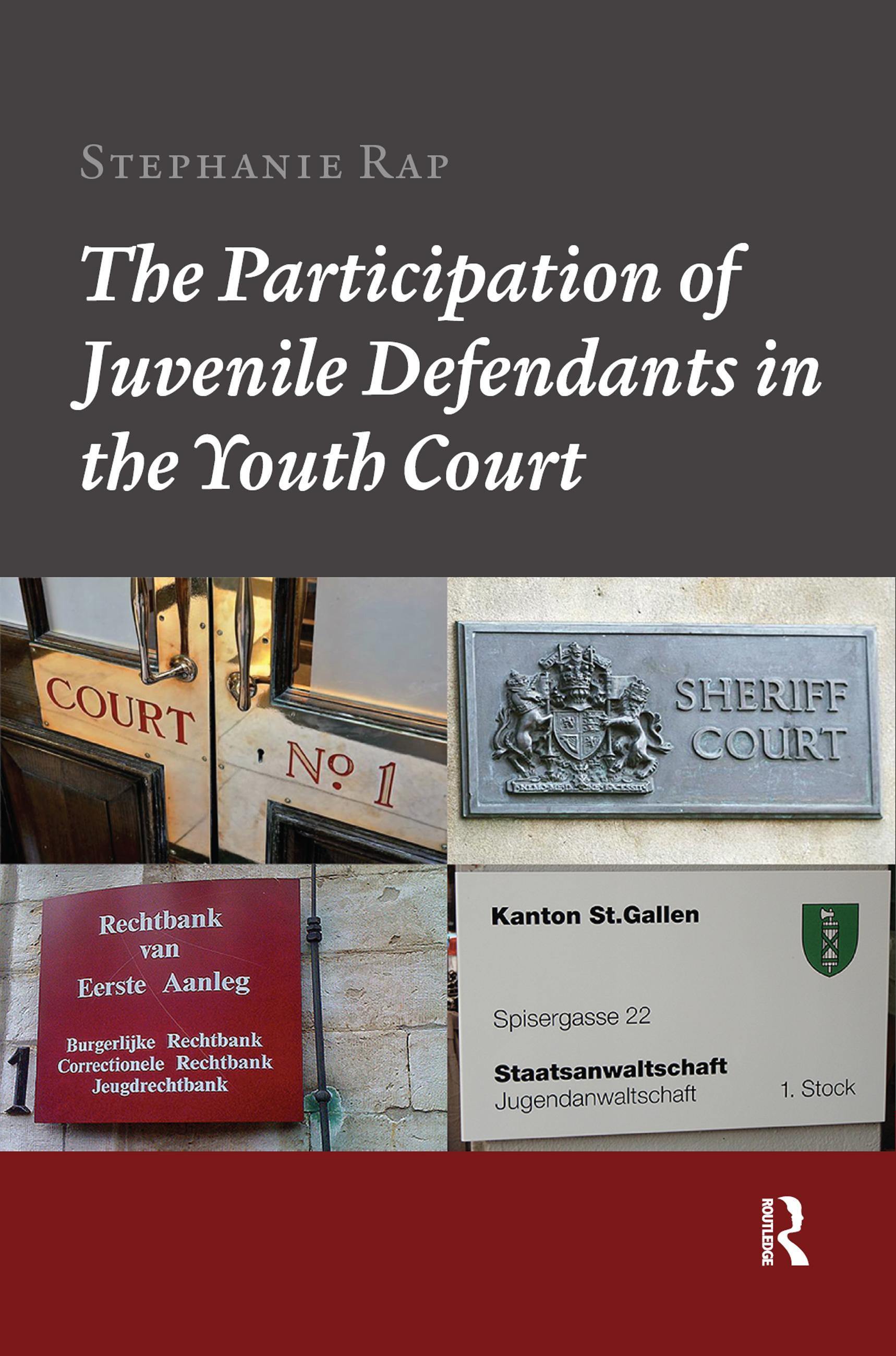
This study revolves around the issue of the participation of juvenile defendants in the youth court. Juvenile defendants’ right to be heard, as stipulated in international children’s rights law and standards, and the fact that juveniles have a limited understanding of the juvenile justice process are taken as starting points to formulate directives in order for young persons to be able to participate effectively in the youth court. In total, the cases of 3,019 juvenile defendants have been observed in youth courts and other competent administrative bodies in juvenile justice in 11 European countries. The Scottish children’s hearing and the juvenile justice practice in Switzerland come forward as examples of best practice regarding the participation of juveniles. A more intimate and informal setting contributes to making the hearing more accessible for the young person and his parents. Furthermore, this study shows that the fulfilment of the requirements for the effective participation of juvenile defendants is not possible in the adversarial youth courts in Europe.
Pay easily by card, Klarna, Apple Pay or Google Pay. Not happy? You always have a 14-day money-back guarantee. Read more in our terms. If you have any questions, email us at hello@memmo.org.
Memmo makes studying easier – wherever you are in the world. We bring your course books and smart study tools together in one place: summaries, quizzes, podcasts and flashcards. Plus Ted, your study buddy who answers anything you wonder. Over 50,000 students already study here – built to help you learn faster and stress less.
You might also like
Buy the book0