
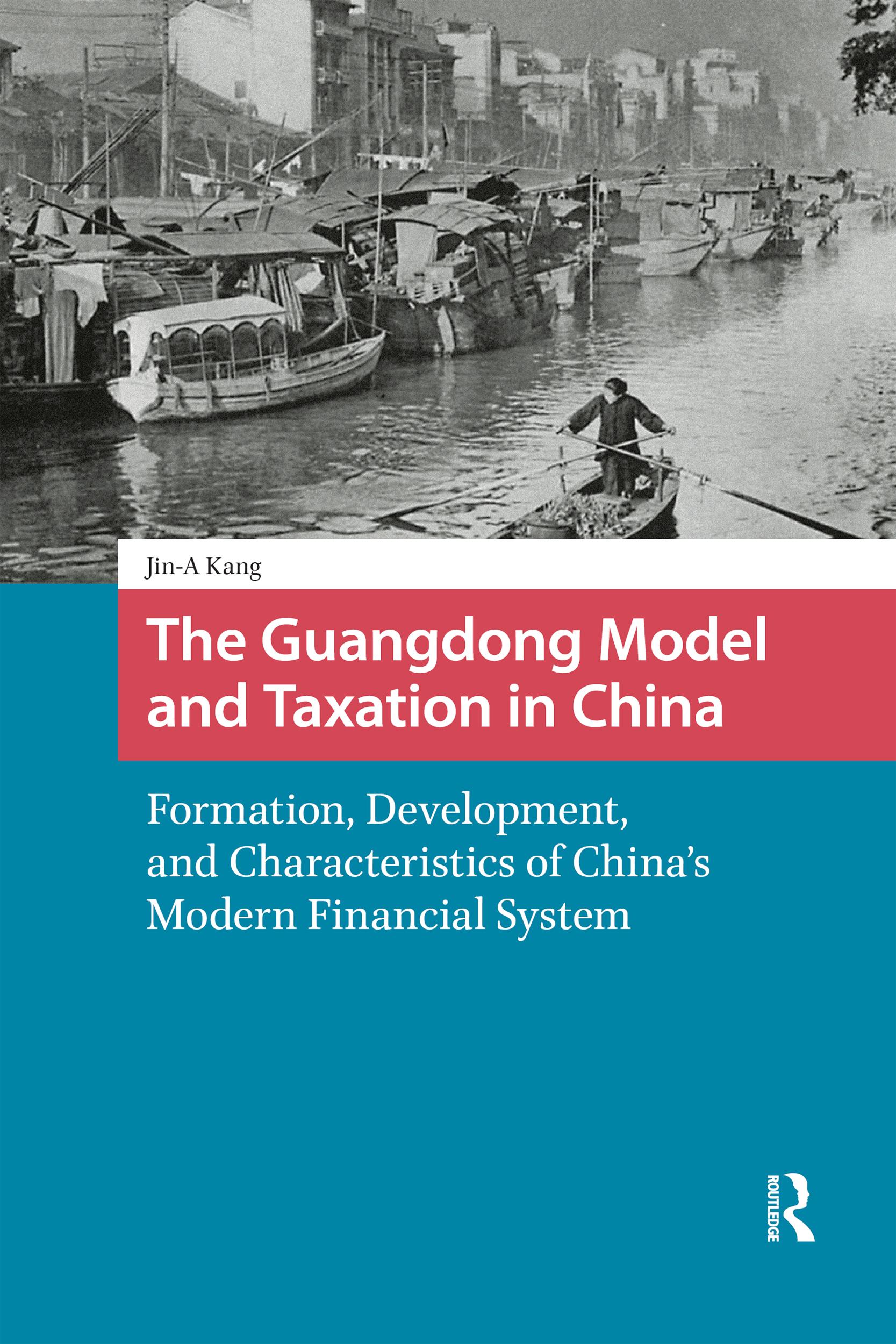
This book explores the formation, development, and characteristics of modern China's finance, focusing especially on Guangdong province as a case study to illustrate both the macro-level trends and the micro-level reality. The chronological range of this book is mainly from the late Qing period to the early Republican Era ending in 1937, when the full-scale Second Sino-Japanese War broke out. After the concept of modern finance was introduced to China for the first time in the late Qing period, the efforts to build modern finance continued in the Republican Era both nationally and locally. But this process was interrupted by the outbreak of the war against Japan in 1937 and, having been derailed, did not subsequently recover due to the subsequent civil war between the Kuomintang and the Chinese Communist Party. This interrupted process of financial modernization was resumed with Reform and Opening-up, launched in 1978. Therefore, in order to illustrate the structural transformation and persistent characteristics of China’s fiscal system, this book also includes discussions of the early Qing period and current Chinese finance.
Pages: 310
Category: Ekonomi & Utveckling
e-ISBN: 9781040786789
Shipping weight: 1.2 kg
Ships in: 1-2 days
Pay easily by card, Klarna, Apple Pay or Google Pay. Not happy? You always have a 14-day money-back guarantee. Read more in our terms. If you have any questions, email us at hello@memmo.org.
Memmo makes studying easier – wherever you are in the world. We bring your course books and smart study tools together in one place: summaries, quizzes, podcasts and flashcards. Plus Ted, your study buddy who answers anything you wonder. Over 50,000 students already study here – built to help you learn faster and stress less.
You might also like
Buy the book0