
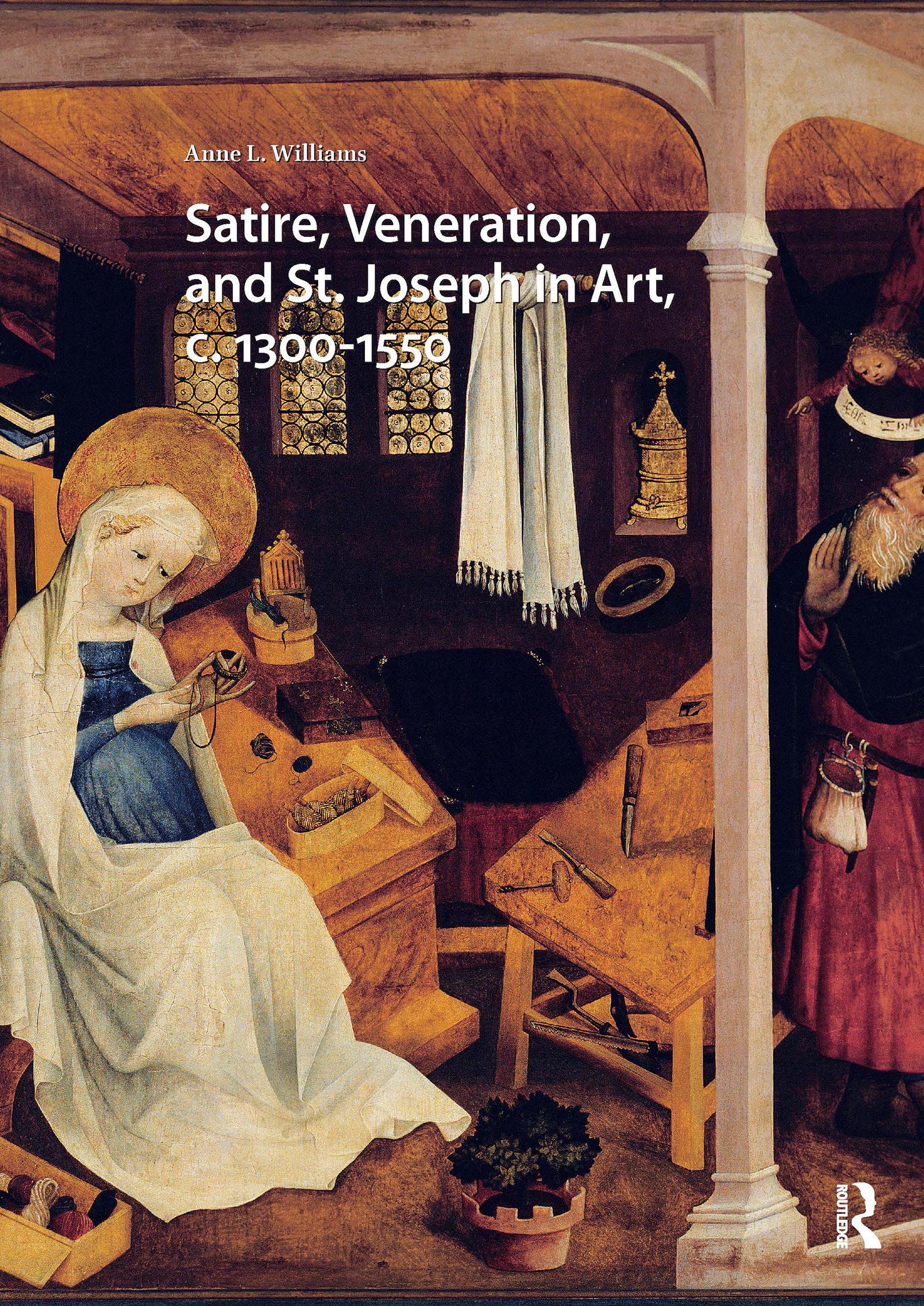
Satire, Veneration, and St. Joseph in Art, c. 1300.1550 is the first book to reclaim satire as a central component of Catholic altarpieces, devotional art, and veneration, moving beyond humor's relegation to the medieval margins or to the profane arts alone. The book challenges humor's perception as a mere teaching tool for the laity and the antithesis of 'high' veneration and theology, a divide perpetuated by Counter-Reformation thought and the inheritance of Mikhail Bakhtin (Rabelais and His World, 1965). It reveals how humor, laughter, and material culture played a critical role in establishing St. Joseph as an exemplar in western Europe as early as the thirteenth century. Its goal is to open a new line of interpretation in medieval and early modern cultural studies by revealing the functions of humor in sacred scenes, the role of laughter as veneration, and the importance of play for pre-Reformation religious experiences.
Pay easily by card, Klarna, Apple Pay or Google Pay. Not happy? You always have a 14-day money-back guarantee. Read more in our terms. If you have any questions, email us at hello@memmo.org.
Memmo makes studying easier – wherever you are in the world. We bring your course books and smart study tools together in one place: summaries, quizzes, podcasts and flashcards. Plus Ted, your study buddy who answers anything you wonder. Over 50,000 students already study here – built to help you learn faster and stress less.