
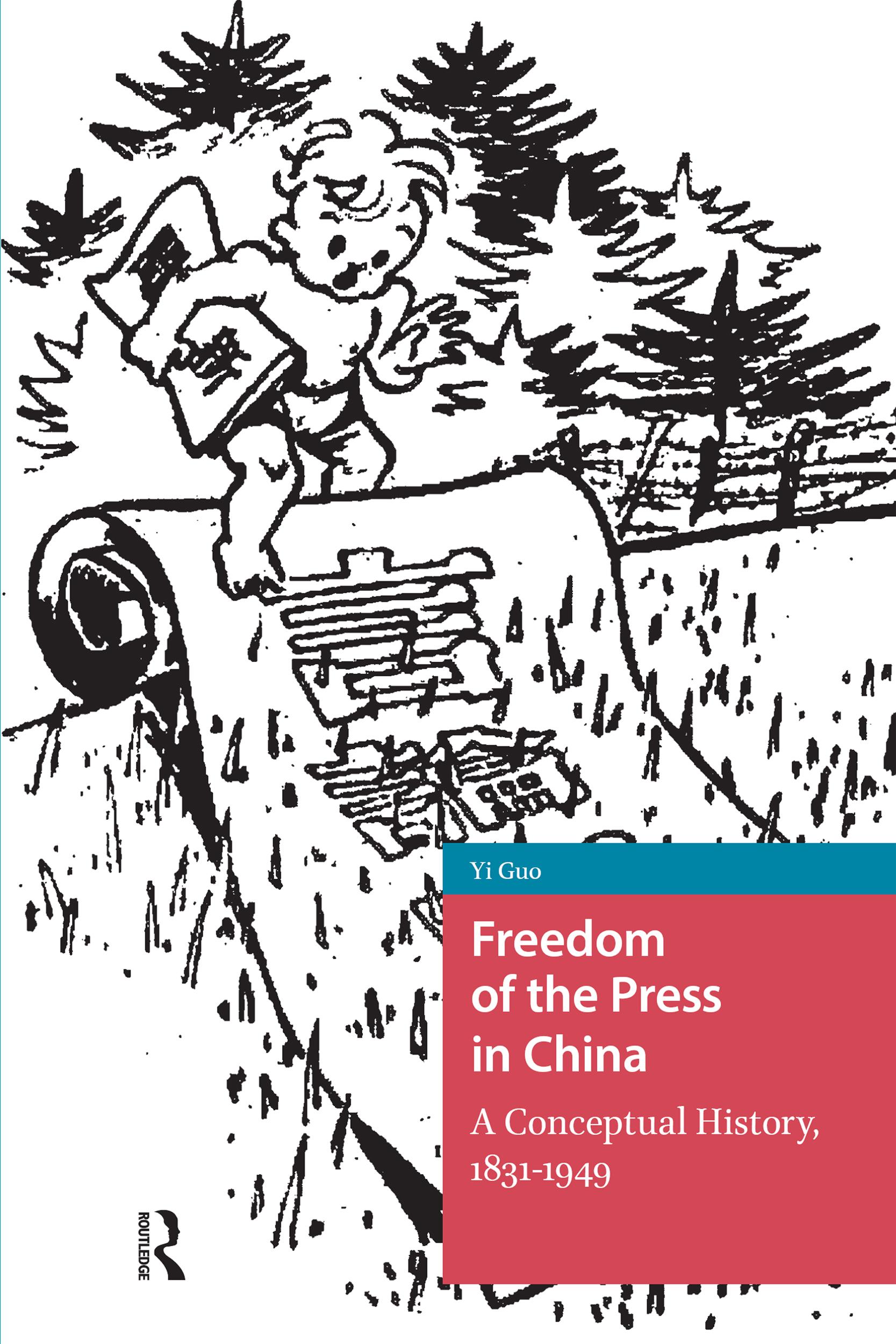
Western commentators have often criticized the state of press freedom in China, arguing that individual speech still suffers from arbitrary restrictions and that its mass media remains under an authoritarian mode. Yet the history of press freedom in the Chinese context has received little examination. Unlike conventional historical accounts which narrate the institutional development of censorship and people's resistance to arbitrary repression, Freedom of the Press in China: A Conceptual History, 1831-1949 is the first comprehensive study presenting the intellectual trajectory of press freedom. It sheds light on the transcultural transference and localization of the concept in modern Chinese history, spanning from its initial introduction in 1831 to the establishment of the People's Republic of China in 1949. By examining intellectuals' thoughts, common people's attitudes, and official opinions, along with the social-cultural factors that were involved in negotiating Chinese interpretations and practices in history, this book uncovers the dynamic and changing meanings of press freedom in modern China.
Pay easily by card, Klarna, Apple Pay or Google Pay. Not happy? You always have a 14-day money-back guarantee. Read more in our terms. If you have any questions, email us at hello@memmo.org.
Memmo makes studying easier – wherever you are in the world. We bring your course books and smart study tools together in one place: summaries, quizzes, podcasts and flashcards. Plus Ted, your study buddy who answers anything you wonder. Over 75,000 students already study here – built to help you learn faster and stress less.