
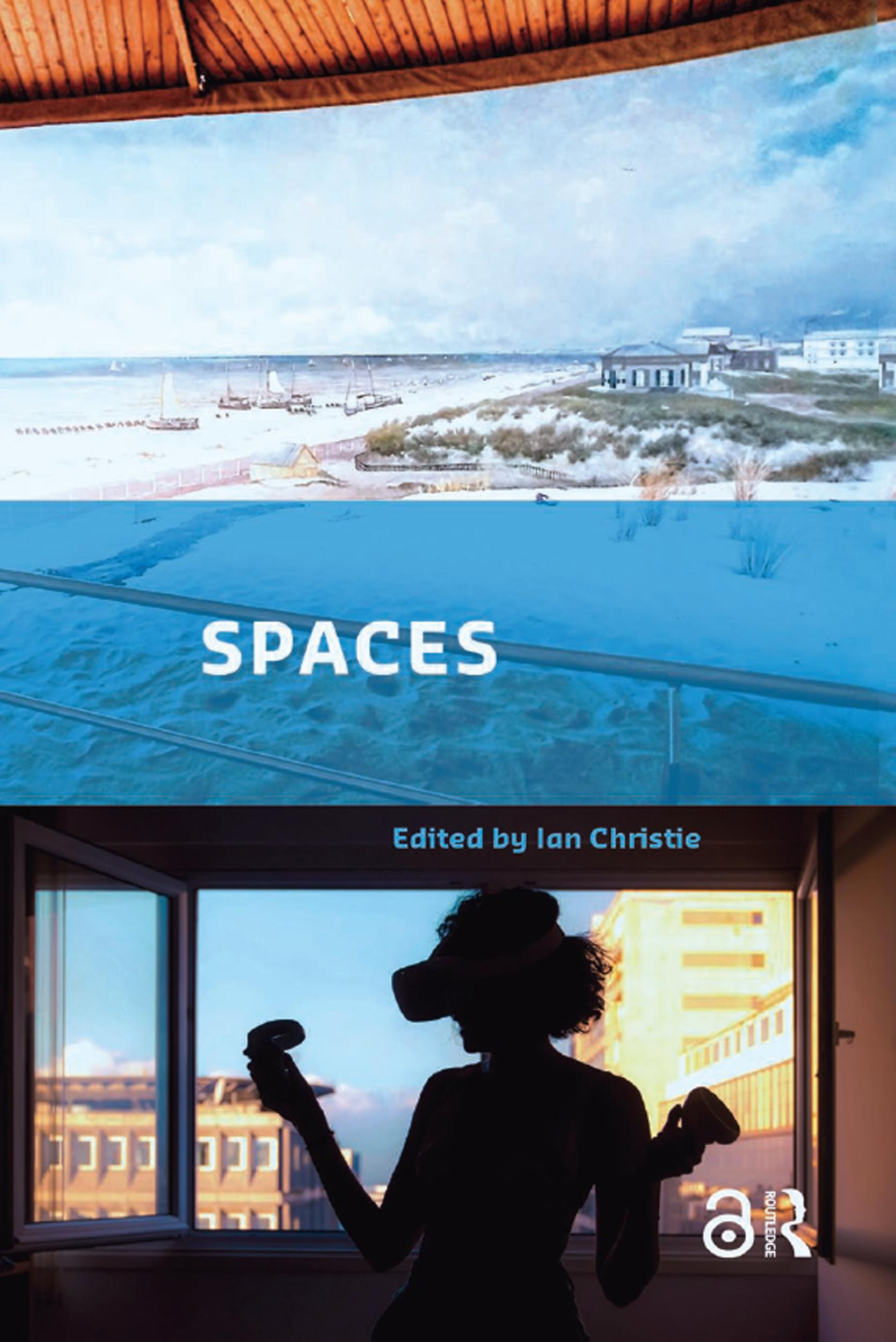
Film has long been defined as a temporal art, most famously by André Bazin and Andrei Tarkovsky. Yet more fundamentally it has always been a spatial art, transporting its audiences imaginatively to spaces and places other than those they literally inhabit. In the digital era, this spatial illusion and paradox has been greatly expanded – by the predominance of domestic film viewing, along with new extra-terrestrial perspectives, and the promise of novel kinesthetic experiences with Virtual Reality and “immersion”. The international authors in this collection address the history and aesthetics of screen media as spatial transposition, in a range of exemplary analyses that run from the landscapes of John Ford’s westerns to Chantal Akerman’s claustrophobic domestic spaces, from the conventions of the English country house film to Patrick Keiller’s Robinson roaming a changed country, and from the experiences of Covid pandemic confinement to those of un-homed van-dwellers in Chloe Zhao’s award-winning NOMADLAND.
Pay easily by card, Klarna, Apple Pay or Google Pay. Not happy? You always have a 14-day money-back guarantee. Read more in our terms. If you have any questions, email us at hello@memmo.org.
Memmo makes studying easier – wherever you are in the world. We bring your course books and smart study tools together in one place: summaries, quizzes, podcasts and flashcards. Plus Ted, your study buddy who answers anything you wonder. Over 50,000 students already study here – built to help you learn faster and stress less.
You might also like
Buy the book0