
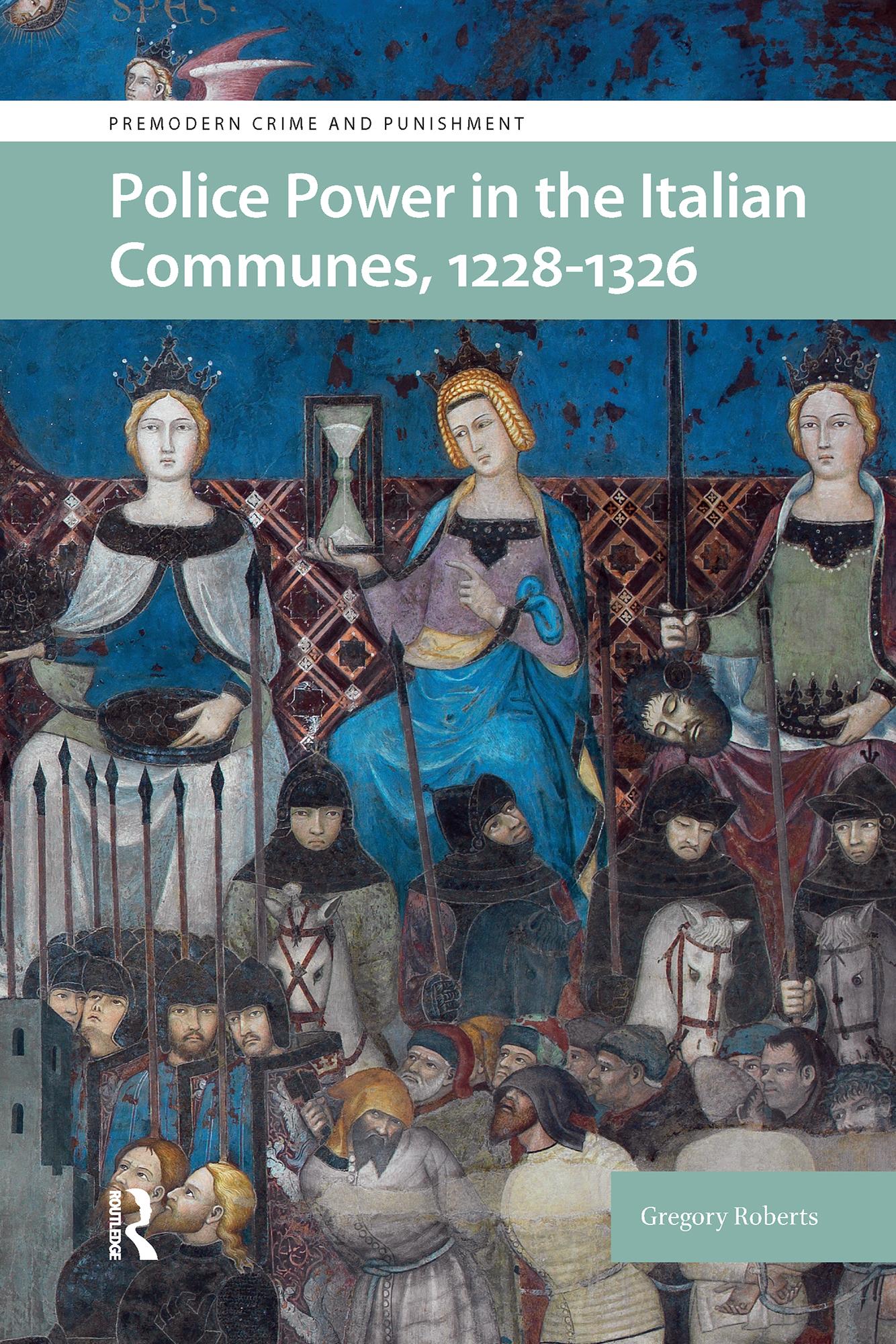
Medieval states are widely assumed to have lacked police forces. Yet in the Italian city-republics, soldiers patrolled the streets daily in search of lawbreakers. 'Police Power in the Italian Communes, 1228-1326' is the first book to examine the emergence of urban policing in medieval Italy and its impact on city life. Focusing on Bologna in the thirteenth and early fourteenth centuries, Gregory Roberts shows how police forces gave teeth to the communes' many statutes through a range of patrol activities. Whether seeking outlaws in the countryside or nighttime serenaders in the streets, urban police forces pursued lawbreakers energetically and effectively. They charged hundreds of individuals each year with arms-bearing, gambling, and curfew violations, convicting many of them in the process. Roberts draws on a trove of unpublished evidence from judicial archives, rich with witness testimony, to paint a vivid picture of policing in daily life and the capacity of urban governments to coerce. Breaking new ground in the study of violence, justice, and state formation in the Middle Ages, Police Power in the Italian Communes sheds fresh light on the question of how ostensibly modern institutions emerge from premodern social orders.
Pay easily by card, Klarna, Apple Pay or Google Pay. Not happy? You always have a 14-day money-back guarantee. Read more in our terms. If you have any questions, email us at hello@memmo.org.
Memmo makes studying easier – wherever you are in the world. We bring your course books and smart study tools together in one place: summaries, quizzes, podcasts and flashcards. Plus Ted, your study buddy who answers anything you wonder. Over 50,000 students already study here – built to help you learn faster and stress less.
You might also like
Buy the book0