
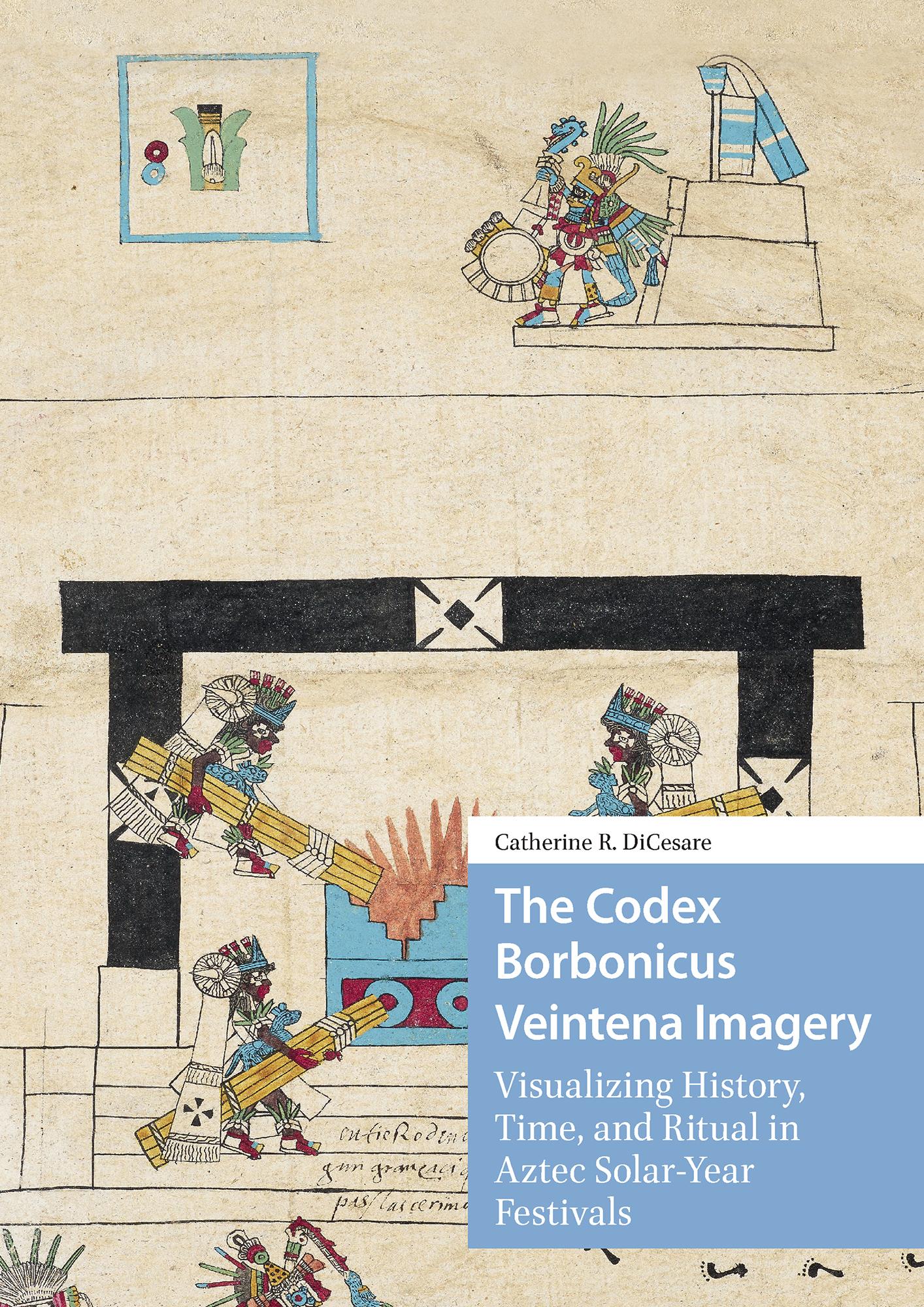
The sixteenth-century pictorial manuscript known as the Codex Borbonicus contains a remarkable record of the eighteen Mexica (or “Aztec”) festival periods of twenty days, known as veintenas, celebrated during the 365-day solar year. Because its indigenous artists framed the Borbonicus veintenas with historical year dates, this volume situates the annually recurring rituals within the march of linear, reckoned time, in the singular year “2 Reed” (1507), during the reign of Moteuczoma II. DiCesare attends to the historical dimensions of several unusual scenes, proposing that the veintenas probably varied significantly from year to year in response to historical concerns. She considers particularly whether the Borbonicus veintenas document the confluence of solar year ceremonies with a second set of ritual feast days, governed by the 260-day cycle known as the tonalpohualli, or “count of days.” In this way, DiCesare analyzes how linear and cyclical conceptions of time intersected in Mexica ritual performance.
Pay easily by card, Klarna, Apple Pay or Google Pay. Not happy? You always have a 14-day money-back guarantee. Read more in our terms. If you have any questions, email us at hello@memmo.org.
Memmo makes studying easier – wherever you are in the world. We bring your course books and smart study tools together in one place: summaries, quizzes, podcasts and flashcards. Plus Ted, your study buddy who answers anything you wonder. Over 75,000 students already study here – built to help you learn faster and stress less.
You might also like
Buy the book0