
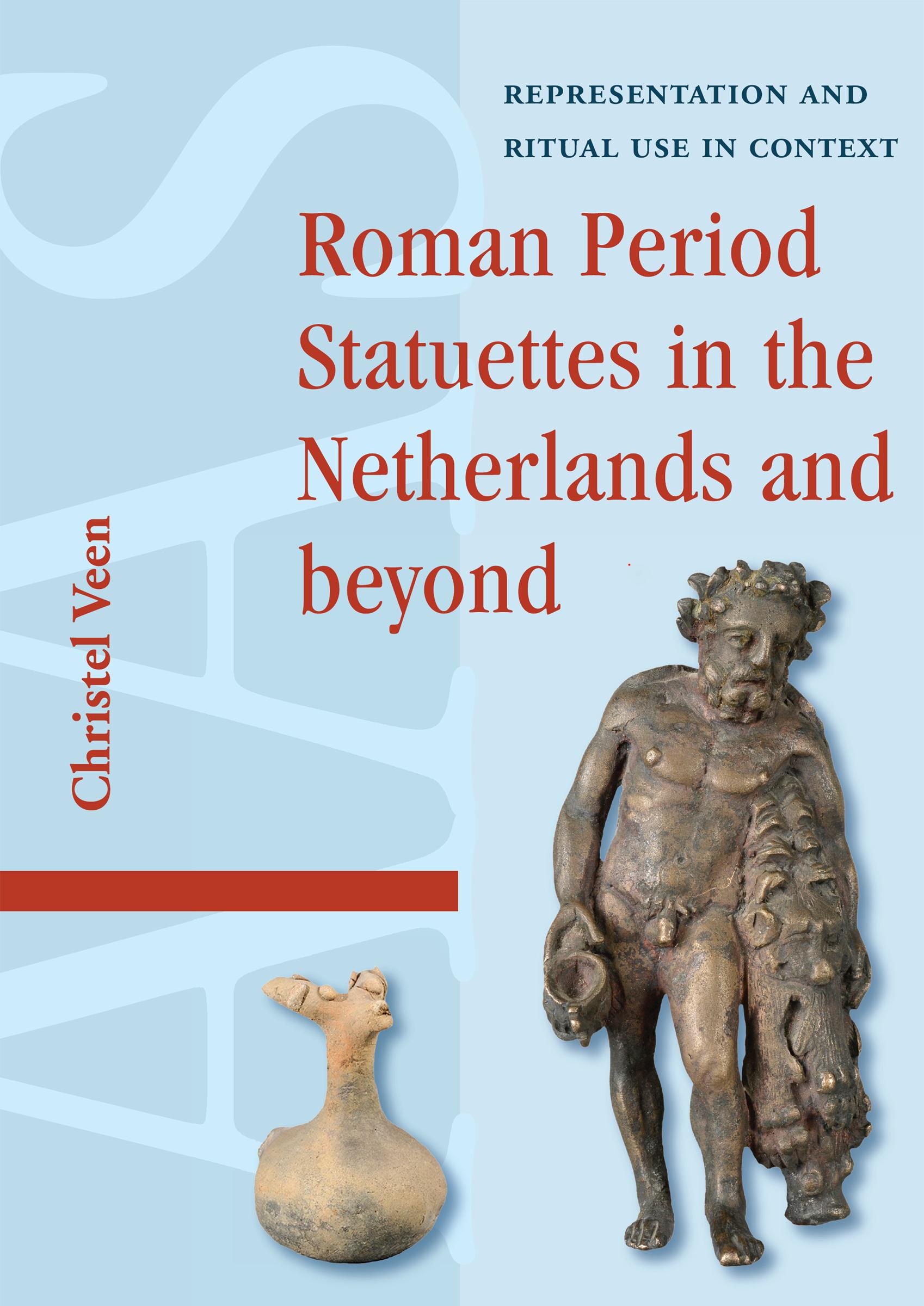
The subject of this study is a relatively rare category of artefacts, bronze and terracotta statuettes that represent deities, human figures and animals. They were introduced in the northwestern provinces by Roman troops from the end of the 1st century BCE onwards. The statuettes have been recovered from military and non-military settlements, the surrounding landscape and, to a far lesser extent, from sanctuaries and graves. Until now, their meaning and function have seldom been analysed in relation to their find-spots. Contrary to traditional studies, they have been examined as one separate category of artefacts, which offers new insights into the distribution pattern and iconographic representation of deities. When studying a group of artefacts, a large research area or a large dataset is required, as well as dateable artefacts and find-contexts. These conditions do not apply to the Netherlands and to the majority of statuettes that are central to this study. Moreover, although the changing appearance of statuettes suggest a transformation of cults, the identities of the owners of these statuettes remain invisible to us. Therefore, the issue of Romanization is not put central here. Instead, the focus is on a specific aspect of religion, known as lived religion, within the wider subject of its transformation in the Roman period: how people used statuettes in everyday life, in the context of their houses and settlements.
Pay easily by card, Klarna, Apple Pay or Google Pay. Not happy? You always have a 14-day money-back guarantee. Read more in our terms. If you have any questions, email us at hello@memmo.org.
Memmo makes studying easier – wherever you are in the world. We bring your course books and smart study tools together in one place: summaries, quizzes, podcasts and flashcards. Plus Ted, your study buddy who answers anything you wonder. Over 75,000 students already study here – built to help you learn faster and stress less.
You might also like
Buy the book0