
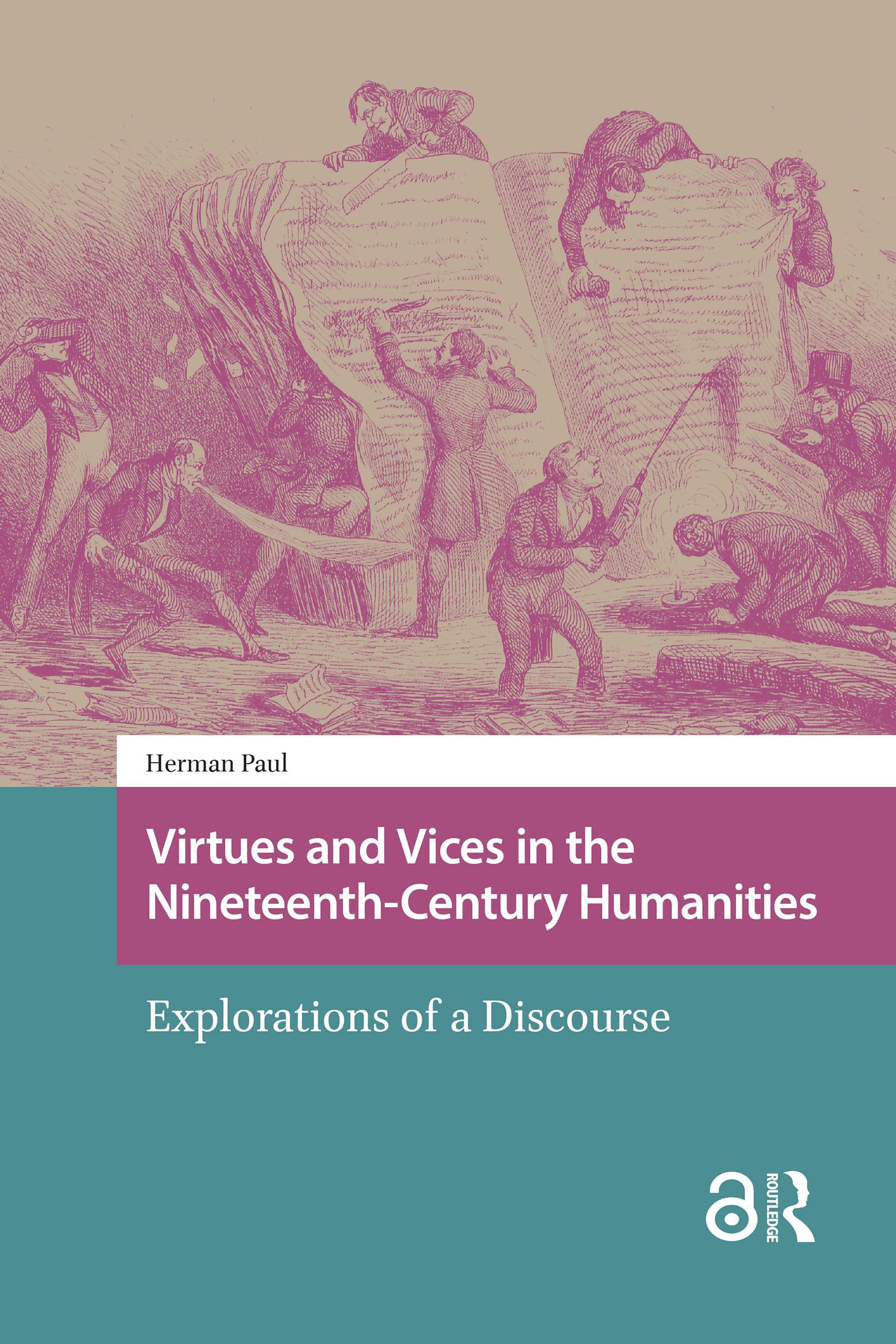
What do scholars do when they talk about virtues (impartiality, accuracy) or vices (dogmatism, prejudice)? Against the common view that such high-minded talk is largely irrelevant to actual scholarly practice, this volume proposes to treat it as a practice in its own right. Drawing on case studies from the nineteenth-century humanities (with occasional forays into physics, chemistry, and medicine), Paul shows that notions of virtue and vice were an evaluative discourse used across the academic spectrum. Paul argues that this evaluative idiom is best studied from a rhetorical point of view, with due attention to repertoires on which scholars drew, explicit or implicit appeals to authority, multi-layered meanings of virtue and vice terms, different uses to which these concepts were put, and societal contexts that lent plausibility to scholars' invocations of virtue and vice. Based on more than a decade of research, this volume will be a key reference for scholars interested in virtues, vices, and the history of the humanities.
Pages: 298
Category: Vetenskapsteori och forskningsmetod
e-ISBN: 9781040772119
Shipping weight: 1.2 kg
Ships in: 1-2 days
Pay easily by card, Klarna, Apple Pay or Google Pay. Not happy? You always have a 14-day money-back guarantee. Read more in our terms. If you have any questions, email us at hello@memmo.org.
Memmo makes studying easier – wherever you are in the world. We bring your course books and smart study tools together in one place: summaries, quizzes, podcasts and flashcards. Plus Ted, your study buddy who answers anything you wonder. Over 50,000 students already study here – built to help you learn faster and stress less.
You might also like
Buy the book0