
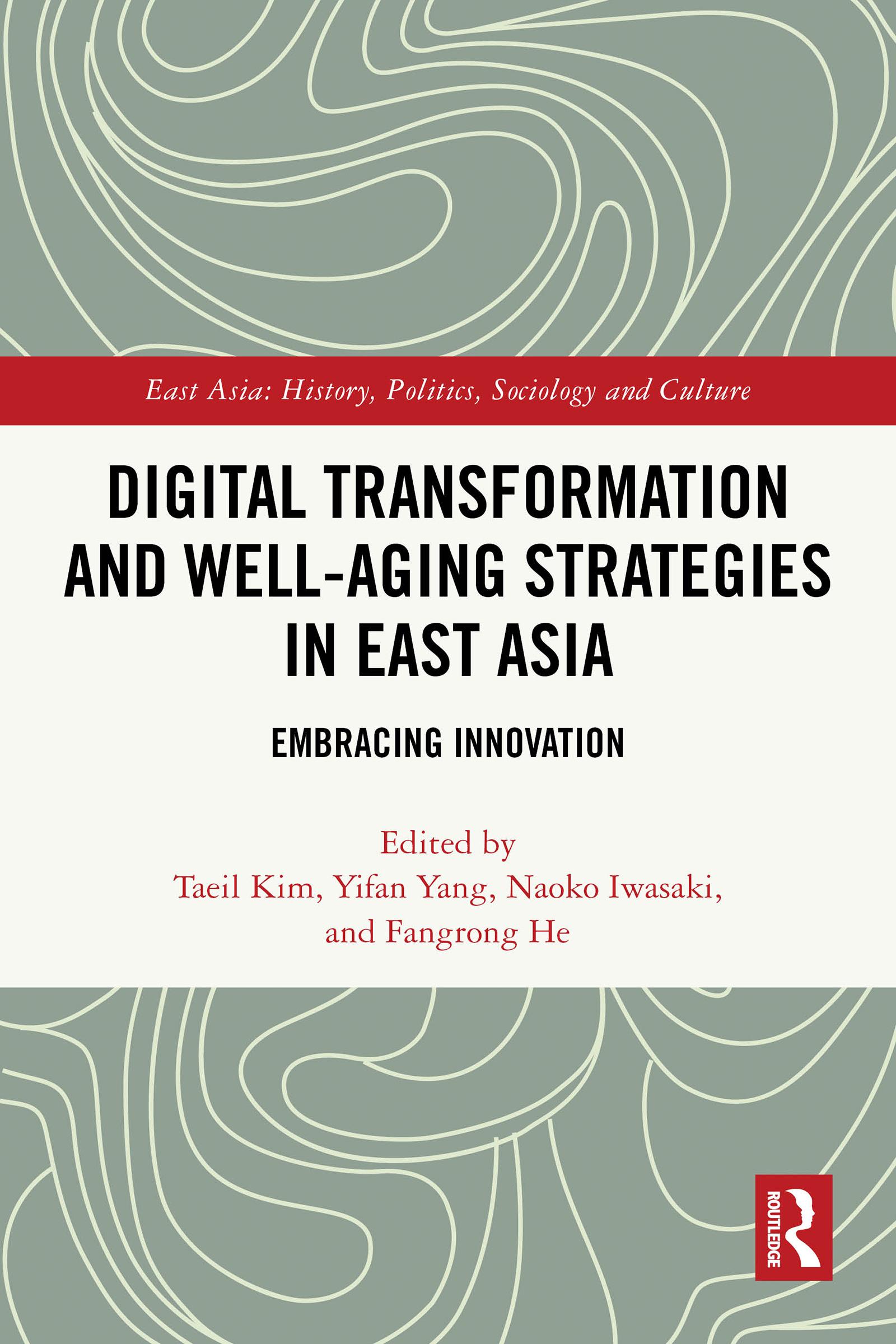
Taeil, Yifan, Naoko, and Fangrong, along with their contributors, examine how China, Korea, and Japan are leveraging digital technologies to address unprecedented demographic shifts in their aging populations.
This book offers a comparative and policy-oriented examination of how digital technologies and artificial intelligence are transforming aging societies in East Asia. Focusing on China, South Korea, and Japan, it brings together interdisciplinary perspectives to analyze how governments are responding to population aging through digital health, long-term care innovation, community-based services, and everyday digital support for older adults. A key feature of the book is its integrated framework, which links technological change with intergenerational relations, welfare institutions, and digital inclusion, rather than treating technology as a purely technical solution. The book combines national policy analysis with local case studies and thematic syntheses, allowing readers to understand both structural differences and shared challenges across countries.
An essential book for academics and researchers of social policy, public administration, gerontology, and digital governance, as well as policymakers and practitioners engaged in aging and welfare reform. Readers will benefit from empirically grounded insights, comparative perspectives, and policy-relevant lessons for designing inclusive, sustainable, and human-centered digital strategies in aging societies.
Pay easily by card, Klarna, Apple Pay or Google Pay. Not happy? You always have a 14-day money-back guarantee. Read more in our terms. If you have any questions, email us at hello@memmo.org.
Memmo makes studying easier – wherever you are in the world. We bring your course books and smart study tools together in one place: summaries, quizzes, podcasts and flashcards. Plus Ted, your study buddy who answers anything you wonder. Over 50,000 students already study here – built to help you learn faster and stress less.