
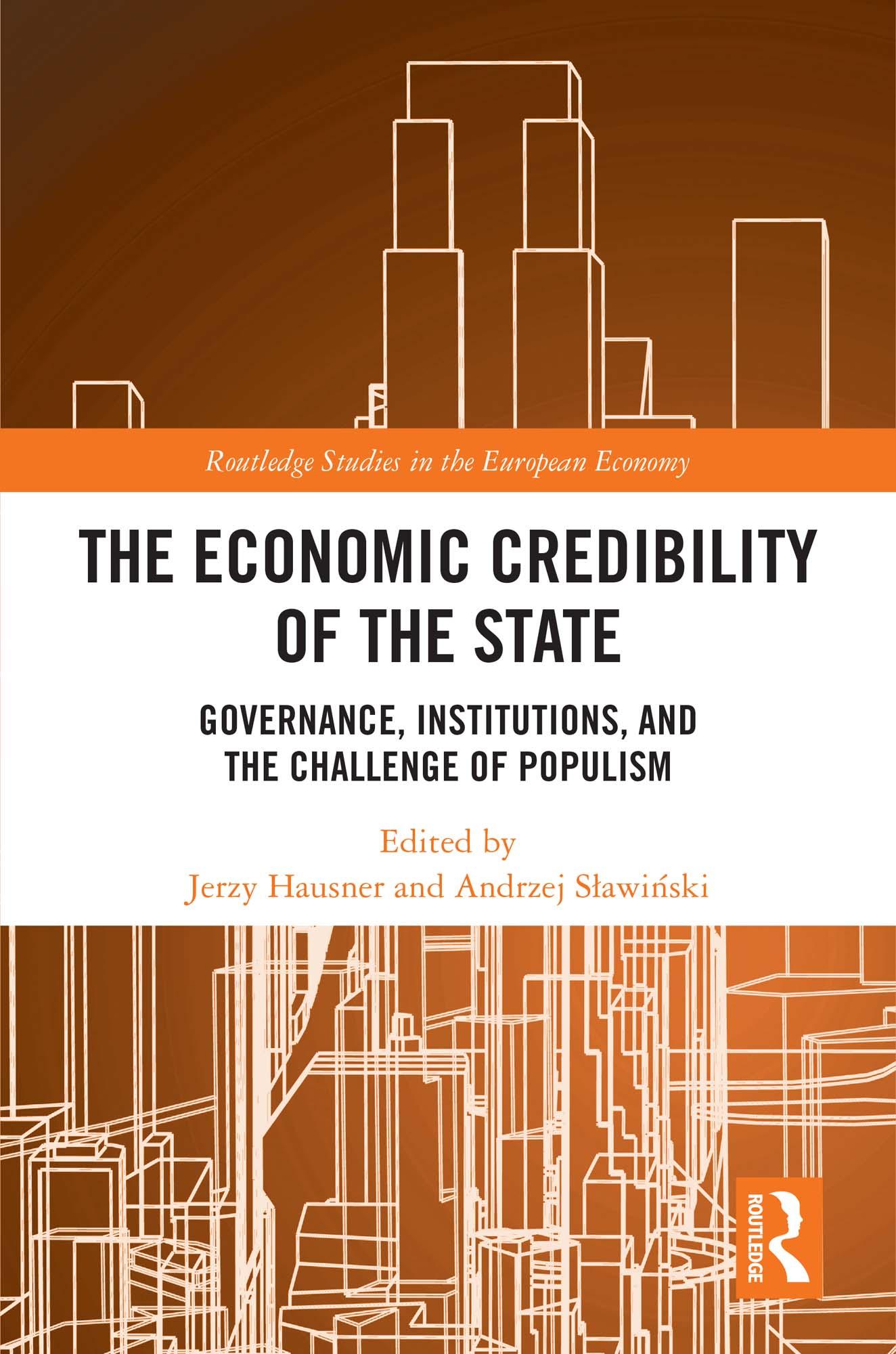
This book argues that economic credibility should be assessed not only on the basis of financial stability and economic growth, but also on the state’s ability to maintain democracy and long‑term social cohesion.
Why do some countries maintain economic stability and investor confidence, while others experience credibility crises? This book examines how political decisions, institutional integrity, and public trust shape economic policy. The authors highlight the consequences of populist governments, which often undermine economic efficiency and democratic stability. The book analyses how populist governments affect a country’s economic credibility and long‑term stability. It offers a comprehensive framework for assessing a country’s economic credibility that goes beyond conventional financial indicators, advocating for a more holistic approach that supports democracy. Supported by research contained in reports on Poland’s economic credibility index, the book benefits from data visualisations, policy recommendations, and comparative analyses of state models, resources which provide the reader with practical tools for assessing economic credibility in various contexts.
This book will be of interest to policymakers, economists, political scientists, and business leaders, among others. With its multidisciplinary approach to the links between economic policy and institutional credibility, it provides valuable insights for those seeking to understand the complexity of modern governance.
Pay easily by card, Klarna, Apple Pay or Google Pay. Not happy? You always have a 14-day money-back guarantee. Read more in our terms. If you have any questions, email us at hello@memmo.org.
Memmo makes studying easier – wherever you are in the world. We bring your course books and smart study tools together in one place: summaries, quizzes, podcasts and flashcards. Plus Ted, your study buddy who answers anything you wonder. Over 50,000 students already study here – built to help you learn faster and stress less.