
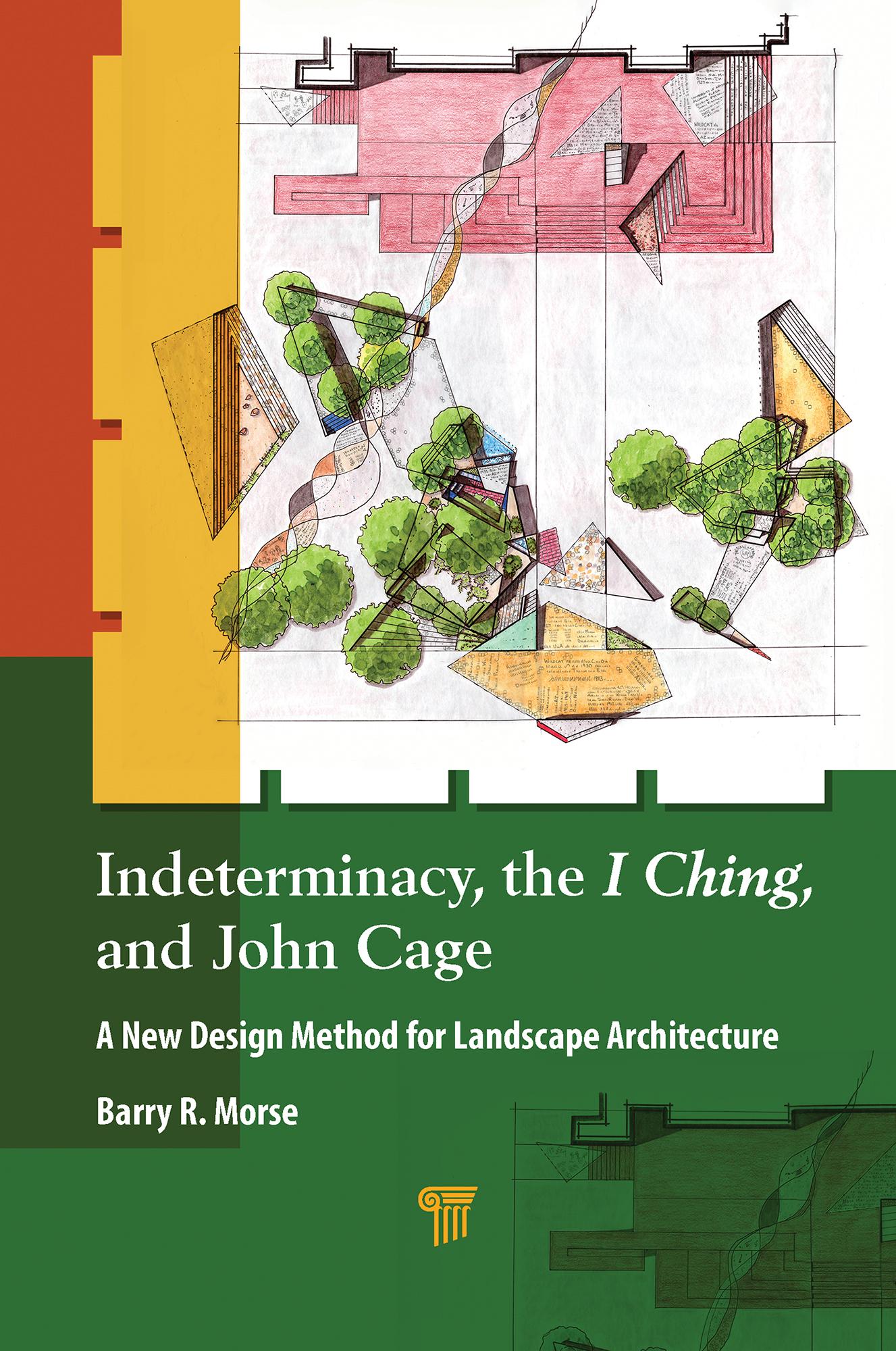
The creative use of indeterminacy, that is, “chance,” is an often-overlooked design opportunity despite the universality of chance in art, nature, science, and life. How can “chance,” a seemingly capricious phenomenon, be made to work for someone? One controlled use of chance is through the Chinese I Ching “chance operations” method of composer and artist John Cage (1912–1992). This book addresses the questions of how one might approach using this method in landscape architectural design, what the outcome of such an indeterminate design would be, and whether or not it could lead to a viable constructed landscape.
In addition, this book answers the question: What is the relationship between the I Ching, John Cage, and the constructed landscape anyway? The final product of the exploration of this method is a new hypothetical redesign of an existing plaza using Cage’s techniques and a comparative evaluation of the new indeterminate concept and the two pre-existing designs, using the original program objectives as a guide against which the three designs can be judged for effectiveness.
Pay easily by card, Klarna, Apple Pay or Google Pay. Not happy? You always have a 14-day money-back guarantee. Read more in our terms. If you have any questions, email us at hello@memmo.org.
Memmo makes studying easier – wherever you are in the world. We bring your course books and smart study tools together in one place: summaries, quizzes, podcasts and flashcards. Plus Ted, your study buddy who answers anything you wonder. Over 75,000 students already study here – built to help you learn faster and stress less.