
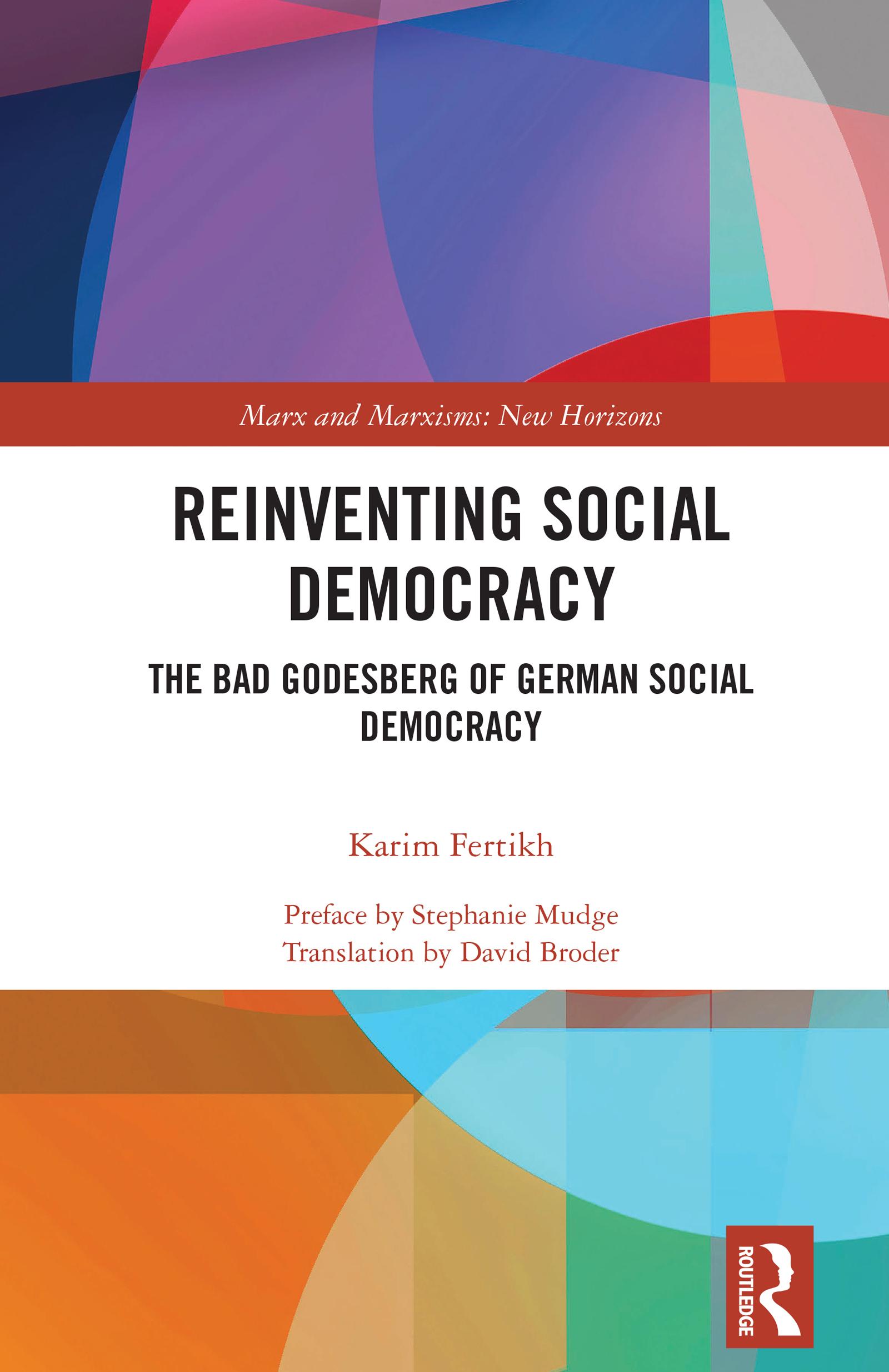
During the twentieth century, social democracy in Europe experienced profound ideological changes. The Bad Godesberg programme of November 1959 is widely considered one of the most momentous of these shifts in European social-democratic ideology. Reinventing Social Democracy explores the programme’s genesis and offers an original interpretation of both the written text and its subsequent uses.
Employing innovative analytical tools underutilised in the examination of social democracy’s history, including quantitative history and prosopography, Karim Fertikh analyses the making of political ideas in the Social-Democratic Party of Germany (SPD). Comparing this process under both the Weimar and Bonn Republics, he describes the construction of Marxism in the social-democratic programmes of the 1920s, to better understand the shifts that occurred after World War II. Fertikh expertly highlights the transformations in social-democratic ideas, linking these developments to the changing face of party intellectuals and of their role in the SPD. Finally, he follows the programme through to the 2000s to identify the clear break with the ideological tradition of social democracy.
Reinventing Social Democracy enriches our understanding of the historical and ideological forces that shaped social democracy during a crucial period in European history. This study offers rich material for courses on German politics, political parties, history of Germany, and the history of political ideas.
Pay easily by card, Klarna, Apple Pay or Google Pay. Not happy? You always have a 14-day money-back guarantee. Read more in our terms. If you have any questions, email us at hello@memmo.org.
Memmo makes studying easier – wherever you are in the world. We bring your course books and smart study tools together in one place: summaries, quizzes, podcasts and flashcards. Plus Ted, your study buddy who answers anything you wonder. Over 50,000 students already study here – built to help you learn faster and stress less.