
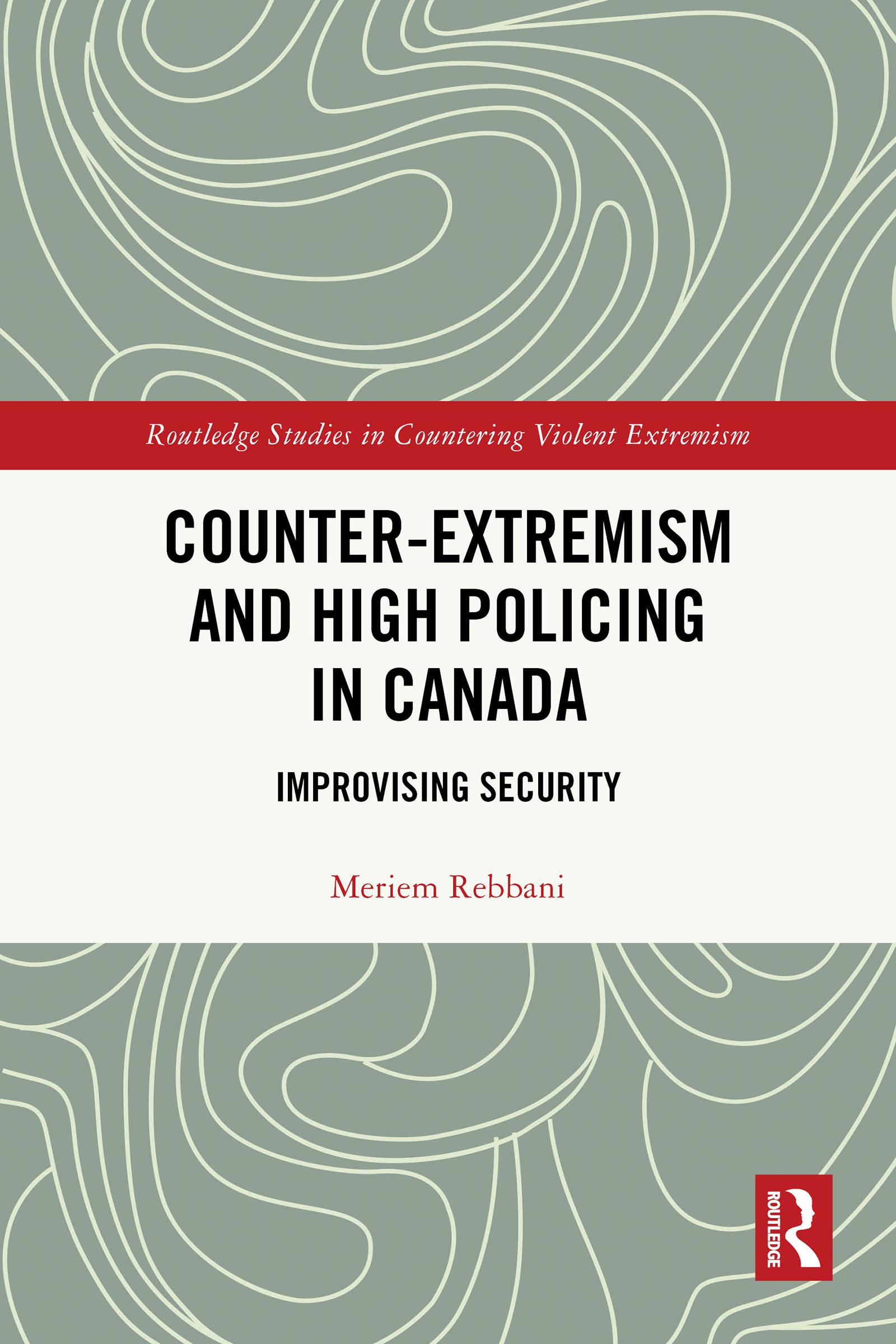
This book presents an ethnographic account of the development of Countering Violent Extremism (CVE) practices in Quebec, Canada.
Drawing on seven years of ethnographic research, the book traces how the fight against “radicalization” moved beyond police and intelligence agencies to include teachers, social workers, and health professionals. This collaboration brought together social care and national security under the shared language of prevention and risk management. The book reveals how these new practices transformed what has been called “high policing”, turning it into a visible, everyday form of governance. It situates Quebec’s approach within global shifts toward neoliberal risk management and actuarial justice, showing how CVE redefined both social intervention and security work. Through vivid field notes and interviews, the work exposes the improvisation, competition, and ethical dilemmas that shaped the creation of Canada’s CVE sector. Spanning the years 2015–2022, this study provides a window into how national security is now made—and contested—at the local level, where the boundaries between care and control have never been more blurred.
This book will appeal to scholars, practitioners, and students of CVE and counter-terrorism studies, criminology, global security studies, and international relations.
Pay easily by card, Klarna, Apple Pay or Google Pay. Not happy? You always have a 14-day money-back guarantee. Read more in our terms. If you have any questions, email us at hello@memmo.org.
Memmo makes studying easier – wherever you are in the world. We bring your course books and smart study tools together in one place: summaries, quizzes, podcasts and flashcards. Plus Ted, your study buddy who answers anything you wonder. Over 50,000 students already study here – built to help you learn faster and stress less.