
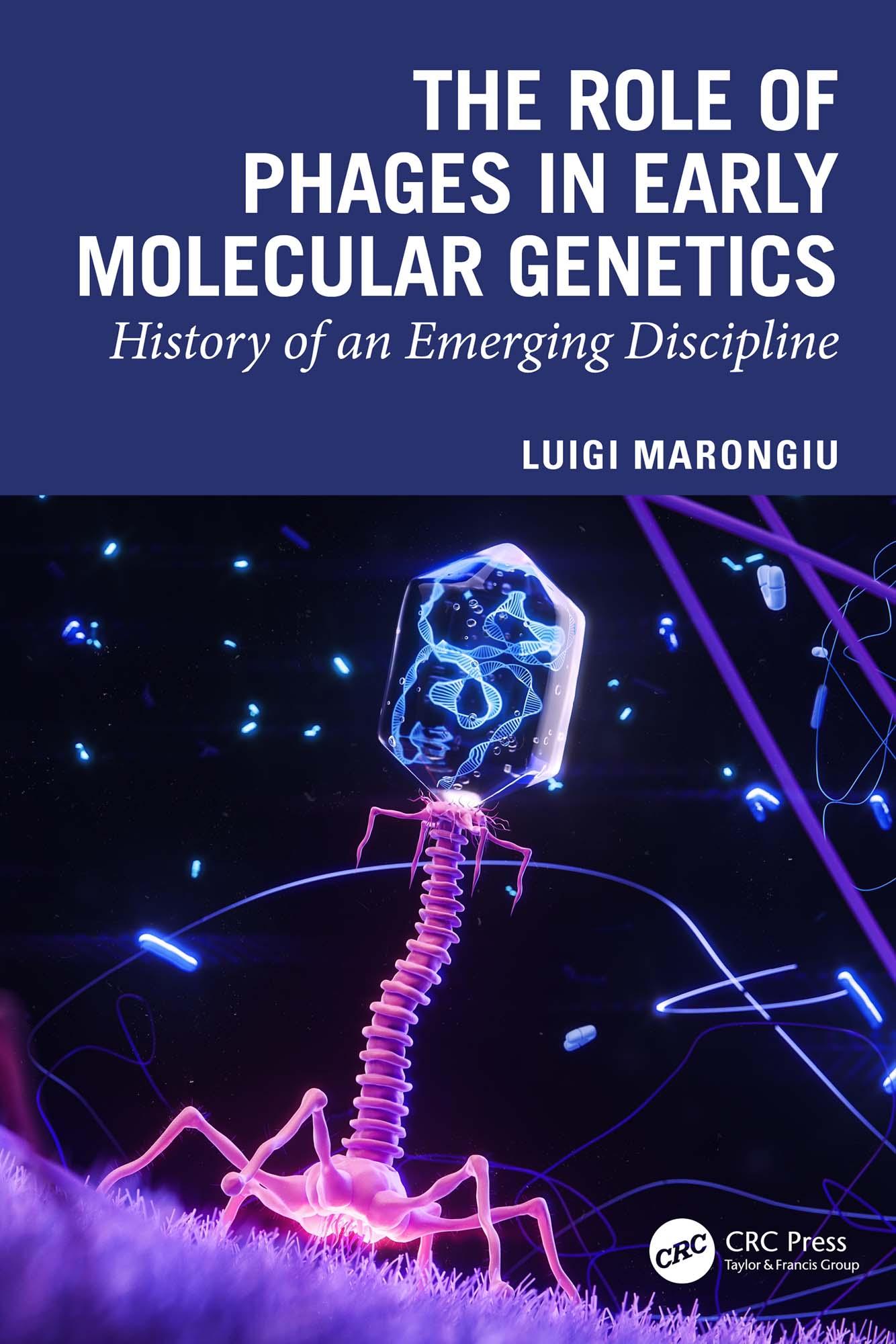
In the shadow of global conflicts—from World War II through the tensions of the Cold War—an extraordinary scientific revolution was quietly unfolding. A brilliant collective of geneticists and microbiologists, known as the Phage Group, harnessed the power of bacterial viruses to unlock the very structure of genes, giving birth to Molecular Biology as we know it today.
As antimicrobial resistance threatens global health, phages have reemerged as critical subjects of scientific inquiry, yet their pivotal role in the genetic discoveries of the 1940s–1960s remains largely overlooked—until now. The Role of Phages in Early Molecular Genetics: History of an Emerging Discipline bridges history, physics, and virology, offering both scientists and general readers a compelling narrative of how these microscopic entities revolutionized our understanding of life itself.
Key Features:
- Explains how bacterial viruses became the unexpected heroes in humanity’s quest to understand the genetic code
- Discusses the forgotten historical and social forces—Lysenkoism, Spencerism, and McCarthyism—that shaped scientific progress yet vanished from our collective memory
- Provides a fascinating parallel between the emergence of phage biology and quantum physics, two revolutionary fields developing in tandem
By illuminating the shared patterns of scientific discovery across disciplines, The Role of Phages in Early Molecular Genetics: History of an Emerging Discipline provides a timely reminder of how breakthrough knowledge emerges—and why the Phage Group’s legacy deserves its rightful place in scientific history.
Pay easily by card, Klarna, Apple Pay or Google Pay. Not happy? You always have a 14-day money-back guarantee. Read more in our terms. If you have any questions, email us at hello@memmo.org.
Memmo makes studying easier – wherever you are in the world. We bring your course books and smart study tools together in one place: summaries, quizzes, podcasts and flashcards. Plus Ted, your study buddy who answers anything you wonder. Over 50,000 students already study here – built to help you learn faster and stress less.