
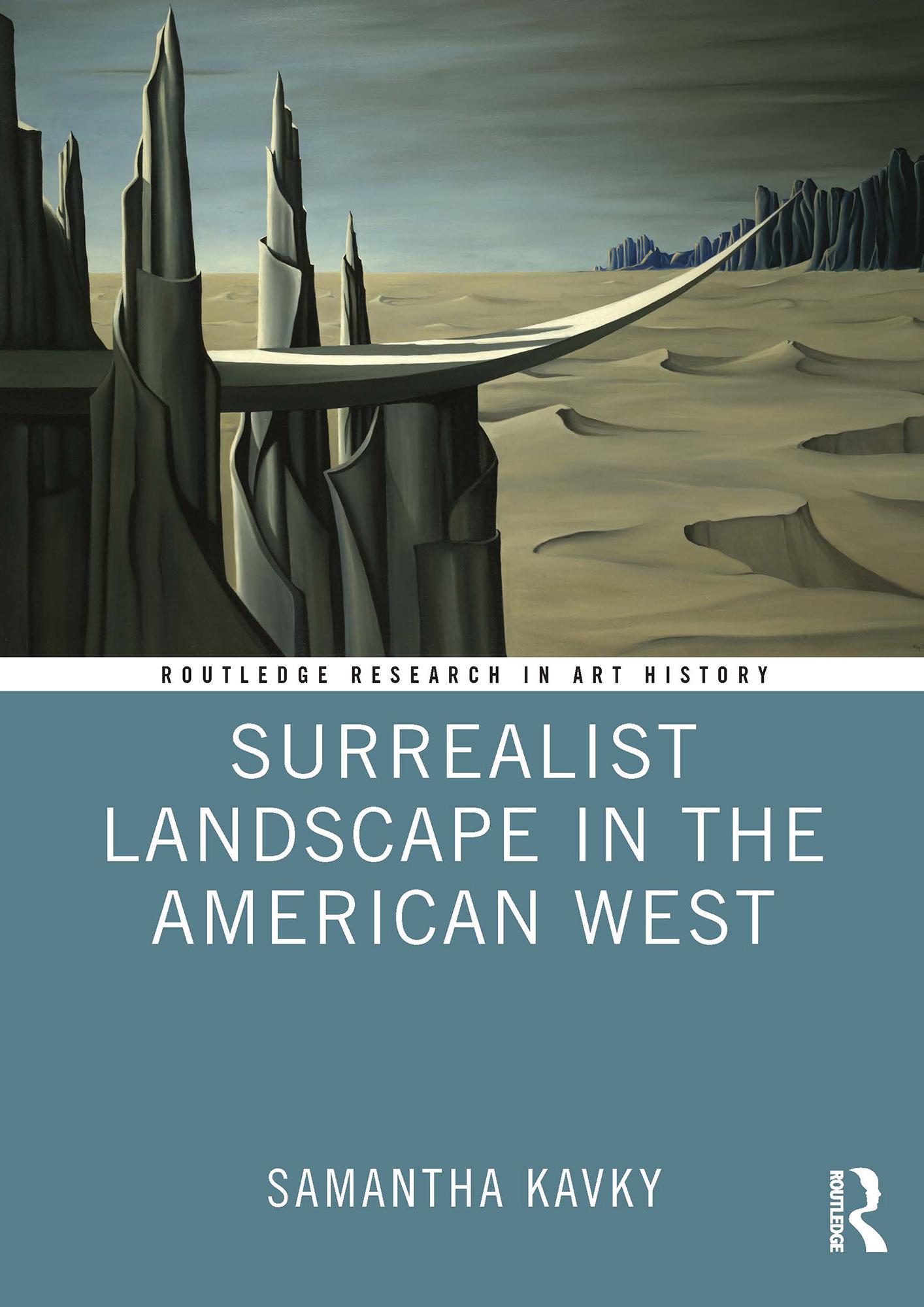
Focusing on the period of the Second World War, this book explores the emergence of surrealist landscape as a genre throughout the period of surrealist exile in the Americas.
By positioning surrealist landscape within the formal, iconographic, and theoretical strategies of the larger movement as well as within the historical context of war and exile, the volume encompasses critical and historical discussions from a broad spectrum of interrelated fields including psychology, anthropology, military history, art history, and ecocriticism. Central to this book are the landscapes of Max Ernst who, along with transplanted European surrealists, Wolfgang Paalen and Kurt Seligmann, revitalized a Romantic image of the American landscape and its indigenous peoples, divorced from, and as a challenge to, European nationalism. American surrealists Dorothea Tanning and Kay Sage challenged traditional analogies between the earth and the female body retained by their male partners. Other European surrealists such as Salvador Dalí and Yves Tanguy perpetuated the appropriation of the desert as a generic space for visionary projection.
The book will be of interest to scholars working in art history, surrealism, ecocriticism, American studies, and feminist studies.
Pay easily by card, Klarna, Apple Pay or Google Pay. Not happy? You always have a 14-day money-back guarantee. Read more in our terms. If you have any questions, email us at hello@memmo.org.
Memmo makes studying easier – wherever you are in the world. We bring your course books and smart study tools together in one place: summaries, quizzes, podcasts and flashcards. Plus Ted, your study buddy who answers anything you wonder. Over 50,000 students already study here – built to help you learn faster and stress less.