
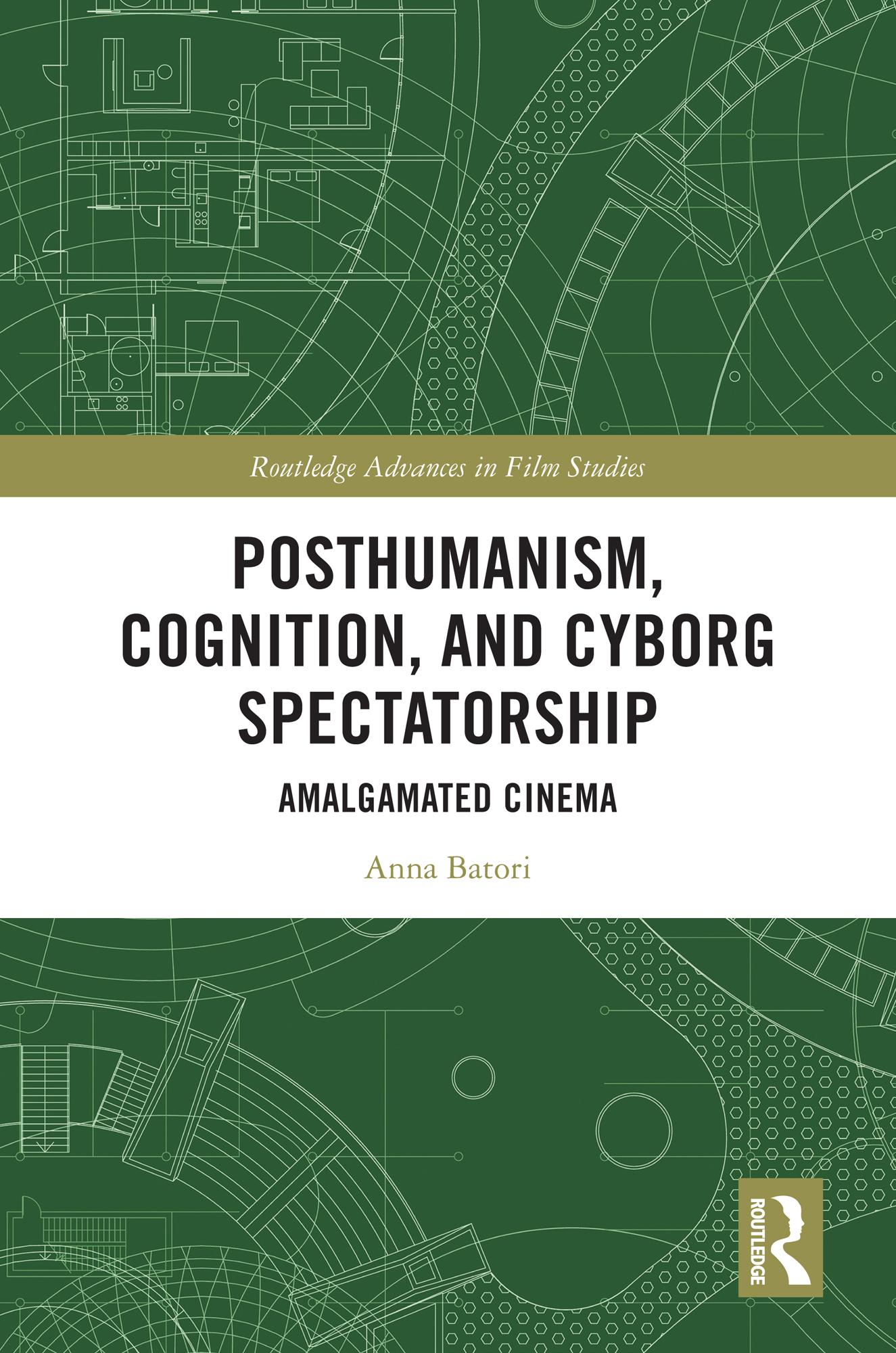
This book argues that contemporary digital blockbusters function as laboratories for posthuman cognition that transform spectatorship into a cyborg mode in which perception, memory, and agency are distributed across the cinematic canvas, the diegetic bodies of characters, the formal operations of film style, and the embodied cognition of the spectator.
Drawing on posthumanist theory and the framework of 4E cognition, it introduces four interlinked concepts – embodied and frozen module cognition, amalgamated aesthetics, and the cybokinetic frame – to explain how film form trains attention, sensorimotor coupling, and cognitive adaptation. Methodologically, the study combines close textual analysis with attention and perception research, incorporating formal measures (ASL, MSL, VAI) and advocating for experimental follow-ups using eye-tracking, pupillometry, and fMRI/EEG studies. Through case studies including Blonde, Nope, Inception, RoboCop, Pacific Rim, and Iron Man, the book traces how aesthetic strategies sustain or fracture embodied engagement under conditions of sensory and informational excess. Ultimately, it redefines the digital blockbuster as an active cognitive technology that both reflects and reconfigures twenty-first-century perception.
The book is aimed at film and media scholars, cognitive scientists exploring neurocinematics and enactive approaches, advanced students, and filmmakers who seek guidance on visual design.
Pay easily by card, Klarna, Apple Pay or Google Pay. Not happy? You always have a 14-day money-back guarantee. Read more in our terms. If you have any questions, email us at hello@memmo.org.
Memmo makes studying easier – wherever you are in the world. We bring your course books and smart study tools together in one place: summaries, quizzes, podcasts and flashcards. Plus Ted, your study buddy who answers anything you wonder. Over 50,000 students already study here – built to help you learn faster and stress less.