
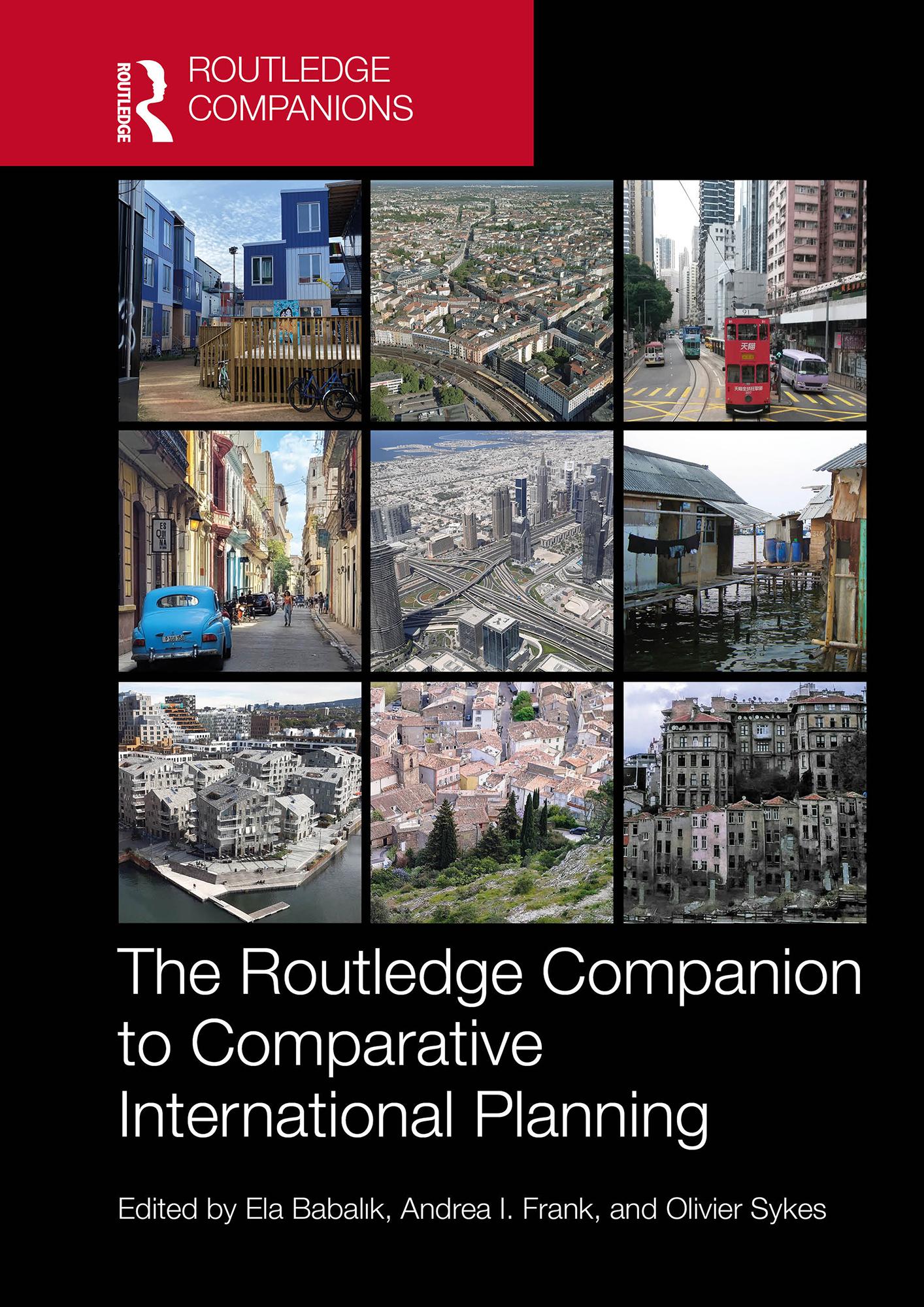
This companion provides an overview of a rich field of scholarship and practice, covering key debates around the purpose and value of comparison as a way of generating knowledge and theory. It features examples of comparative studies which explore contemporary issues in planning for sustainable urban and territorial development.
Across seven parts, the book explores questions of ‘why’ engage in international comparative planning research; ‘what’ planning aspects might be compared; and ‘how’ comparison might be approached. Through compelling cases of contemporary comparative research on diverse planning topics, including planning systems and governance, planning instruments and law, urban morphology, planning for risk, perspectives on informality, comparative pedagogy, and more, readers will gain a wide appreciation of comparative studies and the current state of the field. The book comprises 37 chapters by 61 contributors from around the world, offering their vital insights into the vibrant and evolving scholarship.
The companion will be of interest to educators, academics and researchers, planning practitioners, city and municipal governments, consultants, and advanced students in the fields of city, urban, and regional planning, urban design, human geography, and urban, environmental, and international development studies, interested in comparing and co-learning from global practices and places.
Pay easily by card, Klarna, Apple Pay or Google Pay. Not happy? You always have a 14-day money-back guarantee. Read more in our terms. If you have any questions, email us at hello@memmo.org.
Memmo makes studying easier – wherever you are in the world. We bring your course books and smart study tools together in one place: summaries, quizzes, podcasts and flashcards. Plus Ted, your study buddy who answers anything you wonder. Over 75,000 students already study here – built to help you learn faster and stress less.