
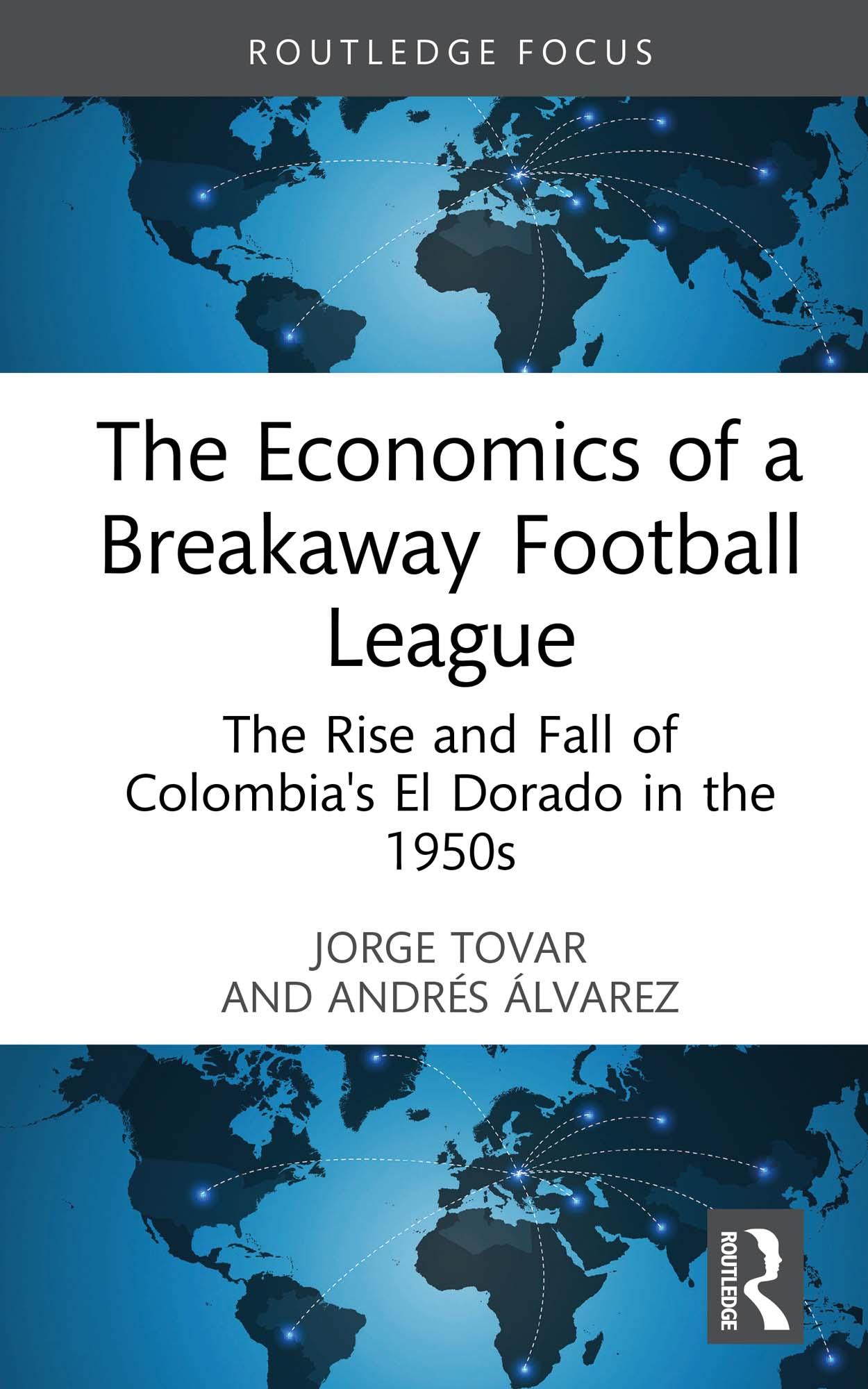
Throughout the history of football, new leagues have periodically emerged offering high salaries to lure foreign stars — the United States, Japan, and China being prominent examples. Less well known, however, is the case of Colombia. The Colombian professional football league was a brief but remarkable experiment that attracted top South American and European players in the early 1950s, commonly referred to as El Dorado.
Drawing on a wide array of archival material and other primary sources, this book explores how a small, economically underdeveloped country with no established football tradition managed to finance such a high-profile "pirate" league while confronting the international football establishment. It examines the economic and social conditions that made it possible to field world-class players such as Alfredo Di Stéfano and Charlie Mitten, and explicitly addresses the domestic and international circumstances that allowed so powerful a league to emerge so far from football's traditional centers of power.
This book also traces the collapse of the league and its lasting ramifications for the history of football in the region. It will be of great interest to readers in sports economics, sports history, economic history, and Latin American studies.
Pay easily by card, Klarna, Apple Pay or Google Pay. Not happy? You always have a 14-day money-back guarantee. Read more in our terms. If you have any questions, email us at hello@memmo.org.
Memmo makes studying easier – wherever you are in the world. We bring your course books and smart study tools together in one place: summaries, quizzes, podcasts and flashcards. Plus Ted, your study buddy who answers anything you wonder. Over 50,000 students already study here – built to help you learn faster and stress less.